

Key Takeaways
Vehicle Maintenance Schedule
A vehicle maintenance schedule is a manufacturer-recommended timeline of service tasks — organized by mileage or time intervals — designed to keep your car running safely and efficiently. It covers everything from oil changes and filter replacements to brake inspections and fluid flushes. Following it helps prevent premature wear and unexpected breakdowns.
Most modern vehicles provide two schedules: a 'normal' driving schedule and a 'severe duty' schedule for conditions like frequent short trips, towing, or extreme temperatures. The appropriate schedule depends on how and where you actually drive.
Why the Schedule Exists — and Where to Find Yours
Every vehicle rolls off the factory line with a service schedule built by the engineers who designed it. That schedule reflects the specific tolerances, fluid capacities, and component lifecycles of your exact powertrain — not a generic average. It is the single most reliable guide to keeping your car in the shape it was built to maintain.
The first place to look is your owner's manual. Most manuals include a dedicated maintenance section organized by mileage intervals (e.g., every 5,000, 15,000, or 30,000 miles) alongside time-based reminders such as annual inspections. If you're researching a vehicle you're considering purchasing, understanding its expected maintenance costs is a useful part of the evaluation process.
A critical detail many drivers overlook: intervals are listed as mileage or time — whichever comes first. A car driven only 3,000 miles in a year still needs an annual coolant check, because fluids degrade chemically over time regardless of use.
Key Service Milestones and What They Actually Do
Maintenance tasks aren't arbitrary — each addresses a predictable failure mode. Here's what the most common items accomplish:
- Engine oil and filter (every 5,000–10,000 miles for synthetic, or per oil life monitor): Oil lubricates moving metal parts and carries away heat and combustion byproducts. As it degrades, it becomes acidic and loses viscosity, increasing wear. The filter traps particulates; a clogged filter bypasses oil unfiltered.
- Tire rotation (every 5,000–7,500 miles): Front and rear tires wear at different rates depending on drivetrain layout and steering loads. Rotating them evens out tread wear and extends overall tire life.
- Air filter (every 15,000–30,000 miles): A restricted engine air filter reduces combustion efficiency. Cabin air filters protect the HVAC system and passenger air quality — often a separate service item.
- Brake fluid flush (every 2–3 years): Brake fluid is hygroscopic — it absorbs moisture from the air over time, which lowers its boiling point and can lead to a spongy pedal under heavy braking.
- Coolant flush (every 30,000–50,000 miles or 5 years): Coolant inhibitors break down, reducing corrosion protection inside the cooling system and risking damage to the water pump and radiator.
- Transmission fluid (every 30,000–60,000 miles for manual; CVT and automatic intervals vary widely): Degraded transmission fluid loses its ability to protect gear surfaces and manage heat, leading to slipping and premature failure.
- Spark plugs (every 30,000–100,000 miles depending on plug type): Worn plugs misfire, reducing fuel economy and straining the ignition coils and catalytic converter.
- Timing belt or chain inspection (60,000–100,000 miles): A failed timing belt is typically a catastrophic, engine-destroying event. Timing chains last longer but are not immune to wear — check your manual for the interval specific to your engine.
35%
Vehicles significantly overdue for oil changes
AAA surveys have consistently found that a substantial portion of American drivers are behind on at least one recommended maintenance item, with oil changes among the most commonly deferred.
$1,200+
Average cost of a neglected timing belt failure
Industry repair data indicates that timing belt failure — often preventable with scheduled replacement — can result in engine damage costing well over $1,000 depending on the severity and vehicle type.
5–7 years
Typical vehicle battery lifespan
Most automotive batteries last between 3 and 7 years depending on climate and usage; extreme heat accelerates degradation faster than cold. See <a href="/autos/car-maintenance/car-battery-health-voltage-load-testing-and-replacement-timing">battery health and replacement timing</a> for more detail.
For a broader view of how these services fit into a vehicle's full life, see the complete picture of car maintenance.
Normal vs. Severe Driving: Which Schedule Applies to You?
Automakers define 'severe duty' conditions more broadly than most drivers expect. If any of the following apply regularly, the severe schedule is likely appropriate for you:
- Frequent trips of 5 miles or less (engine never fully warms up, moisture accumulates in oil)
- Extended idling or stop-and-go traffic
- Towing, hauling, or carrying heavy loads
- Driving in extreme heat or cold
- Operating on dusty, unpaved, or salted roads
Under these conditions, oil, filters, and other fluids degrade faster — so intervals shorten accordingly. Many drivers who consider themselves 'normal' commuters actually qualify as severe-duty based on short daily trips alone.
Use the 'Whichever Comes First' Rule
Every maintenance interval has two triggers: mileage and time. Always act on whichever threshold you hit first. A car driven only a few thousand miles per year can still need annual brake fluid or coolant service due to time-based degradation — the calendar matters as much as the odometer.
Don't let common myths about maintenance intervals cost you unnecessarily. Our article on car maintenance myths that cost drivers money separates fact from long-standing fiction.
As seasons change, some service needs shift too — seasonal car care guidance can help you stay ahead of weather-related wear.
Staying on Track: Practical Tools and Habits
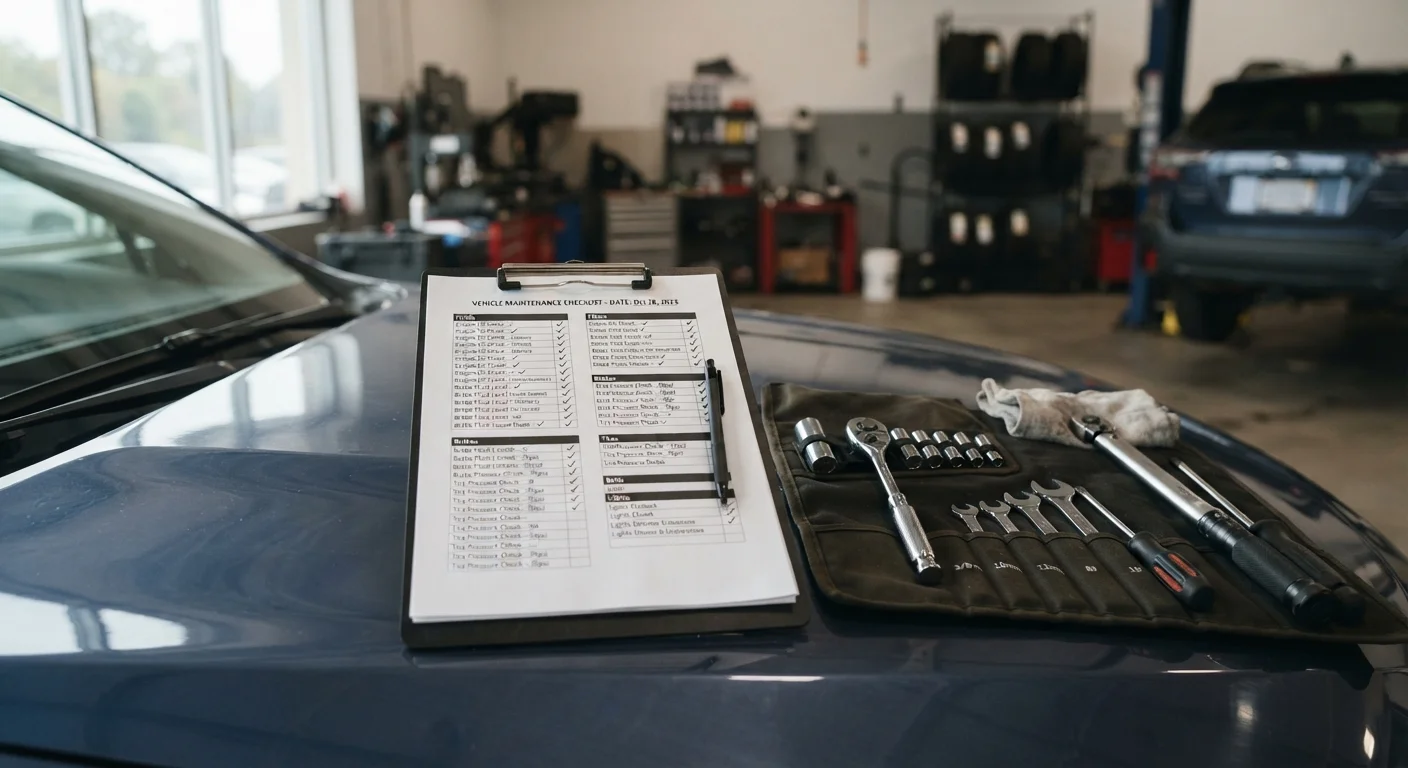
The most effective maintenance habit is simple: keep a log. Whether it's a notes app, a physical folder in your glove box, or an automaker's connected vehicle app, recording what was done and when removes all guesswork at the next service visit.
Modern vehicles equipped with oil life monitoring systems make interval tracking more precise — these systems account for actual engine conditions rather than fixed mileage. However, they typically monitor only engine oil; other service items still require calendar or mileage tracking.
If you're weighing which tasks to handle yourself versus delegating to a shop, a clear comparison of DIY versus professional service can help you make informed decisions. For drivers with older, higher-mileage vehicles, evidence-based strategies for maintaining high-mileage cars offer additional guidance tailored to your situation.