

Key Takeaways
Why High-Mileage Vehicles Demand a Different Approach
An engine with 100,000 or more miles on it is fundamentally different from the one that rolled off the assembly line. Internal tolerances have widened slightly due to normal wear, rubber seals have lost some elasticity, and the cumulative thermal cycling has stressed components in ways that can't always be seen during a visual inspection. Standard maintenance routines designed for newer vehicles don't always account for these realities.
That doesn't mean a high-mileage car is on borrowed time. Many vehicles exceed 200,000 miles with thoughtful care. The key is adjusting your maintenance approach to match what the engine and drivetrain actually need — not just what the factory schedule assumed at the outset. For a broader overview of fluid, tire, and brake upkeep across a vehicle's life, see the complete car maintenance picture.
Oil Selection and Change Frequency: The Core Decision
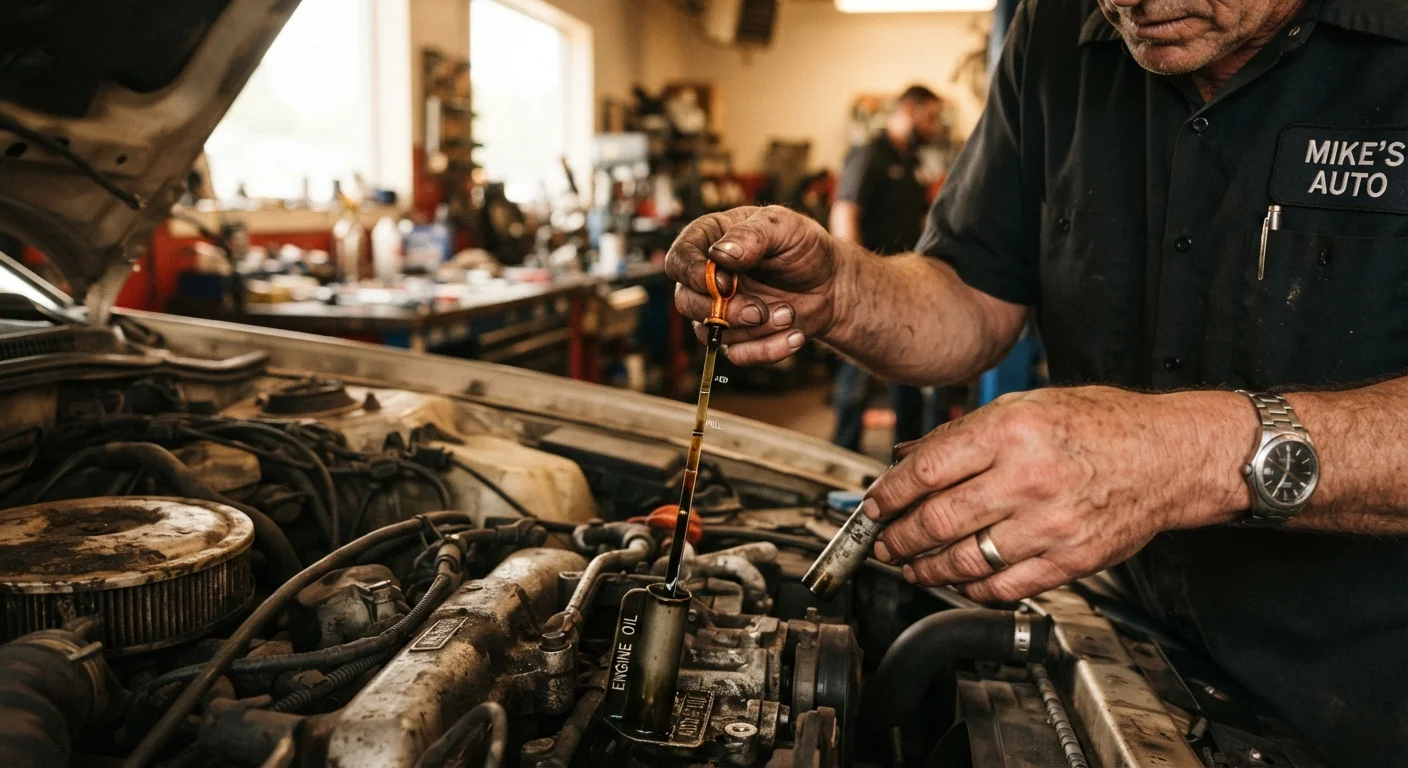
Engine oil is the most consequential ongoing choice for a high-mileage vehicle. As internal clearances widen, a slightly higher viscosity oil — for example, moving from a 5W-30 to a 10W-30, where the manufacturer permits — can help maintain adequate oil pressure at operating temperature. Always verify that any viscosity change falls within your owner's manual's approved range; deviating too far can cause problems of its own.
Many oil manufacturers offer formulations specifically labeled for high-mileage engines. These typically include seal conditioners — additives that can cause aging elastomer seals to swell slightly, reducing minor seepage. Evidence for these additives is real but modest: they can help with slow weeps, but they won't fix a failing seal that needs mechanical attention.
On change frequency: engines with significant wear accumulate contaminants faster, and degraded oil offers less protection. Erring toward the shorter end of the recommended interval range is a reasonable, evidence-backed choice. This topic is explored in more depth in the case for and against extended drain intervals.
Cooling System, Fluids, and Overlooked Systems
The cooling system is disproportionately responsible for catastrophic engine failures in older vehicles. Coolant degrades over time, losing its corrosion inhibitors, which leads to internal rust and deposits that reduce heat transfer. Flushing and refilling the cooling system on a schedule appropriate to your vehicle's age — typically every 30,000 to 50,000 miles depending on coolant type — is one of the higher-value maintenance investments you can make.
Transmission fluid, power steering fluid, and brake fluid are similarly easy to overlook in older cars. Brake fluid is hygroscopic — it absorbs moisture — which lowers its boiling point over time. For safety-critical systems, the consequences of neglect are severe. A qualified mechanic can test brake fluid moisture content and advise whether a flush is warranted.
It's also worth auditing belts and hoses more frequently on high-mileage vehicles. Rubber components degrade with both age and heat cycles. A serpentine belt that fails at highway speed can take down the power steering, alternator, and water pump simultaneously. Visual inspection by a mechanic every 12 months is a practical safeguard. Avoid the common mistake of treating irregular inspections as sufficient — see how some of these habits intersect with car maintenance myths that cost drivers money.
Building a Sustainable Routine for the Long Haul
The most reliable high-mileage vehicles tend to be maintained by owners who are consistent rather than reactive. Waiting for a warning light or an audible symptom before addressing maintenance often means the damage is already done. Scheduling proactive inspections — ideally twice a year — gives a mechanic the chance to catch developing problems before they become expensive failures.
Keep a simple maintenance log, either on paper or with a free app. Recording dates, mileage, and what was done creates accountability and makes it easier to spot patterns. It's also useful documentation if you ever sell the vehicle. For drivers new to building this kind of habit, the first-timer's maintenance routine guide offers a clear starting framework.
Finally, driving style matters more than most drivers realize. Gradual acceleration, avoiding prolonged idling, and allowing the engine to reach operating temperature before pushing it hard all reduce wear. These aren't restrictions — they're simply habits that compound positively over time, much like the broader smarter driving practices that support both safety and efficiency.