

Key Takeaways
Why Maintenance Matters More Than Most Drivers Realize
A well-maintained vehicle lasts longer, costs less to own over time, and is meaningfully safer to drive. Yet surveys consistently show that a significant portion of American drivers are behind on at least one routine service. The gap between knowing maintenance matters and actually doing it is often rooted in confusion — about what needs to happen, when, and why.
The core insight is straightforward: your car is a collection of systems that degrade predictably. Friction wears metal. Heat degrades fluids. Rubber dries and cracks. None of this is catastrophic when caught early. Left unaddressed, minor degradation compounds into expensive repairs. Small repairs that get skipped have a well-documented tendency to become large ones.
This guide covers the full spectrum — from the oil changes you do every few months to the major services that happen once every several years — so you can make informed decisions at every stage of ownership.
77%
Vehicles with at least one needed maintenance item
According to the Car Care Council, approximately 77% of vehicles on U.S. roads need some form of maintenance or repair at any given time.
$1,200+
Average annual vehicle maintenance and repair cost
AAA estimates American drivers spend over $1,200 per year on average for vehicle maintenance and repairs, with costs rising sharply for neglected vehicles.
80,000 mi
Typical timing belt replacement interval
Many manufacturers specify timing belt replacement between 60,000 and 100,000 miles; exact intervals vary significantly by engine design.
Oil Changes: The Foundation of Engine Health
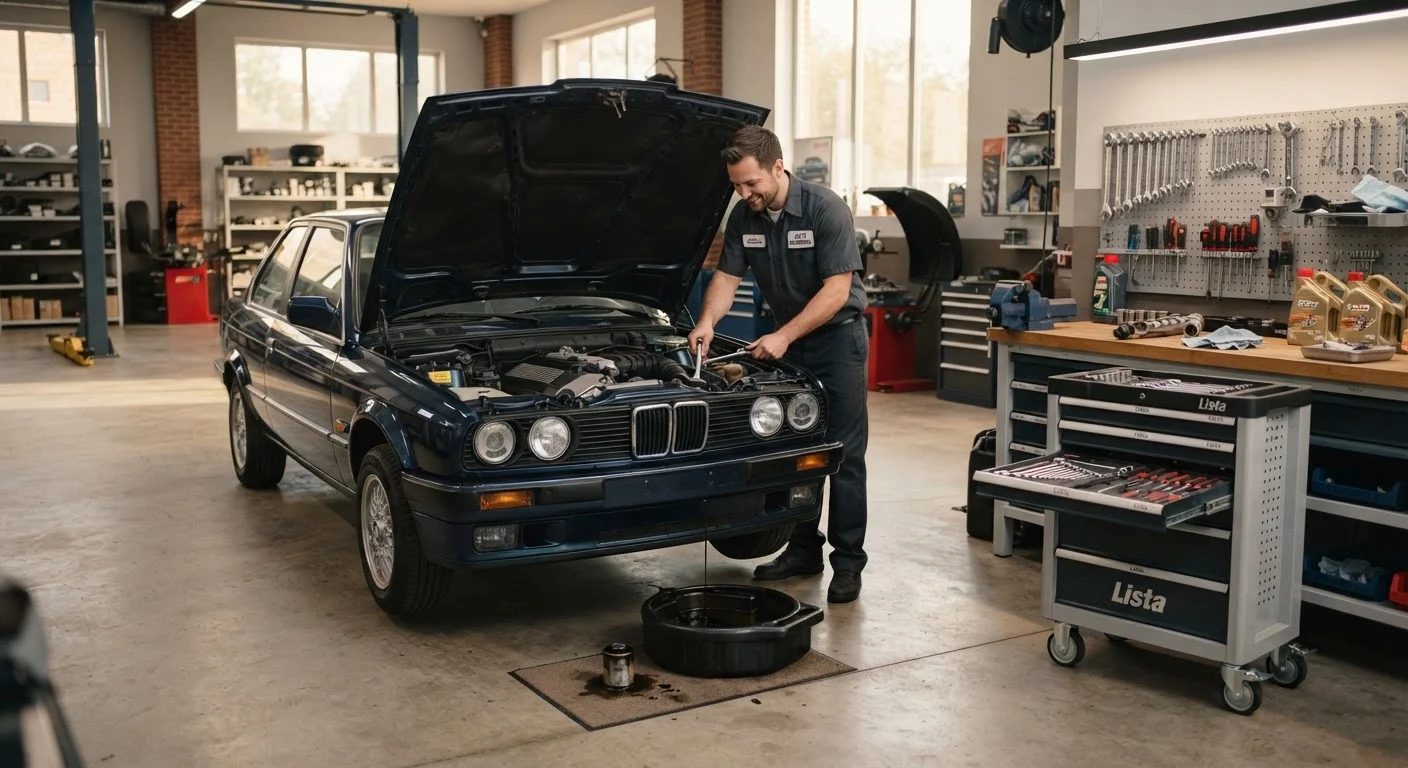
Engine oil lubricates hundreds of moving metal components, carries away heat, and suspends microscopic contaminants until the oil filter traps them. Over time, oil oxidizes, the additive package breaks down, and the fluid becomes less effective at all three jobs. An oil change restores that protection.
How often? Your owner's manual is the authoritative answer — not the sticker on your windshield. Many modern vehicles with full synthetic oil and updated engine designs specify 7,500 to 10,000 miles between changes, sometimes more. The traditional 3,000-mile interval is largely outdated for contemporary vehicles, a point covered in detail in our piece on car maintenance myths that cost drivers money.
Oil type matters too. Conventional, synthetic blend, and full synthetic oils behave differently under heat and stress. Most modern engines are engineered around full synthetic, and using a lower-grade oil than specified can reduce protection even if change intervals appear normal. Always match the viscosity grade printed in your manual.
Always check your dipstick between oil changes — not just at service appointments. A quart low over 3,000 miles is within normal range for many engines, but catching a sudden drop early can prevent serious damage.
Oil consumption patterns can reveal early signs of wear or leaks long before a dashboard warning light activates, giving you a much wider window to act.
When in doubt about which oil to use, choose the viscosity grade printed in your owner's manual over any aftermarket recommendation on the shelf. The manufacturer engineered the engine around that specification.
Using an incorrect viscosity can compromise film strength at operating temperature, potentially increasing wear even if oil change intervals are otherwise correct.
Fluids, Filters, and the Systems They Protect
Oil is just one of several fluids your car depends on. Coolant prevents the engine from overheating and freezing. Brake fluid transmits hydraulic pressure from the pedal to the calipers. Transmission fluid lubricates and cools the gearbox. Power steering fluid (where applicable) assists steering effort. Each has a service life and a condition you can assess with a quick visual check.
Our detailed guide on fluids every car relies on walks through where to find each reservoir and how to read fluid condition. A basic rule: if a fluid looks dark, cloudy, or smells burnt, it's worth a professional evaluation before the next scheduled service.
Filters — engine air filter, cabin air filter, fuel filter — are equally important and frequently overlooked. A clogged engine air filter restricts airflow and forces the engine to work harder. Cabin filters affect the air quality inside your vehicle. Both are typically inexpensive to replace and are included in most manufacturer maintenance schedules.
Check Fluids on a Level Surface
For accurate fluid level readings — especially engine oil and transmission fluid — park on a flat surface and let the engine cool before checking. Heat causes fluid to expand, and a sloped surface shifts fluid away from the dipstick or reservoir, producing misleading readings. Two minutes of patience here prevents a false sense of security.
Tires and Brakes: Your Safety-Critical Systems
No part of your car is more directly connected to your safety than tires and brakes. Tires are your only contact with the road; brakes determine how quickly you can stop. Both degrade silently under normal use, which is why visual inspection at every oil change is a practical minimum standard.
For tires, check tread depth using the penny test — insert a penny into the tread groove with Lincoln's head pointing down; if you can see the top of his head, the tire is at or below 2/32 inch and should be replaced. Also inspect for uneven wear patterns, which often signal alignment or inflation issues. Keep tires inflated to the pressure listed on the door jamb sticker, not the number on the tire sidewall.
Brake pads have a wear indicator that produces a squealing sound when they approach the replacement threshold. If you hear grinding, the pad material is gone and metal-on-metal contact is damaging the rotor. Brake fluid absorbs moisture over time, which lowers its boiling point and can cause brake fade under hard use — most manufacturers recommend replacing it every two to three years regardless of mileage.
Never Ignore Brake Warning Signs
Squealing, grinding, a soft brake pedal, or a vehicle that pulls to one side when braking are all signals that require prompt professional inspection — not monitoring until the next scheduled service. Brake system failures can develop quickly and have serious safety consequences. If you notice any of these symptoms, have the vehicle checked before your next extended drive.
Major Services and Long-Interval Maintenance
Beyond the regular items, vehicles have components designed to last 60,000 to 100,000 miles or more before needing attention. These include the timing belt or chain, spark plugs, the serpentine belt, coolant flush, and transmission fluid change. Missing these doesn't produce immediate symptoms — but the consequences of failure can be severe. A snapped timing belt, for example, can cause catastrophic engine damage in many engine designs.
The maintenance schedule explained covers the specific mileage milestones for these services in detail. The practical takeaway: pull out your owner's manual and cross-reference your current odometer reading against the manufacturer's schedule. If you've purchased a used vehicle and don't know its service history, a qualified mechanic can assess which long-interval services are overdue.
Timing Belt Failure Can Total an Engine
On interference-design engines — which represent a large share of modern vehicles — a timing belt failure at speed causes pistons and valves to collide, resulting in repair costs that often exceed the vehicle's value. This service is non-negotiable. If you don't know whether your timing belt has been replaced and you're approaching or past the manufacturer's mileage threshold, treat this as urgent.
Building a Maintenance Habit That Actually Sticks
The most effective maintenance strategy is a simple one you'll actually follow. Set calendar reminders tied to mileage milestones. Keep a small folder in the glove box for service receipts — this also builds documentation that supports resale value. When you take a vehicle in for an oil change, ask the technician to do a multipoint inspection; most shops include this at no charge and it surfaces items worth monitoring.
For drivers who want to be more hands-on, some tasks are straightforward with basic tools and a safe work environment. Our DIY oil change guide covers what's involved and when it makes sense to leave the job to a professional instead. The goal isn't to do everything yourself — it's to understand what's happening with your vehicle so you can make informed decisions.
Developing smarter driving habits also extends the life of your vehicle's components. Aggressive acceleration, hard braking, and high-speed driving all accelerate wear. Our Driving Smarter hub covers practical techniques for reducing wear while improving efficiency.
Your Vehicle Owner's Manual
The single most authoritative source for your car's specific maintenance schedule, fluid specifications, and service intervals. Most are also available as free PDFs from manufacturer websites.
NHTSA Vehicle Safety & Recall Database
The National Highway Traffic Safety Administration's free lookup tool lets you check whether your vehicle has any open safety recalls that should be addressed — often at no cost to you.
Car Care Council Maintenance Guide
A free, publicly available resource from the nonprofit Car Care Council covering service intervals, seasonal checklists, and fluid guidance for everyday drivers.