

Key Takeaways
Why Automotive Myths Refuse to Die
Car maintenance advice spreads fast, sticks hard, and ages poorly. Much of what Americans treat as common knowledge was reasonable guidance decades ago, then calcified into habit long after the industry moved on. The result is real money lost: unnecessary service visits, premium fuel purchases that deliver nothing, and skipped maintenance that actually matters.
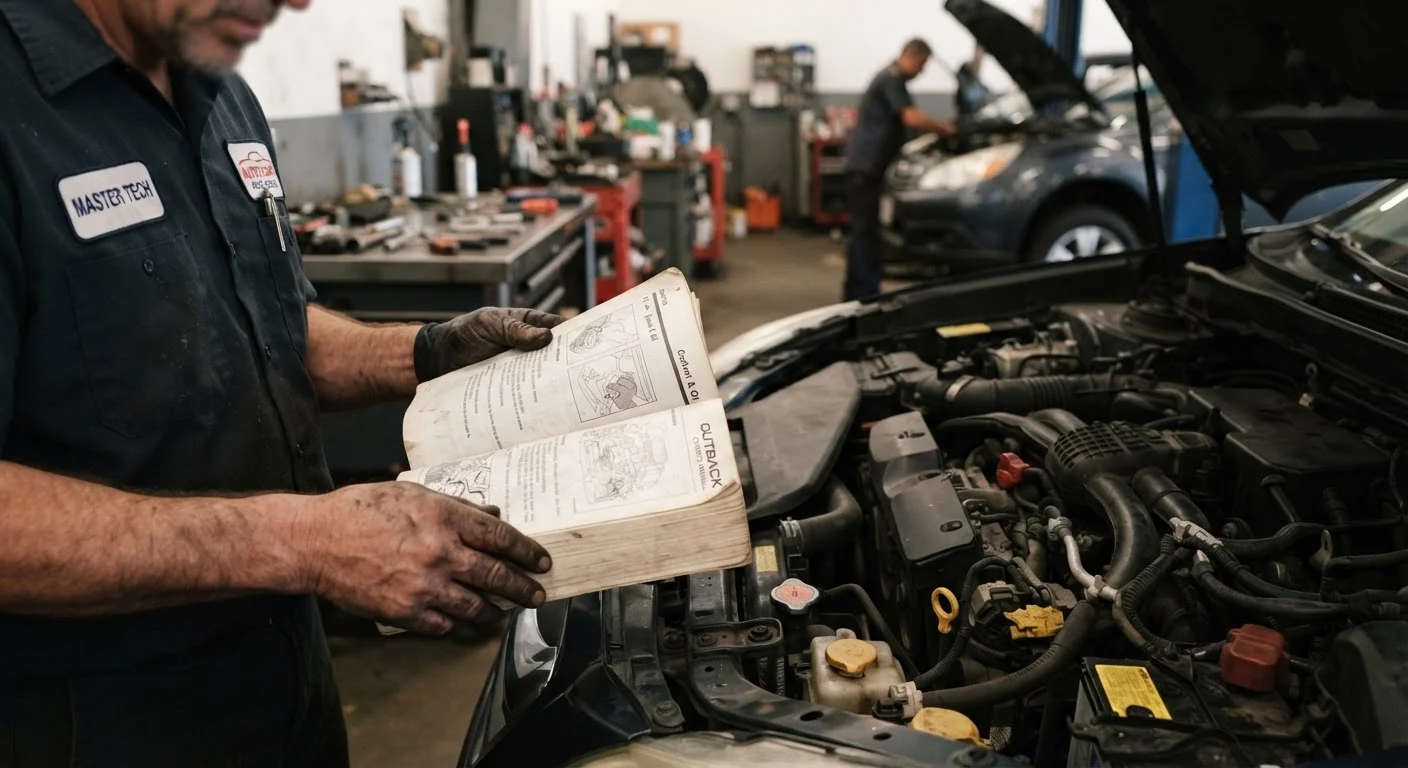
The antidote is simple: consult your owner's manual and apply current engineering knowledge. Every myth below has a measurable cost — financial, mechanical, or both. A complete picture of modern vehicle maintenance can help fill in the gaps once the fiction is cleared away.
Myth
You need to change your oil every 3,000 miles, no exceptions.
Fact
Most modern vehicles with conventional oil are engineered for 5,000–7,500 mile intervals; synthetic oil commonly extends that to 10,000–15,000 miles depending on the manufacturer.
The 3,000-mile rule originated when engine tolerances were looser and oil chemistry was far less refined. Today's full-synthetic and synthetic-blend oils maintain viscosity and protective properties much longer. Following an outdated interval doesn't harm the engine — it just empties your wallet unnecessarily. Check your owner's manual or understand how oil formulations differ to find the interval right for your vehicle and driving conditions.
Myth
You should let your car idle for several minutes in winter to warm up the engine.
Fact
Modern fuel-injected engines reach operating temperature faster by being driven gently — prolonged idling wastes fuel and can wash cylinder walls with unburned fuel.
This advice made sense for carbureted engines that needed time to meter fuel correctly in cold air. Fuel injection changed everything: the engine management system adjusts the fuel mixture automatically from the first second. A brief 30-second idle to allow oil to circulate is reasonable, but anything beyond that delays warmup, increases fuel consumption, and in cold climates can introduce excess fuel into the oil. Drive gently for the first few miles instead.
Myth
Premium fuel will improve performance and protect any engine.
Fact
Premium fuel only benefits engines specifically designed — and tuned by the manufacturer — to require or recommend it. Regular engines see no gain.
Higher-octane fuel resists 'knock' (pre-ignition) in high-compression or turbocharged engines that need it. In an engine calibrated for regular unleaded, the combustion timing and compression ratio aren't set up to exploit premium's properties. You'll simply spend more per gallon for identical output. Check the fuel door or owner's manual: 'required' means use premium; 'recommended' means premium may offer marginal benefit under heavy load; silence means regular is the right call.
Myth
The maximum pressure printed on your tire sidewall is the correct inflation target.
Fact
The sidewall number is the maximum pressure the tire can safely hold — not the operating target. Correct pressure is on the vehicle's door placard.
Inflating to the sidewall maximum produces an overinflated tire: the contact patch shrinks, ride harshness increases, and the center tread wears faster. The vehicle placard (usually inside the driver's door jamb) specifies pressures engineered for that car's weight distribution and suspension geometry. Front and rear pressures often differ. Check monthly and always measure cold — tire pressure rises as the rubber heats up during driving, so a hot reading will be misleadingly high.
Myth
Washing a car more often damages the paint over time.
Fact
Regular washing protects paint by removing contaminants like road salt, bird droppings, and tree sap that chemically degrade the clear coat if left in contact.
Paint damage from washing is real but comes from poor technique — dirty wash mitts, abrasive cloths, or automatic brushes with worn bristles — not from washing frequency itself. A properly executed hand wash using clean microfiber mitts and appropriate soap is genuinely protective. Leaving corrosive contaminants on the surface in the name of 'protecting paint' achieves the opposite. In winter regions where roads are salted, more frequent washing is advisable.
Myth
If the engine is running fine, you can skip coolant and transmission fluid changes indefinitely.
Fact
Both fluids degrade chemically over time regardless of how the vehicle feels, and neglecting them can lead to costly internal damage.
Coolant contains corrosion inhibitors that deplete with heat cycling, allowing rust and scale to form inside the cooling system — eventually causing radiator and water pump damage. Transmission fluid breaks down under heat and shear stress; degraded fluid loses its ability to protect clutch packs and bearings. Neither issue announces itself loudly until significant damage is done. Checking your vehicle's fluids regularly is one of the simplest, highest-value habits a driver can build. Deferred maintenance compounds over time — and fluid neglect is a prime example.
What to Actually Do Instead
Replacing myths with better habits doesn't require becoming a mechanic. It requires reading your owner's manual once and trusting it. Manufacturer service intervals are tested extensively for the specific engine, oil capacity, and driving conditions each vehicle is designed for.
5,000–15,000 mi
Typical manufacturer-recommended oil change interval
Intervals vary by vehicle and oil type; consult your owner's manual for the specification that applies to your engine.
~30 seconds
Adequate winter idle time before gentle driving
Most automotive engineers and manufacturer guidelines suggest allowing oil to circulate briefly, then driving gently rather than idling at length.
1 PSI
Pressure drop per 10°F temperature fall
The U.S. Department of Energy notes that tires lose roughly 1 PSI for every 10-degree Fahrenheit drop in ambient temperature.
Pay attention to your vehicle's oil life monitor if it has one — modern systems use algorithms tracking temperature cycles, engine loads, and mileage to flag oil changes only when genuinely needed. Extended drain intervals have real trade-offs worth understanding, but the guesswork is largely eliminated by these systems.
On tire pressure: check monthly with a reliable gauge when tires are cold, and match the pressure specified on the driver's door placard — not the number molded into the sidewall. Proper inflation directly affects fuel economy in ways most drivers underestimate. For high-mileage vehicles, evidence-based strategies for keeping older cars reliable matter more than any folklore shortcut.
Your Owner's Manual Overrules the Shop Sticker
Quick-lube shop reminder stickers are set conservatively to maximize return visits — they are not calibrated to your specific vehicle. Your owner's manual contains the manufacturer-tested service intervals for your exact engine, oil type, and driving conditions. When in doubt, the manual wins. If you no longer have a printed copy, most manufacturers offer them as free downloads on their official websites.