

Key Takeaways
The Real Cost of 'I'll Deal With It Later'
Every driver has done it: spotted something small — a faint vibration, a dashboard light, a noise that only appears on cold starts — and decided it can wait. In isolation, one deferral is rarely catastrophic. But deferred maintenance has a compounding quality that makes it one of the most reliably expensive habits a car owner can develop.
The reason small problems grow is mechanical interdependence. A vehicle is a system of systems, and most components exist in load-sharing relationships with their neighbors. When one part degrades and isn't addressed, the components it supports or lubricates absorb additional stress. What begins as a worn belt tensioner can become a snapped belt and a damaged alternator. A seeping valve cover gasket can drip oil onto hot exhaust components, creating a fire risk that started as a $40 gasket replacement.
For a fuller picture of how to stay ahead of your vehicle's needs, see our complete car maintenance guide. Understanding the schedule is the first step to avoiding the expensive gaps.
~$1,200
Average engine repair cost from oil neglect
Industry repair data consistently shows that engine damage attributable to oil starvation or degradation often runs into the thousands, dwarfing the cost of routine oil changes many times over.
3x
Cost multiplier when brake pads score rotors
Automotive repair shops report that allowing pads to wear through to metal contact typically converts a straightforward pad swap into a combined pad-and-rotor replacement, tripling the parts and labor bill.
Common Mistakes That Turn Minor Issues Into Major Bills
The following patterns show up repeatedly in repair shop histories. Each starts with something a driver noticed, judged as non-urgent, and set aside — sometimes for weeks, sometimes for years.
Delaying an oil change because the car still 'seems fine.'
Why it happens: Oil degradation is invisible to the driver until damage is already done, making it easy to rationalize postponing the service.
Ignoring a slow tire leak or driving on visibly low tire pressure.
Why it happens: Drivers often assume a slow leak is harmless or plan to 'deal with it later,' underestimating how quickly pressure loss accelerates tire wear and blowout risk.
Letting brake pad wear go past the manufacturer's recommended service limit.
Why it happens: The squealing noise that worn pads produce is easy to dismiss, especially if braking still feels adequate in normal driving conditions.
Skipping a coolant flush when it appears on the maintenance schedule.
Why it happens: Coolant looks clean long after it has lost its protective properties, making the flush feel unnecessary to drivers who aren't experiencing overheating.
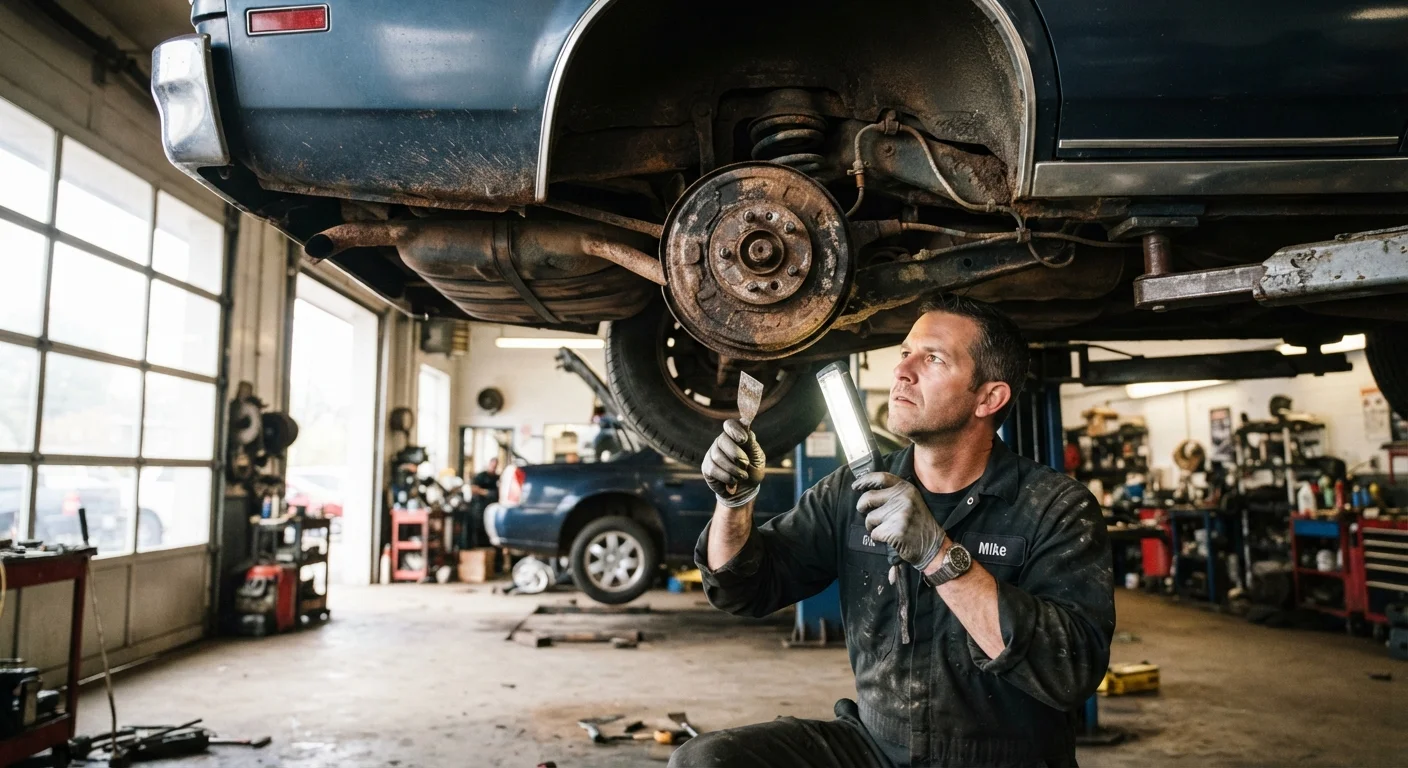
Putting off a small rust spot on the body or undercarriage.
Why it happens: Surface rust seems cosmetic and non-urgent, and bodywork feels expensive, leading drivers to defer it indefinitely.
Safety Is Never a Deferrable Expense
Certain repairs — worn brake pads, cracked tires, failing steering components — directly affect your ability to control the vehicle. These are not candidates for a 'wait and see' approach. If you are unsure whether an issue affects vehicle safety, have a qualified mechanic assess it before driving further.
It's also worth separating real maintenance needs from outdated conventional wisdom. Our guide to car maintenance myths can help you distinguish between services your vehicle genuinely needs and habits that persist mostly out of tradition.
Building a Habit of Timely Attention
The antidote to deferred maintenance isn't a complicated system — it's a consistent, modest commitment to noticing and acting. A few practical approaches make this realistic for most drivers:
- Review your owner's manual once. Most drivers have never read the maintenance schedule section. It takes 20 minutes and tells you exactly what your vehicle actually needs and when.
- Log repairs and services. A simple note in your phone or a paper log in the glove box lets you track what's been done and flag what's approaching. This also protects resale value.
- Treat unusual noises and warning lights as messages, not nuisances. A noise that changes with speed, braking, or turning is the vehicle pointing at a specific system. Investigate before dismissing.
Ignored Warning Lights Can Hide Cascading Damage
A dashboard warning light that seems minor — like a low coolant indicator or a check engine light — can signal the beginning of a failure chain. Driving on a legitimate engine warning without diagnosis risks turning a sensor fix into an engine overhaul. Always get warning lights read by a mechanic before assuming they are trivial.
When you're weighing whether to handle a repair yourself or bring in a professional, our garage vs. shop comparison lays out which tasks most drivers can realistically manage at home. And if parts cost is a concern, understanding OEM vs. aftermarket options can help you make a confident, cost-aware choice without sacrificing quality.
Deferred repairs don't disappear — they accumulate interest. The most cost-effective maintenance schedule is simply the one you actually follow.