

| Check engine oil | Monthly or every 1,000 miles (General industry guidance; consult owner's manual) |
| Coolant flush interval | Every 2–5 years (varies by type) (Refer to vehicle manufacturer schedule) |
| Brake fluid replacement | Approximately every 2 years (Most OEM recommendations) |
| Transmission fluid change | Every 30,000–60,000 miles (conventional); some sealed units never (Varies significantly by vehicle and fluid type) |
| Power steering fluid check | Every 6 months or with oil changes (Only applicable to hydraulic systems) |
| Windshield washer fluid | Top off as needed; seasonal formula recommended |
Why Fluids Matter More Than Most Drivers Realize
Your car is essentially a system of controlled forces — combustion, friction, heat, and pressure — and fluids are what keep all of it from tearing itself apart. When levels drop or fluids degrade, the damage often builds silently, until it becomes expensive. The good news: most fluid checks take under five minutes and require no tools beyond a clean rag.
Before checking any fluid under the hood, park on a level surface and let the engine cool for at least 10–15 minutes. Hot engines can pressurize reservoirs and distort level readings. Some checks — transmission fluid, for example — may require a warm engine depending on the vehicle; your owner's manual will specify.
| Check engine oil | Monthly or every 1,000 miles (General industry guidance; consult owner's manual) |
| Coolant flush interval | Every 2–5 years (varies by type) (Refer to vehicle manufacturer schedule) |
| Brake fluid replacement | Approximately every 2 years (Most OEM recommendations) |
| Transmission fluid change | Every 30,000–60,000 miles (conventional); some sealed units never (Varies significantly by vehicle and fluid type) |
| Power steering fluid check | Every 6 months or with oil changes (Only applicable to hydraulic systems) |
| Windshield washer fluid | Top off as needed; seasonal formula recommended |
The Six Fluids to Monitor and What to Look For
Engine Oil
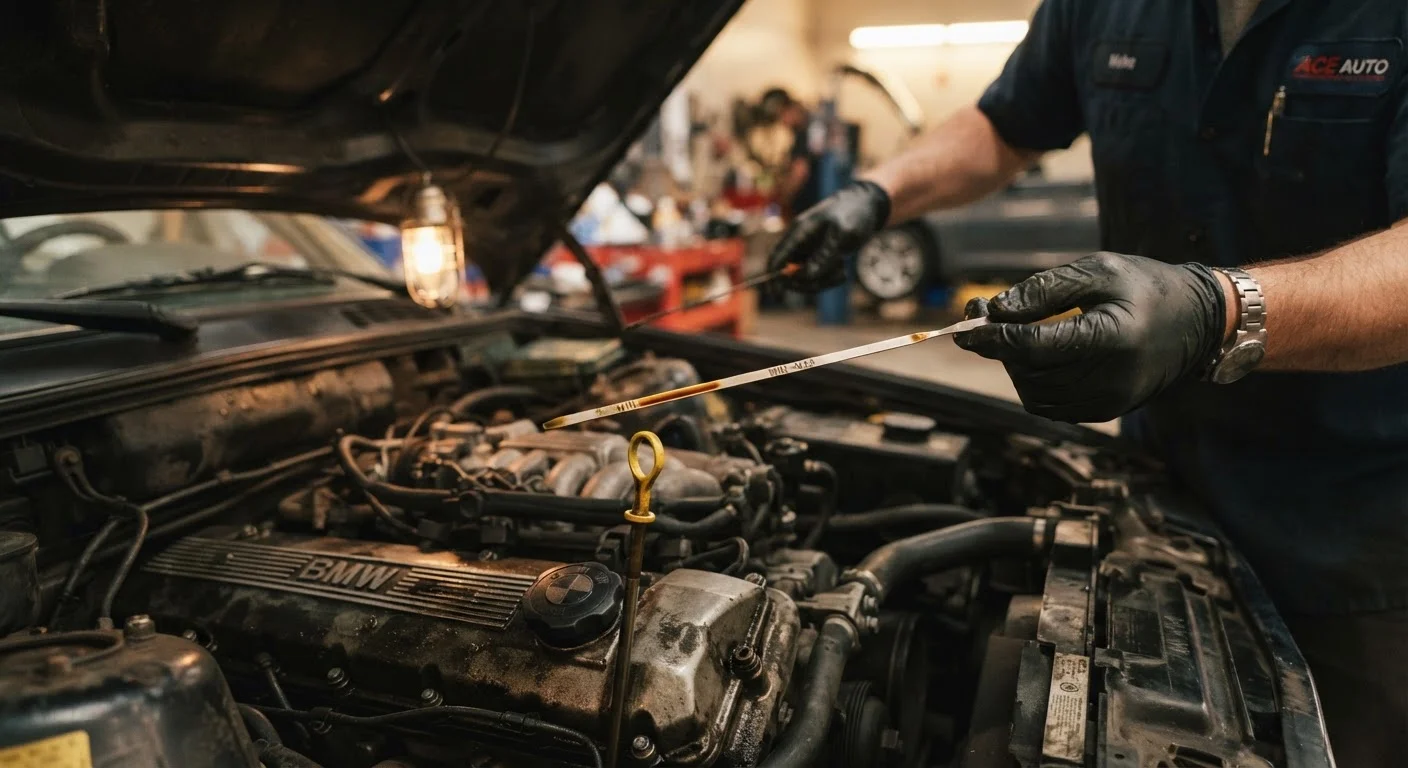
Engine oil lubricates moving parts, reduces heat from friction, and carries contaminants away from the engine. Pull the dipstick, wipe it clean, reinsert fully, then pull it again. The oil should fall between the MIN and MAX marks. Healthy oil is amber to light brown; black, gritty, or milky oil signals it's time to act. For a deeper look at formulation choices, see our guide to conventional, synthetic, and blend motor oils.
Coolant (Antifreeze)
Coolant regulates engine temperature and prevents freezing in winter. Check the translucent overflow reservoir — never open the radiator cap on a hot engine, as pressurized coolant can cause serious burns. The level should sit between LOW and FULL. Coolant should be brightly colored (green, orange, or pink depending on type); a rusty or murky appearance means it needs flushing.
Brake Fluid
Brake fluid transmits the force from your pedal to the brake calipers. Locate the small reservoir near the firewall on the driver's side. Level should be between MIN and MAX. Brake fluid naturally absorbs moisture over time, which lowers its boiling point and reduces stopping performance — most manufacturers recommend replacement every two years regardless of level.
Transmission Fluid
Transmission fluid lubricates gears and enables smooth shifting. Many modern vehicles have a sealed transmission with no user-accessible dipstick; check your owner's manual before assuming. When accessible, healthy fluid is reddish and nearly clear — dark brown or burnt-smelling fluid indicates deterioration.
Power Steering Fluid
This fluid allows the steering wheel to turn with minimal effort. Many newer vehicles use electric power steering and have no hydraulic fluid at all. If yours does, the reservoir is typically labeled near the steering column. Low levels often point to a leak, which a qualified mechanic should evaluate.
Windshield Washer Fluid
It won't affect engine performance, but running out mid-drive in dirty conditions is a safety hazard. Use a purpose-made washer fluid — plain water can freeze and damage the pump in cold climates.
Dipstick
A long metal rod inserted into the engine oil reservoir used to measure oil level and assess its condition. Most are marked with MIN and MAX indicators.
Coolant (Antifreeze)
A fluid, usually water mixed with ethylene glycol, that circulates through the engine to regulate operating temperature and prevent freezing or boiling.
Brake Fluid
A hydraulic fluid that transfers force from the brake pedal to the wheel calipers or drums. It absorbs moisture over time, which degrades its performance.
Viscosity
A measure of a fluid's resistance to flow. Motor oil viscosity ratings (e.g., 5W-30) indicate how the oil behaves at different temperatures.
Sealed Transmission
A transmission designed without a user-accessible dipstick or fill port, requiring dealer or shop equipment to service. Common in many modern vehicles.
Overflow Reservoir
A translucent plastic tank connected to the radiator that holds excess coolant and allows level monitoring without opening the pressurized radiator cap.
Putting It All Together
Running a quick fluid check every month — or before a long drive — costs nothing and can catch problems before they escalate. Many of the assumptions drivers carry about maintenance intervals are outdated; our look at common car maintenance myths covers which old rules still hold and which ones waste money.
Fluid needs also shift with seasons — engine coolant condition matters more heading into summer heat, while washer fluid formulation matters in winter. Our seasonal car care guide walks through what to inspect as conditions change.
If you notice any fluid that's critically low, discolored, or has an unusual smell, have it inspected by a qualified mechanic promptly. Driving with compromised fluids — especially brake fluid or coolant — can lead to unsafe conditions and significant mechanical damage. When in doubt, pull over and get a professional assessment rather than continuing to drive.
For a structured pre-trip review, the pre-road trip checklist includes fluids alongside tires, lights, and emergency kit essentials.