

Key Takeaways
Start here
Why Simplicity Is the Right Starting Point
Core steps
The Three Non-Negotiables: Cleanse, Moisturize, Protect
Know your skin
Understanding Your Skin Before You Shop
Layer correctly
How to Layer Products Without Getting It Wrong
Level up
When and How to Add Extras
Why Simplicity Is the Right Starting Point
Skincare marketing thrives on complexity — 12-step routines, proprietary delivery systems, ingredient stacks that require a chemistry degree to decode. For anyone starting from zero, this noise is the single biggest barrier to actually building a habit. The evidence, however, points in a different direction: a short, consistent routine outperforms an elaborate one that gets abandoned after two weeks.
Think of building a skincare routine the same way you'd approach building a sustainable fitness habit — the fundamentals practiced reliably matter far more than optimizing every variable at once. Start with what you'll actually do every morning and night, and add complexity only when the basics feel effortless.
Commit to Two Weeks Before Judging
Give any new routine at least two full weeks before deciding it isn't working. Skin often experiences a brief adjustment period when you switch products — especially if you're introducing a cleanser for the first time. Reactions in the first few days don't always indicate incompatibility.
The Three Non-Negotiables: Cleanse, Moisturize, Protect
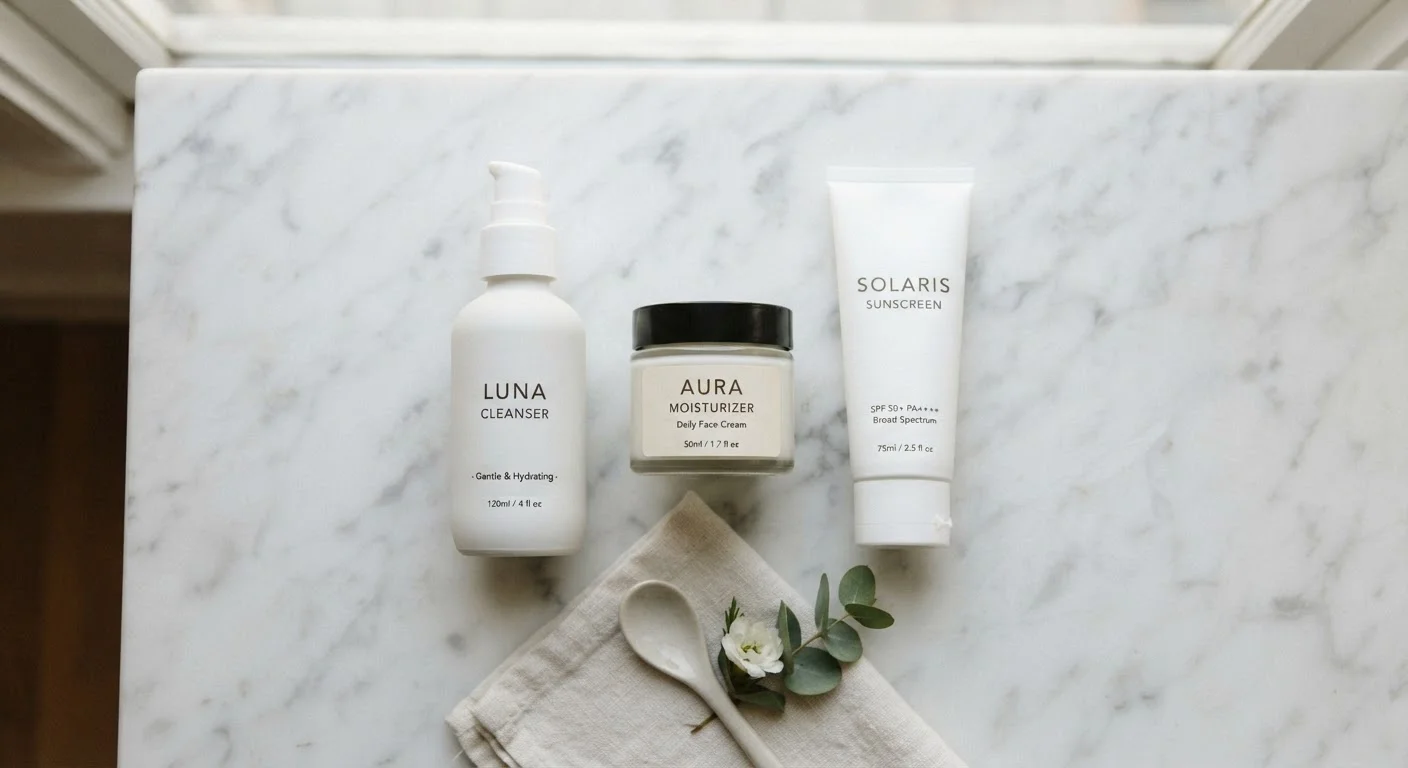
Three steps cover the overwhelming majority of what daily skincare needs to accomplish for most people.
Cleanser
A gentle, low-pH cleanser removes the day's accumulation of sebum, pollutants, and sunscreen without stripping the skin barrier. The goal is a clean canvas, not squeaky-tight skin — that sensation often signals over-cleansing. Cream or gel cleansers without fragrance or alcohol are broadly well-tolerated across skin types.
Moisturizer
Moisturizers support the skin barrier by sealing in water (occlusives), drawing moisture into the skin (humectants like hyaluronic acid), and replenishing lipids (emollients). Even oily skin benefits from a lightweight moisturizer — skipping it can prompt the skin to overproduce sebum. Seasonal shifts can change what your moisturizer needs to do; our piece on why moisturizers underperform in winter explains the underlying reasons.
SPF
Broad-spectrum sunscreen — meaning protection against both UVA and UVB radiation — is the most evidence-supported anti-aging and skin-protection step available without a prescription. A minimum SPF 30 is widely recommended by dermatology organizations for daily use. For a deeper look at application habits, see our overview of sun protection habits dermatologists recommend.
Understanding Your Skin Before You Shop
Buying products before understanding your skin type is one of the most common beginner mistakes. It leads to products that feel wrong, reactions that could have been avoided, and a routine that doesn't stick.
Skin barrier
The outermost layer of skin that acts as a protective shield, keeping moisture in and irritants out. A healthy barrier is the foundation of most skincare goals.
Humectant
An ingredient that draws water from the environment or deeper skin layers to the surface. Hyaluronic acid and glycerin are common examples found in moisturizers.
Broad-spectrum SPF
A sunscreen that protects against both UVA rays (which penetrate deeply and contribute to aging) and UVB rays (which cause sunburn). Both types can damage skin DNA.
Occlusive
An ingredient that forms a physical barrier on the skin surface to slow water loss. Petrolatum and certain plant-based waxes are common examples.
Active ingredient
A skincare ingredient with a targeted, evidence-supported function — such as retinoids for cell turnover or niacinamide for barrier support. These require more care in selection and layering.
Emollient
An ingredient that softens and smooths skin by filling gaps between skin cells. Many moisturizers contain emollients like squalane or fatty acids alongside humectants.
A simple self-assessment: wash your face with a gentle cleanser, pat dry, wait one hour without applying anything, then observe. If skin feels tight or flaky, it skews dry. If it looks shiny across the entire face, it's likely oily. Shine concentrated on the forehead, nose, and chin — with dryness elsewhere — suggests combination. Redness, stinging, or frequent reactions point toward sensitivity, which warrants extra care when introducing any new product.
Once you have a working hypothesis about your skin type, you can map it to appropriate textures and ingredients. Our guide to routines across skin types goes deeper on this matching process.
How to Layer Products Without Getting It Wrong
Product sequencing isn't arbitrary — it affects how well each step absorbs and whether actives reach their target layers of the skin. The general principle for the morning routine is: cleanser → serum (if using) → moisturizer → SPF, always finishing with sunscreen as the outermost layer.
Thick, occlusive products applied before thin, water-based ones can physically block absorption. SPF layered under moisturizer is likely to be diluted and unevenly distributed. These aren't theoretical concerns — they translate directly into reduced efficacy.
For a comprehensive breakdown of sequencing logic, including how different active ingredients interact, see our detailed guide on layering skincare products without canceling their effects.
Don't Mix Actives Without Research
Certain active ingredients can interact negatively when layered — for example, using a vitamin C serum at the same time as a niacinamide-heavy product has been debated for potential efficacy concerns, and mixing retinoids with strong exfoliating acids can increase skin sensitivity significantly. As a beginner, stick to the three-step core until you've learned how individual ingredients behave.
When and How to Add Extras
Once your three-step routine feels automatic — typically after four to six weeks — you're in a better position to consider additions. Common next steps include a chemical exfoliant (like a low-concentration AHA or BHA used once or twice weekly), a vitamin C serum for antioxidant support in the morning, or a retinoid at night for cell turnover support.
The cardinal rule: introduce one new product at a time, spaced at least two weeks apart. This makes it possible to identify what's working — and what isn't. When in doubt, patch test any new product before full-face application.
Morning and evening routines eventually diverge as you add more steps. Actives like retinoids are generally reserved for nighttime because of photosensitivity concerns, while antioxidants are most useful in the morning before sun exposure. For a clear breakdown of this split, see our guide on AM vs. PM skincare differences.
AM vs. PM Skincare Guide
Once you have the basics down, this article explains how morning and evening routines diverge and which actives belong in each window.
Patch Testing Skincare: Steps Most People Skip
A practical walkthrough for testing new products safely before applying them to your full face — essential reading before adding any new item to your routine.
Skincare Across Skin Types
Maps ingredient types and product textures to oily, dry, combination, and sensitive skin profiles so you can select products with more confidence.
This article is for general informational and educational purposes only and is not a substitute for professional dermatological or medical advice. If you have a skin condition, persistent reactions, or concerns about your skin health, consult a qualified dermatologist or healthcare provider.