

Key Takeaways
Our Verdict
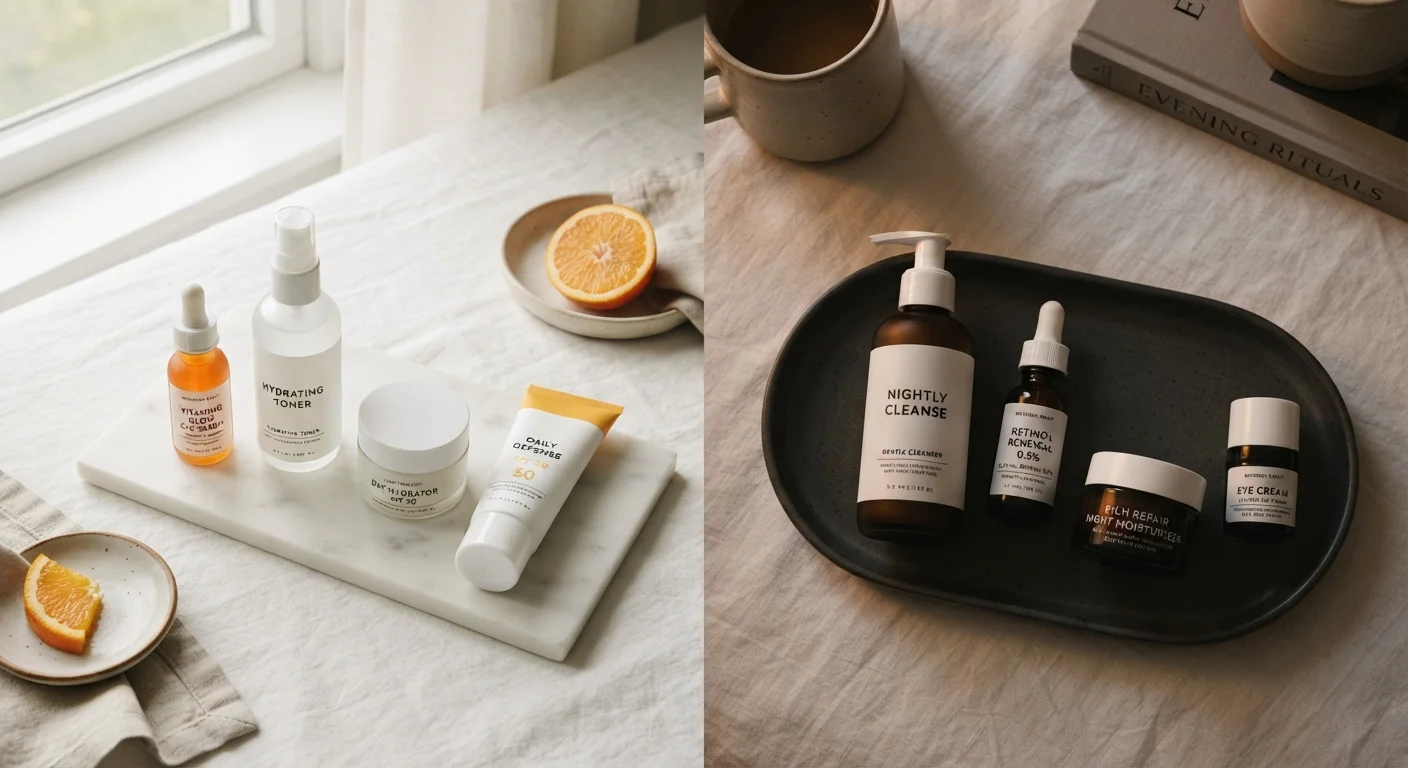
AM and PM routines are not interchangeable — they serve distinct biological functions tied to your skin's circadian rhythm. Morning calls for antioxidants and broad-spectrum SPF to defend against environmental stressors, while evening is the window for actives that promote cellular turnover and deeper repair. A well-structured routine assigns each ingredient to the time of day where it performs best.
| Best for | Recommended |
|---|---|
| Those new to building a structured routine | Start with a minimal AM routine: cleanser, moisturizer, SPF |
| Those targeting texture, tone, or signs of aging | Prioritize PM actives like retinoids or AHAs with a nourishing night moisturizer |
| Those with sensitive or reactive skin | Keep both routines simple, introduce actives one at a time, and consult a dermatologist |
Why AM and PM Routines Have Different Jobs
Your skin operates on a circadian rhythm — the same roughly 24-hour biological clock that governs sleep and hormone cycles. In the morning, skin shifts into a defensive mode: sebum production increases, and exposure to UV radiation, pollution, and free radicals begins. By evening, the skin pivots toward repair: cell turnover accelerates, and transepidermal water loss (the rate at which moisture escapes through the skin's surface) tends to rise overnight.
This biological rhythm is why dermatologists and estheticians consistently recommend structuring routines around purpose, not just habit. An AM routine that prioritizes antioxidant protection and sun defense complements the skin's natural morning physiology. A PM routine stacked with ingredients that support cellular renewal works with — rather than against — the skin's overnight repair processes.
If you're building a skincare routine from the ground up, understanding this AM/PM logic is one of the most important foundations to establish early.
What Belongs in the Morning Routine
The AM routine is fundamentally about protection. Three categories of ingredients are most relevant here:
- Antioxidants — Vitamin C (l-ascorbic acid) is the most studied option for morning use. It helps neutralize free radicals generated by UV exposure and pollution, and some research suggests it may complement the effectiveness of sunscreen. Niacinamide is another well-tolerated morning antioxidant that also supports the skin barrier.
- Hydration and barrier support — Hyaluronic acid, glycerin, and ceramides are time-neutral ingredients that work well in the morning, helping skin stay plump and resilient throughout the day.
- Broad-spectrum SPF — This is non-negotiable. Dermatologists consistently identify daily SPF use as the single most impactful step for preventing photoaging and reducing skin cancer risk. SPF should always be the final skincare step before makeup, applied generously to all exposed skin.
Storing Vitamin C Correctly
Vitamin C serums can be sensitive to light and air. Store them in a cool, dark location and replace the bottle if the formula turns orange or brown — oxidized vitamin C loses much of its antioxidant activity. Some formulations use more stable derivatives like ascorbyl glucoside, which may have a longer shelf life.
Vitamin C serums can be sensitive to light and air. Store them away from direct sunlight and replace the bottle if the formula turns orange or brown — oxidized vitamin C loses much of its antioxidant activity.
What Belongs in the Evening Routine
The PM routine is where treatment actives shine. Without incoming UV exposure and with cellular repair at its peak, nighttime offers the ideal environment for ingredients that would otherwise carry photosensitivity risks or simply work better undisturbed.
- Retinoids — Retinol and prescription-strength retinoids (like tretinoin) promote cell turnover and are among the most evidence-backed ingredients for addressing fine lines, uneven texture, and acne. They are photosensitive and should be used only at night. Beginners should start with lower concentrations and increase gradually; anyone with specific skin concerns should consult a dermatologist before starting.
- Exfoliating acids — AHAs (alpha hydroxy acids like glycolic and lactic acid) and BHAs (beta hydroxy acids like salicylic acid) increase photosensitivity and are generally better suited to PM use. For a full reference on how these actives work, see our plain-language guide to active ingredients.
- Richer occlusives and barrier-repair ingredients — Shea butter, squalane, and peptide-rich night creams complement the skin's elevated overnight repair activity.
| AM Routine | PM Routine | |
|---|---|---|
| Primary goal | Protection from environmental stressors | Repair and cellular renewal |
| SPF | Required — final step before makeup | Not needed or appropriate |
| Retinoids | Not recommended — photosensitive | Ideal — works with overnight repair cycle |
| Exfoliating acids (AHAs/BHAs) | Generally avoid — increase UV sensitivity | Preferred timing for most skin types |
| Vitamin C / antioxidants | Highly effective — defends against UV damage | Can be used but less targeted benefit |
| Moisturizer | Lighter texture often preferred | Richer formula supports overnight barrier repair |
| Cleanser | Gentle rinse or mild cleanser | Full cleanse to remove makeup, SPF, and pollutants |
Targeting hyperpigmentation specifically? The timing of brightening actives matters — our guide on hyperpigmentation types and treatment ingredients explains how to align those choices with your routine structure.
What Works at Both Times — and What to Watch
Several routine staples are genuinely time-flexible. Cleansing is appropriate morning and night, though many people with drier skin prefer a water rinse or gentle cleanse in the morning rather than a full foaming wash. Moisturizer is a twice-daily staple for virtually every skin type, though the formula may differ — lighter textures for AM, richer formulas for PM.
Where problems arise is in ingredient conflicts and redundancy. Layering retinoids with AHAs in the same routine, for instance, can increase irritation without proportionally increasing benefit. Similarly, using the same active in both routines can compound sensitivity. See our article on skincare ingredient overlaps for guidance on auditing your current stack.
Active Ingredients Require Personalized Guidance
Retinoids, exfoliating acids, and other treatment actives carry real irritation potential, especially when combined or introduced too quickly. People who are pregnant, nursing, or managing a chronic skin condition should consult a board-certified dermatologist before incorporating these ingredients. This article is for general informational purposes and is not a substitute for professional medical or dermatological advice.
For personalized guidance on sequencing actives — especially if you have sensitive, reactive, or condition-prone skin — consult a board-certified dermatologist. General product information is not a substitute for professional assessment of your individual skin needs.
Product layering order also influences how well each ingredient is absorbed. Our guide to layering skincare products covers sequencing logic that applies to both your AM and PM routines.