

Key Takeaways
Why Patch Testing Gets Skipped — and Why That's a Problem
Most people open a new product, apply it to their face, and wait. If the reaction is mild, they push through. If it's severe, they stop — and spend days managing irritated, inflamed skin. This is the exact scenario a patch test is designed to prevent.
Patch testing is a deliberate, low-risk method of exposing a small area of skin to a new product before committing to full-face or full-body application. It's a standard practice in clinical dermatology for diagnosing contact allergies, and a simplified version translates directly to everyday skincare routines. Before you add any new product to a layered routine, confirming it's tolerated on its own is a foundational step.
Skipping it is understandable — packaging is appealing, the formula smells good, you've read good things — but the skin's immune and barrier response doesn't care about any of that. Reactions can emerge hours or even days after first contact, which means a rushed application gives you no useful information.
What you will need
How to Patch Test a New Skincare Product Correctly
The process is straightforward but precise. Cutting corners at any stage reduces the reliability of the result.
Choose the right test site
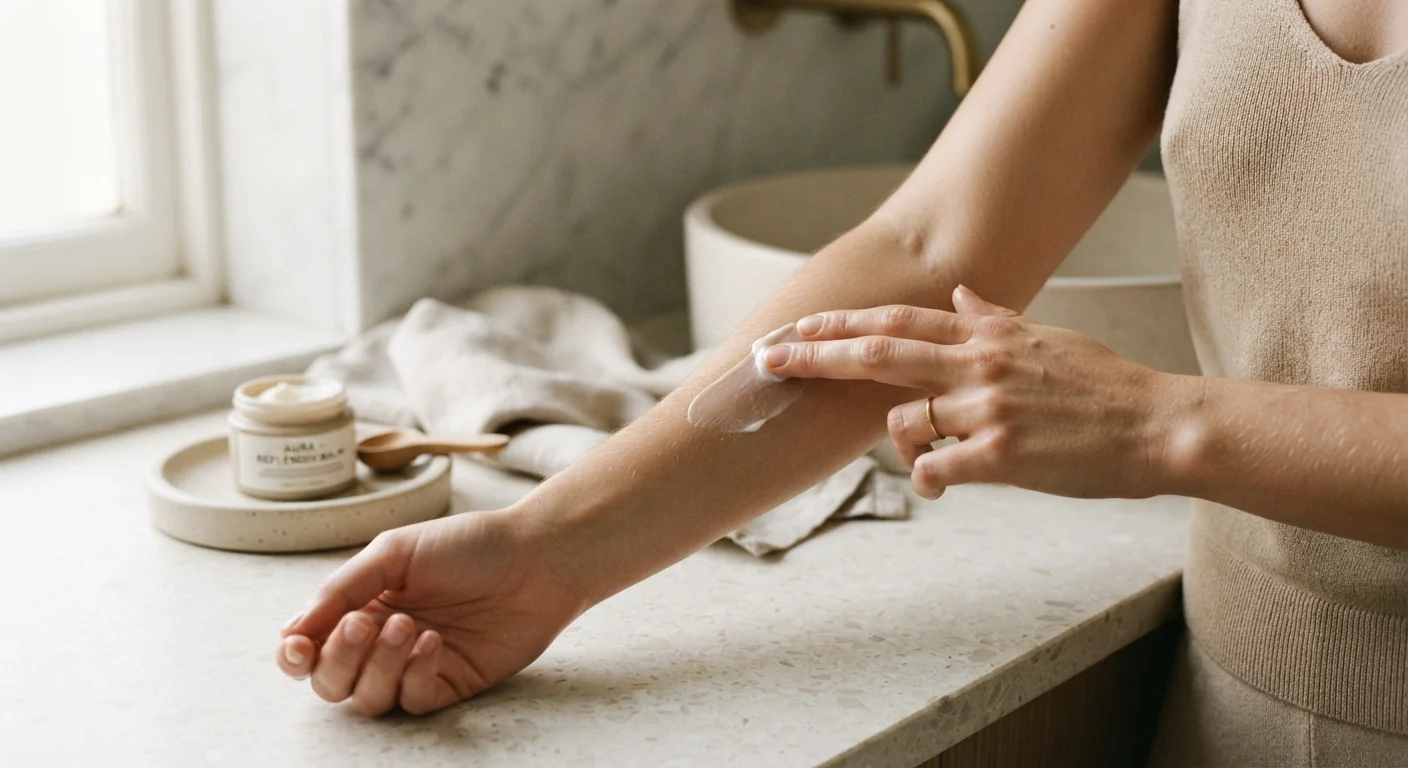
Apply the product to the inner forearm, about two inches below the crease of the elbow. This area has skin that's relatively thin and responsive — making reactions visible — but is less reactive than your face and easier to monitor. Avoid the neck or behind the ear, which are commonly suggested but harder to observe and more prone to irritation from incidental contact.
Clean and dry the test area
Gently wash the forearm area with a plain, unscented cleanser and pat dry. Allow the skin to return to its normal state for 10–15 minutes before applying anything. Residue from other products — especially actives — can interfere with the result.
Apply a small, controlled amount
Use a pea-sized amount of the product — or a single thin layer for serums and oils. Apply it to a coin-sized area and leave it undisturbed. Do not rub extensively or layer it over other products. If the product is a wash-off formula (cleanser, mask), apply for the duration the packaging recommends, then rinse — this mimics real-world use.
Observe for 24 to 72 hours
Check the site at 15 minutes, 24 hours, and 48 hours. For high-potency actives such as retinoids, chemical exfoliants, or vitamin C derivatives, extend observation to 72 hours. Keep the area uncovered and avoid submerging it in water for extended periods during testing. Note any changes: redness, warmth, swelling, itching, flaking, or breakouts.
High-Active Products Deserve Extra Time
Retinoids, AHAs (alpha hydroxy acids), BHAs (beta hydroxy acids), and high-concentration vitamin C are the categories most likely to produce delayed responses. Dermatologists generally recommend a full 72-hour window for these, rather than the standard 24–48 hours. Patience here pays off.
If you're still building out your baseline routine, start with the core steps — cleanser, moisturizer, and SPF — before introducing any products that require patch testing.
Reading the Results — and What to Do Next
Not every reaction looks the same. Redness, itching, small bumps, or flaking at the test site are all signals to stop and reassess. A stinging sensation immediately after application may indicate the product's pH is incompatible with your current barrier state rather than a true allergy. Delayed redness or bumps appearing after 24 hours are more likely a sensitivity or contact reaction to a specific ingredient.
No reaction at the test site after the full observation window is a reasonable green light for full application — but start gradually. Apply once every other day for the first week rather than twice daily, especially with potent actives like retinoids or alpha hydroxy acids. It's also worth reviewing the ingredient list before you commit to understand what you're testing and flag any known sensitivities.
If a reaction does occur, wash the area with a gentle cleanser and apply an unscented moisturizer to support barrier recovery. Persistent redness, swelling, or blistering warrants professional evaluation. A dermatologist can conduct formal patch testing to identify specific allergens — this general guidance is informational only and is not a substitute for medical advice.
Reactions on the Face Can Escalate Quickly
If you bypass patch testing and apply directly to the face, even a mild sensitivity can affect a large surface area — including around the eyes, which is particularly vulnerable. If you experience sudden swelling, hives, or difficulty breathing after applying any skincare product, seek emergency medical care immediately. These symptoms may indicate a systemic allergic reaction.
For more on managing ingredient overlaps and avoiding redundant actives, see how to identify when two products are doing the same job.