

| Framework type | Descriptive aesthetic categorization system |
| Typical archetype count | 7–12 categories depending on the framework |
| Most common outcome | A blend of 2–3 archetypes, not one exclusive type |
| Primary use case | Wardrobe editing, intentional shopping, and style communication |
| Related frameworks | Seasonal color analysis, body proportion theory, capsule wardrobe method |
What Style Archetypes Are — and Aren't
A style archetype is a named aesthetic category that clusters together specific silhouettes, color palettes, fabrics, and cultural references. Think of archetypes as shorthand: instead of explaining that you prefer structured tailoring, muted earth tones, and heritage materials, you might simply identify with the Classic or Old Money archetype — and anyone familiar with the framework instantly understands what that signals.
The framework is descriptive, not prescriptive. It offers a vocabulary for personal taste, not a dress code. Most people find that they sit at the intersection of two or three archetypes rather than belonging cleanly to one. That overlap is useful data, not a flaw in the system.
Style archetypes are also distinct from seasonal color analysis, which focuses on your natural coloring rather than aesthetic preference. The seasonal colour palette system addresses a different question entirely — which hues work with your complexion — while archetypes address what kind of visual story you want to tell.
| Framework type | Descriptive aesthetic categorization system |
| Typical archetype count | 7–12 categories depending on the framework |
| Most common outcome | A blend of 2–3 archetypes, not one exclusive type |
| Primary use case | Wardrobe editing, intentional shopping, and style communication |
| Related frameworks | Seasonal color analysis, body proportion theory, capsule wardrobe method |
The Core Archetypes: A Practical Reference
Different practitioners name and define archetypes differently. The most widely circulated frameworks tend to include between seven and twelve categories. The following represents a consensus of commonly used archetypes across style education contexts:
- Classic / Timeless: Clean lines, neutral palettes, quality-forward fabrication. Prioritizes longevity over trend.
- Romantic: Soft silhouettes, florals, draped fabrics, and feminine detailing. Often features blush tones, lace, or ruffled edges.
- Edgy / Avant-Garde: Structured or deconstructed pieces, monochromatic darks, unconventional layering, and statement hardware.
- Bohemian: Relaxed silhouettes, natural fibers, layered textures, and folk-inspired prints. Prioritizes ease and artisan detail.
- Minimalist: Restrained palette, precise tailoring, and a preference for negative space — both in outfits and in a curated wardrobe overall.
- Maximalist / Eclectic: Intentional pattern mixing, saturated color, and layered accessories. Visual abundance is the point, not a mistake.
- Sporty / Athleisure: Performance fabrics, utility-forward design, and athletic silhouettes adapted for everyday wear.
- Preppy / Collegiate: Heritage details, structured outerwear, and a restrained color story rooted in Ivy League tradition.
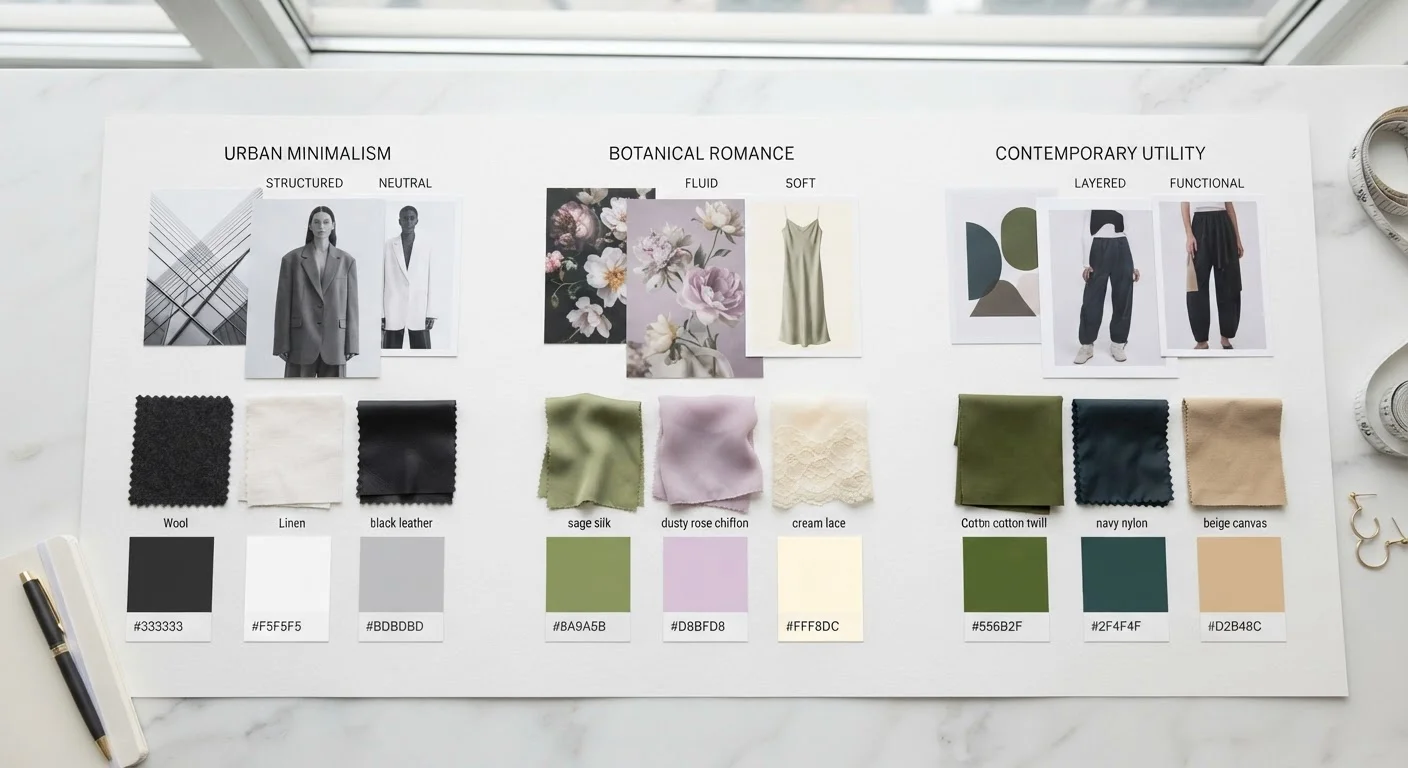
For a deeper look at how visual references can help you identify which archetypes resonate, style moodboarding is a practical next step.
Style archetype
A named aesthetic category defined by recurring patterns in silhouette, color, fabric, and cultural reference. Used as shorthand for identifying and communicating personal taste.
Archetype blend
The combination of two or more archetypes that together more accurately describe an individual's aesthetic than any single category alone.
Capsule wardrobe
A curated, intentionally small collection of versatile clothing items that work cohesively together, often built around a consistent aesthetic or archetype.
Visual vocabulary
The shared set of aesthetic terms — colors, silhouettes, textures, references — that allow people to describe and recognize a style direction without ambiguity.
How to Use the Framework Practically
The value of identifying your archetype or archetype blend lies in what it unlocks downstream — specifically, more intentional shopping and editing decisions. When you understand your aesthetic in structural terms, you can evaluate new pieces against a consistent filter rather than reacting impulsively to whatever is in season.
Clarifying your style identity before shopping applies this logic directly: purchases anchored to a defined archetype tend to integrate more cohesively with what's already in your wardrobe, reducing the accumulation of disconnected pieces.
The framework also pairs naturally with texture, pattern, and layering principles — once you know your archetype, you can use those visual tools to add depth within that aesthetic rather than accidentally pulling in conflicting directions.
If you're new to thinking about personal style at all, this foundational guide establishes the groundwork before archetypes become useful.
Archetypes Are a Tool, Not a Label
Style archetypes work best when treated as navigational aids rather than fixed identities. Your aesthetic can and does shift over time — with age, context, lifestyle, and exposure to new references. Revisiting your archetype assessment periodically is more productive than treating your initial identification as permanent.