

Key Takeaways
Start here
Why Personal Style Feels So Intimidating
Understand the foundation
What Personal Style Actually Is
Take action
How to Start Discovering Your Style
Work with what you have
Building from What You Already Own
Avoid the pitfalls
Common Missteps to Avoid
Why Personal Style Feels So Intimidating
For a lot of people, fashion feels like a conversation happening in another room — one where everyone else seems to know the rules, the references, and the right answers. If you've never thought much about what you wear beyond comfort and practicality, the idea of developing a "personal style" can feel performative, expensive, or simply not for you.
That response is understandable, but it's based on a misconception: that style is something reserved for people with a particular interest, income, or personality. In practice, everyone communicates something through what they wear, whether or not they've ever thought about it deliberately. The question isn't whether you have a style — it's whether yours is intentional.
This guide assumes no prior knowledge, no existing aesthetic, and no budget requirement. It's a starting point for anyone who's looked at their closet and thought: I have no idea what I'm doing.
Reframe what 'knowing about fashion' means
You don't need to know designer names, seasonal trends, or industry history to develop a personal style. The only knowledge that matters at the start is self-knowledge — what feels comfortable, what you're drawn to visually, and what you actually wear. Everything else can come later, or not at all.
What Personal Style Actually Is
Personal style is the consistent visual expression of who you are — the patterns that emerge over time in what you choose to wear and how you wear it. It's not the same as following trends, though trends can inform it. It's not about spending more, owning more, or dressing in a way that others approve of.
The most useful way to think about it: style is a filter. It's how you consistently answer the question, does this feel like me? Over time, those answers add up to something recognizable — a wardrobe with coherence, a look that feels settled rather than scattered.
Personal style
The consistent visual choices that reflect your identity — the patterns in what you wear and how you wear it over time.
Aesthetic
A loosely defined visual sensibility or mood — a shorthand for the kinds of looks, textures, and combinations you're drawn to.
Silhouette
The overall shape an outfit creates — for example, whether it's fitted or relaxed, structured or draped.
Wardrobe coherence
The quality of a wardrobe where pieces work together naturally, so that most combinations feel intentional rather than accidental.
Capsule thinking
An approach to dressing built around a smaller number of versatile, well-chosen pieces rather than a large, varied collection.
For a deeper look at what separates personal style from trend-following, see what personal style actually means. And if some of the terminology you encounter in style conversations feels unfamiliar, a plain-language fashion glossary can help decode the jargon.
How to Start Discovering Your Style
The first step is observation, not shopping. Before you change anything, spend time noticing what you're genuinely drawn to — not what you think you should like or what's currently popular. A few practical methods:
- Notice what catches your eye. When you see someone on the street, in a film, or in a photo whose look you respond to — pause and ask why. Is it the color? The silhouette? The level of formality? The detail?
- Collect images intentionally. A private folder on your phone or a saved collection on any visual platform can reveal patterns quickly. After a few weeks, look at what you've saved and identify the common threads.
- Pay attention to what you actually wear. Not what you own — what you reach for repeatedly. Those are the data points that matter most.
Style discovery is a process of narrowing, not expanding. The goal is to understand your own preferences clearly enough that future decisions become easier, not more complicated. If you're thinking about eventually exploring secondhand or vintage as part of that process, a practical guide to vintage shopping is a useful next step.
Building from What You Already Own
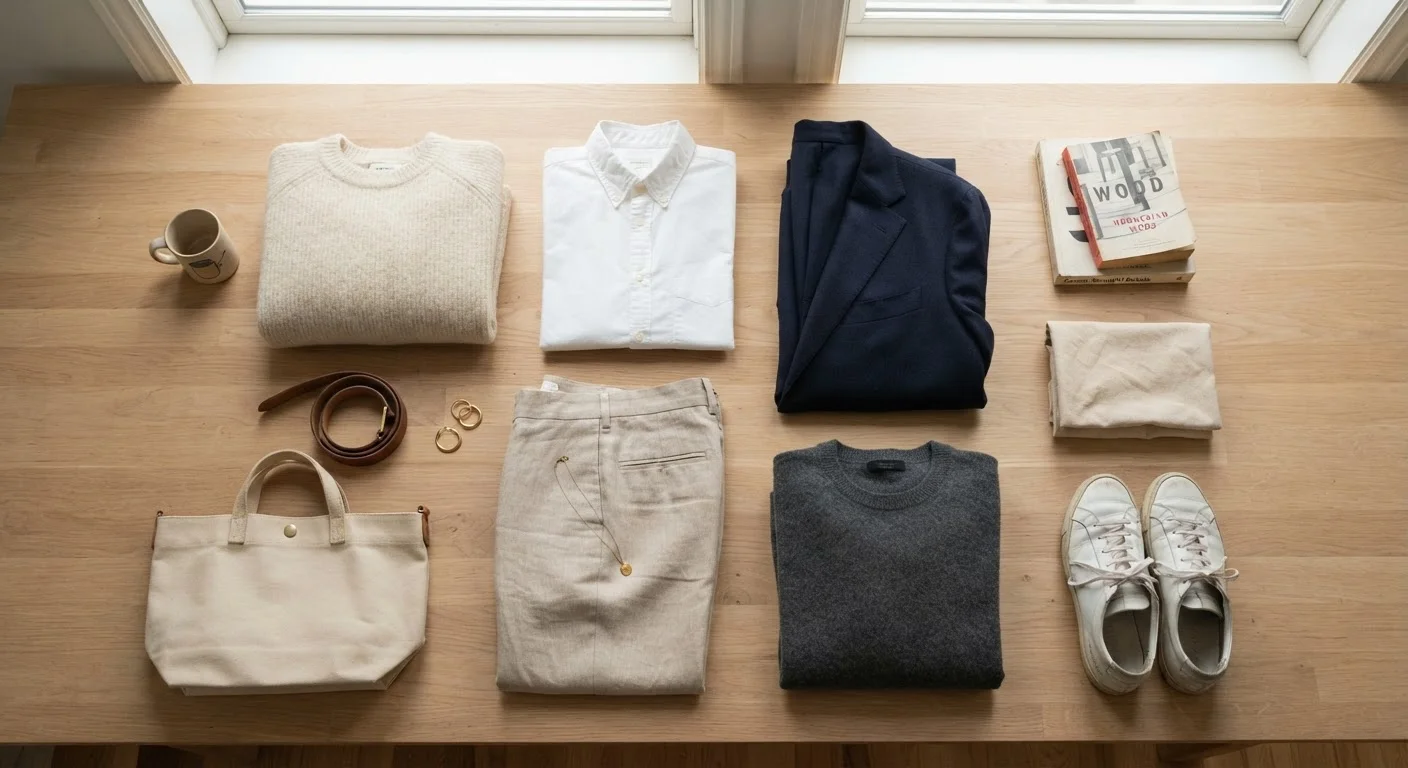
Once you've done some observation, your existing wardrobe becomes the most honest mirror available. Go through what you own with a fresh lens — not to judge it, but to categorize your responses. For each item, notice whether you feel good wearing it, reach for it rarely, or avoid it entirely. Items in that last category are worth examining: why did you buy them, and why don't you wear them? The answers often reveal where your impulses and your actual preferences diverge.
From what's left — the pieces you genuinely like and wear — look for patterns. Are they mostly in a narrow color range? A consistent level of formality? A similar fabric weight or silhouette? Those patterns are the beginning of a personal aesthetic.
What 'editing your wardrobe' really means
Editing doesn't mean throwing everything out. It means assessing honestly and removing only what genuinely doesn't serve you. A single pass through your closet with a critical eye — without pressure to replace anything — is often enough to reveal the core of your actual preferences.
Before thinking about adding anything new, it's worth understanding your current starting point clearly. Developing a style identity before shopping explains why this order matters — and how it makes every future purchase more intentional.
Common Missteps to Avoid
Style beginners tend to make a handful of predictable mistakes. Knowing them in advance makes them easier to sidestep.
- Trying to overhaul everything at once. A sudden, wholesale wardrobe reset rarely produces the results people expect — and often leads to regret, wasted spending, and a closet that feels even more incoherent than before. Understanding where all-at-once overhauls go wrong can save you considerable time and money.
- Mistaking trend-following for style. Chasing what's currently popular without filtering it through your own preferences produces a wardrobe that dates quickly and never feels fully yours. The fashion trends hub is useful for awareness, not necessarily imitation.
- Shopping before you have clarity. Adding pieces before you understand your existing patterns tends to compound the problem rather than solve it.
- Treating style as a fixed endpoint. What feels right to you will shift over time. Personal style is a living thing — not a label you apply once and defend forever.
Style development is, above all, a form of self-knowledge. It rewards patience and honest observation far more than spending power or trend awareness. Start with what you already have, pay attention to what you're drawn to, and allow the process to be gradual. That's where durable personal style actually comes from.
What Personal Style Actually Means — and Why It's Not About Trends
A deeper editorial look at what personal style really is, how it differs from trend-following, and how to start defining your own signature aesthetic.
The Vocabulary of Fashion Trends: A Plain-Language Reference
A jargon-free glossary covering the style terminology you're most likely to encounter, from broad aesthetic categories to current trend labels.
Vintage Shopping for the First Time: A Practical Starting Point
An accessible introduction to thrift stores, estate sales, and online vintage — covering how to find, evaluate, and wear secondhand pieces confidently.