

Key Takeaways
Macronutrients
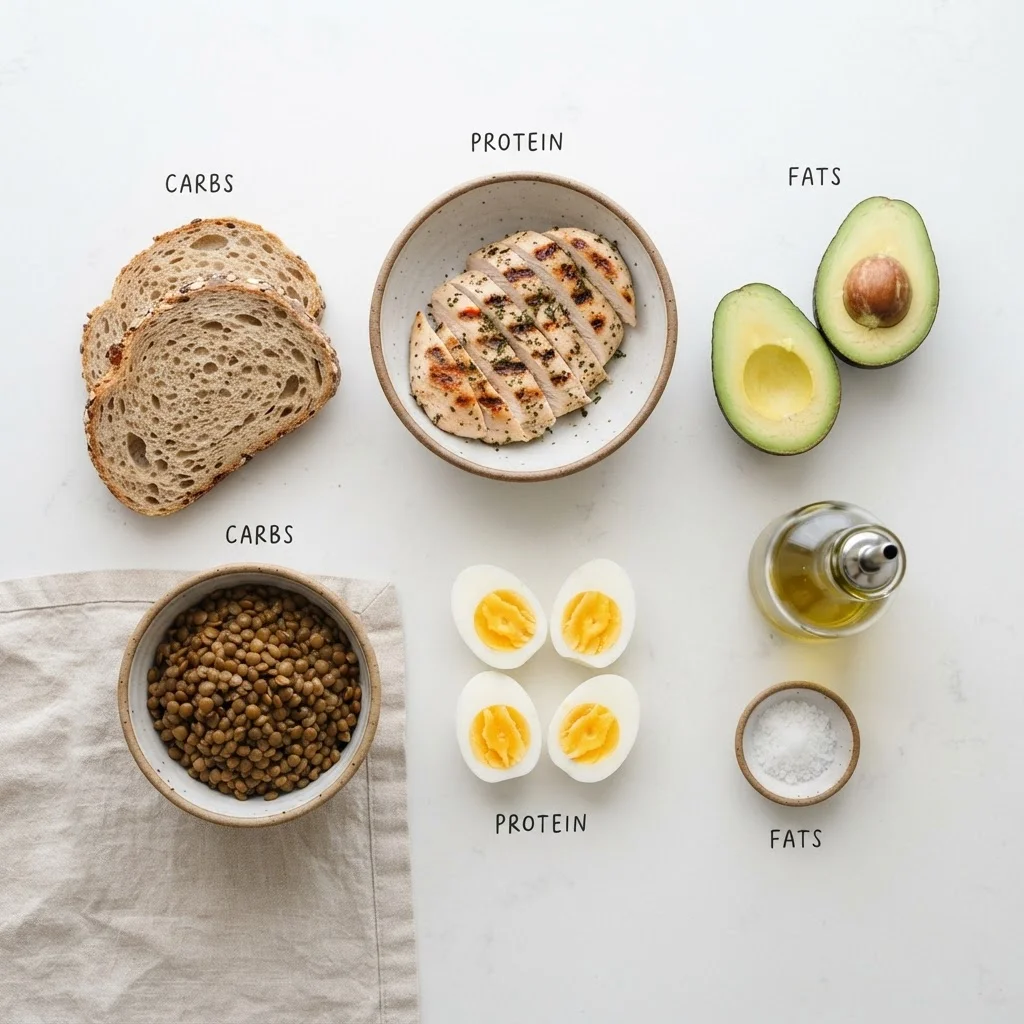
Macronutrients are the three main categories of nutrients — carbohydrates, proteins, and fats — that your body needs in relatively large amounts to produce energy and carry out essential functions. Unlike vitamins and minerals, which are needed in smaller quantities, macronutrients provide the calories that fuel everything from breathing to exercise. Every food you eat contains some combination of these three building blocks.
Each macronutrient provides a specific caloric yield: carbohydrates and proteins supply approximately 4 kilocalories per gram, while fats supply approximately 9 kilocalories per gram.
Carbohydrates: Your Body's Primary Fuel
Carbohydrates are the body's first-choice energy source. When you eat carbs — whether from oats, fruit, legumes, or bread — your digestive system breaks them down into glucose, which cells use directly for fuel. The brain is particularly dependent on glucose; it consumes roughly 20% of your body's total energy despite accounting for only about 2% of its weight.
Not all carbohydrates behave the same way. Simple carbohydrates, found in table sugar and refined grains, are digested quickly and can cause rapid shifts in blood glucose. Complex carbohydrates, found in whole grains, vegetables, and legumes, digest more slowly and come packaged with fiber, which supports digestive health and helps sustain energy levels. Fiber — technically a carbohydrate — is not fully digested, but it feeds beneficial gut bacteria and contributes to feelings of fullness.
The idea that carbohydrates are inherently fattening is a persistent myth. Evidence consistently shows that the source and context of carbohydrate intake matters far more than carbohydrate consumption itself. For a closer look at common food misconceptions, see evidence-based corrections to widespread nutrition myths.
Protein: Building Blocks for Every Cell
Protein is often associated with muscle building, but its responsibilities extend to virtually every system in the body. Proteins are made of amino acids — twenty in total, nine of which are considered essential because the body cannot synthesize them and must obtain them from food. These amino acids are used to repair damaged tissue, produce enzymes and hormones, support immune function, and transport molecules through the bloodstream.
Complete protein sources contain all nine essential amino acids. Animal-derived foods — meat, poultry, fish, eggs, and dairy — are typically complete. Most plant-based sources are lower in one or more essential amino acids, though eating a varied plant-based diet across the day can meet all amino acid needs without supplementation.
“Protein quality matters as much as quantity. Meeting your essential amino acid needs through a varied diet — plant-based or otherwise — is achievable and well-supported by the science.”
— Walter Willett, Professor of Epidemiology and Nutrition, Harvard T.H. Chan School of Public Health
Protein also has a higher thermic effect than carbohydrates or fats, meaning the body expends more energy digesting it — a modest but real metabolic consideration. High-protein meals also tend to promote satiety, which can help with overall calorie regulation, though this is one tool among many rather than a dietary cure-all.
Fats: More Than Just Stored Energy
Dietary fat has long been mischaracterized as something to minimize. In reality, fats are essential — the body cannot manufacture certain fatty acids on its own, and fat-soluble vitamins A, D, E, and K can only be absorbed in the presence of dietary fat. Fats also form the structural backbone of every cell membrane and are critical for producing steroid hormones, including estrogen and testosterone.
The distinction between fat types matters. Unsaturated fats — found in olive oil, nuts, seeds, and fatty fish — are generally associated with cardiovascular benefit in research literature. Saturated fats, found in red meat and full-fat dairy, appear to raise LDL cholesterol when consumed in excess, though the relationship is nuanced and actively studied. Trans fats, largely from partially hydrogenated oils, have been strongly linked to increased cardiovascular risk and have been largely removed from the U.S. food supply through FDA regulation.
A Simple Way to Think About Fat Quality
Rather than tracking grams of each fat type, many nutrition researchers suggest focusing on food sources: prioritize fatty fish, nuts, seeds, and olive oil, and limit highly processed foods that tend to be higher in saturated and trans fats. Whole-food sources of fat generally come with additional nutrients that refined fats lack.
Understanding fat types on food packaging can feel confusing. Our guide on reading a nutrition label without getting lost can help you identify which fats appear in your everyday foods.
Why Balance Matters More Than Elimination
Popular diets frequently promote cutting one macronutrient dramatically — very low fat in earlier decades, very low carbohydrate more recently. While specific dietary patterns can be appropriate for certain medical conditions under professional supervision, the broader evidence base supports dietary variety over extreme restriction for the general population.
Each macronutrient interacts with the others. Eating fat alongside vegetables enhances absorption of fat-soluble nutrients. Pairing protein with carbohydrates can moderate the glycemic response of a meal. Considering macronutrient composition is one piece of a larger nutritional picture that includes essential vitamins and minerals and overall food quality.
45–65%
Recommended calorie share from carbohydrates
According to the Dietary Guidelines for Americans, carbohydrates should make up 45–65% of total daily calories for most adults.
10–35%
Recommended calorie share from protein
The National Academies of Medicine's Acceptable Macronutrient Distribution Range for protein is 10–35% of total daily caloric intake for adults.
20–35%
Recommended calorie share from fat
Dietary Guidelines recommend that fat account for 20–35% of total daily calories, with emphasis on unsaturated fat sources.
For those just beginning to think about nutrition, a grounded starting point for eating well offers a broader framework. And if you want to stretch the nutritional value of what you eat, understanding nutrient density is a practical next step.
This article is for general informational purposes only and does not constitute medical or dietary advice. Individual nutritional needs vary. Consult a registered dietitian or qualified healthcare provider before making significant changes to your diet.