

Key Takeaways
Start here
Why Nutrition Basics Matter
Build understanding
Macronutrients: The Big Three
Go deeper
Micronutrients and Why They Count
See the bigger picture
Food Patterns Over Single Foods
Apply it
Practical First Steps
Why Nutrition Basics Matter
Nutrition information is everywhere — and much of it is contradictory. One headline warns against a food that another declares essential. For beginners, this noise can make eating feel more complicated than it needs to be.
The good news is that the core principles of nutrition are relatively stable and well-supported by decades of research. What you eat over weeks, months, and years shapes energy levels, disease risk, and overall well-being in ways that short-term fads rarely address. Starting with fundamentals — rather than trending diets or single-ingredient fixes — gives you a durable foundation. This article is general health information; it is not medical advice. Always consult a qualified healthcare professional for guidance specific to your situation.
Macronutrients: The Big Three
Every food you eat is built from some combination of three macronutrients: carbohydrates, protein, and fat. Each serves distinct roles, and none is inherently the enemy.
Macronutrient
One of three main nutrient categories — carbohydrates, protein, and fat — that provide the body with energy and structural materials in relatively large amounts.
Micronutrient
Vitamins and minerals needed by the body in small quantities to support functions like immune response, bone strength, and energy metabolism.
Dietary fiber
A type of carbohydrate found in plant foods that the body cannot fully digest; it supports digestive health and helps regulate blood sugar and cholesterol levels.
Dietary pattern
The overall combination of foods and drinks consumed regularly over time, which research uses as a more reliable predictor of health outcomes than individual foods.
Ultra-processed food
Foods manufactured with industrial ingredients and additives — such as emulsifiers, colorings, and flavor enhancers — that go well beyond basic cooking; typically high in added sugar, sodium, and refined fats.
Amino acids
The building blocks of protein; the body uses them to construct and repair tissues, produce hormones, and support many other biological processes.
- Carbohydrates are the body's preferred energy source. Whole-food sources — vegetables, fruits, legumes, and whole grains — also deliver fiber, which supports digestion and sustained energy. Heavily refined versions provide calories with fewer accompanying nutrients.
- Protein supplies amino acids that the body uses to build and repair tissue, produce enzymes, and support immune function. Sources range from animal products like meat, fish, and dairy to plant-based options such as beans, lentils, tofu, and edamame.
- Fat supports brain health, hormone production, and the absorption of fat-soluble vitamins. Unsaturated fats found in foods like olive oil, nuts, and fatty fish feature prominently in dietary patterns linked to favorable health outcomes in research.
A practical takeaway: rather than targeting a precise ratio of macros, focus on the quality and variety of sources within each category. For a research-grounded framework on portioning meals, see our guide to building a balanced plate.
Micronutrients and Why They Count
While macronutrients provide energy, micronutrients — vitamins and minerals — regulate the processes that keep you functioning. They are needed in far smaller amounts but are no less important.
Key examples include iron (oxygen transport), calcium and vitamin D (bone health), B vitamins (energy metabolism), and vitamin C (immune function and tissue repair). Deficiencies in these nutrients can have meaningful health consequences over time.
Make Variety Your Default Strategy
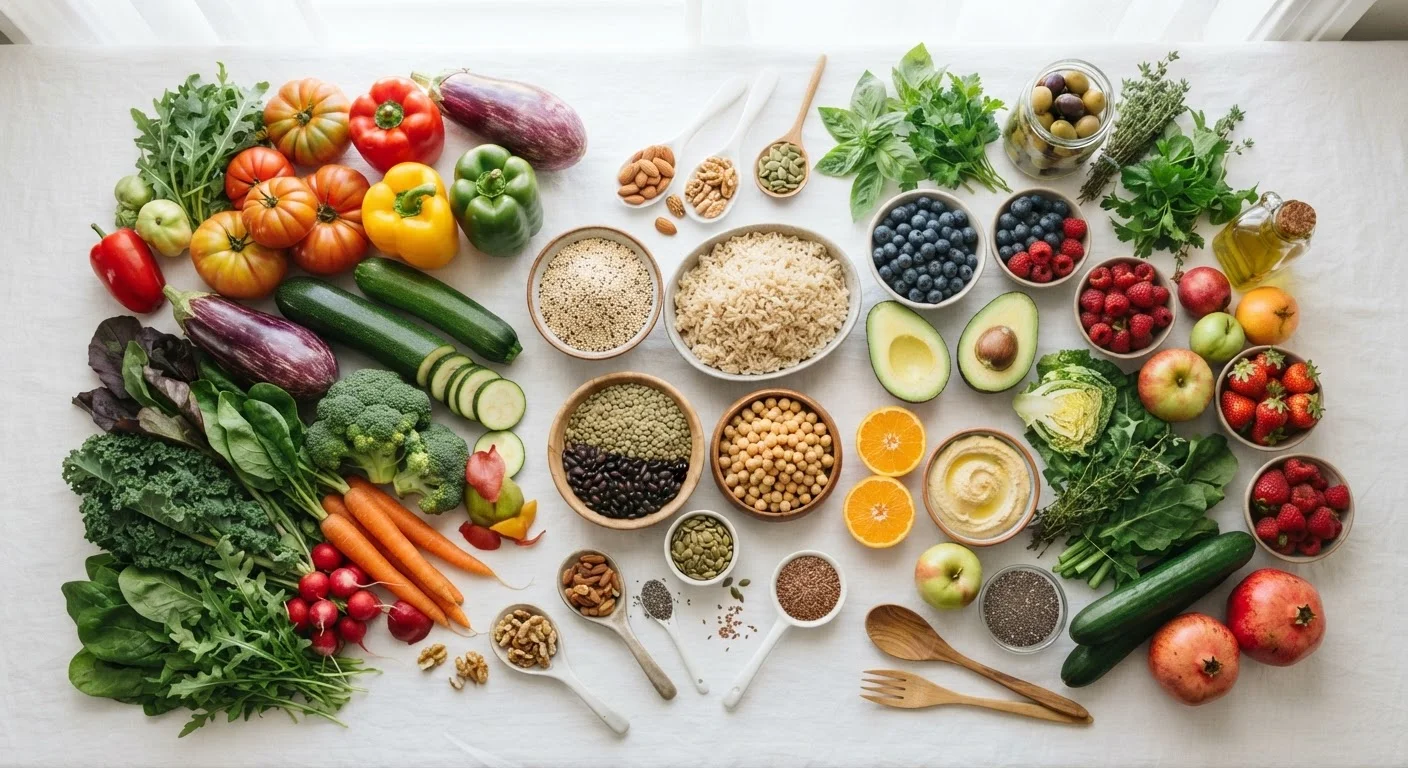
Eating a wide range of whole foods across different colors and categories is one of the most practical ways to cover your micronutrient bases without tracking individual vitamins. Think of variety as a built-in nutritional safety net. Over time, diversifying your grocery choices becomes habit rather than effort.
The most reliable way to meet micronutrient needs for most healthy adults is through dietary variety — eating across a broad range of vegetables, fruits, whole grains, proteins, and dairy or fortified alternatives. A colorful plate is often a practical shorthand for nutritional diversity. Supplements may be appropriate in specific circumstances, but that decision belongs with a healthcare provider rather than a general guide.
Food Patterns Over Single Foods
Nutrition research increasingly points to dietary patterns — the overall combination of foods eaten regularly — as more predictive of health outcomes than any individual food or nutrient in isolation. No single superfood offsets an otherwise unvaried diet, and no single indulgence derails an otherwise sound one.
Several evidence-backed patterns share common traits: an emphasis on vegetables, fruits, whole grains, and legumes; moderate protein from varied sources; and limited ultra-processed foods. Our article on eating patterns worth knowing covers Mediterranean, DASH, and whole-food approaches in detail — including what they share and where they differ.
Nutrition and Exercise Work Together
What you eat supports how your body responds to physical activity, and vice versa. Adequate protein aids muscle recovery, while carbohydrates help fuel movement. If you're starting a new exercise routine, it's worth thinking about both nutrition and movement as complementary pillars rather than separate concerns.
If you're also building other healthy habits, nutrition and movement reinforce each other. Our strength training beginner's guide covers how to pair exercise with your nutritional foundation.
Practical First Steps
Beginning to eat more intentionally doesn't require an immediate overhaul. Small, consistent changes tend to be more sustainable than dramatic restrictions that prove difficult to maintain.
- Add before you subtract. Introduce more vegetables, fruit, or whole grains before focusing on removing anything. Addition is psychologically easier and nutritionally beneficial.
- Read ingredient lists, not just labels. Shorter ingredient lists and recognizable ingredients are a general indicator of less processing.
- Eat with some regularity. Consistent meal timing supports stable energy and reduces impulsive eating, though the ideal schedule varies by individual.
- Stay hydrated. Water is often overlooked in nutrition conversations. Adequate hydration supports every metabolic process.
- Question dramatic claims. If a product or plan promises rapid transformation, that is a signal to verify the underlying evidence carefully.
Some people find it helpful to grow a portion of their own food. Our beginner's guide to starting a vegetable garden is a useful companion if you're curious about that path.
This article is for general informational purposes only and does not constitute medical or dietary advice. Please consult a qualified healthcare professional or registered dietitian before making significant changes to your diet, especially if you have an existing health condition.