

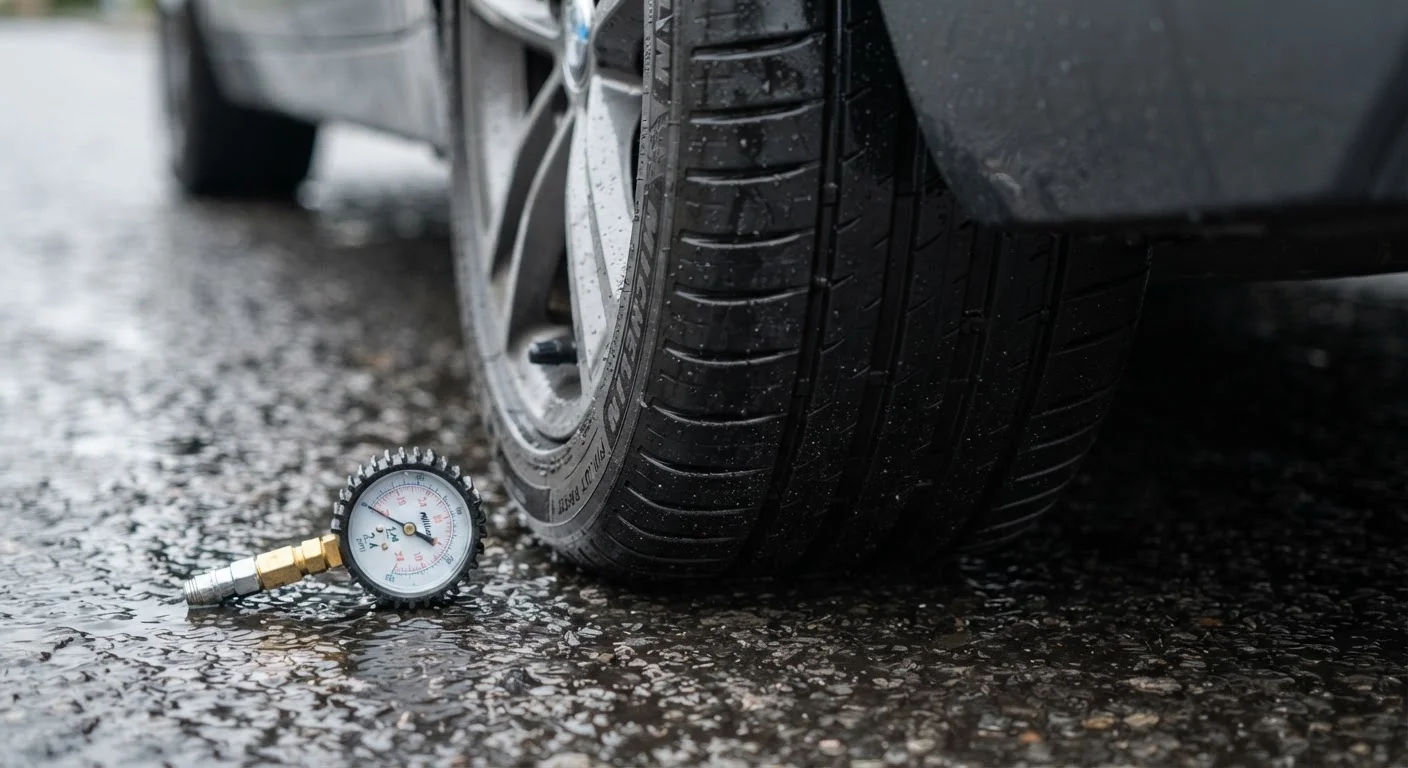
Tire Pressure: The Number That Changes Everything
Tire pressure is measured in PSI and is the single most frequently neglected tire variable. Driving on underinflated tires increases rolling resistance, accelerates tread wear on the outer edges, and reduces handling precision — particularly in emergency maneuvers. Overinflation causes the center of the tread to wear faster and reduces the tire's contact patch with the road.
The correct pressure for your vehicle is listed on a sticker inside the driver's door jamb or in the owner's manual — not on the tire sidewall, which shows the tire's maximum rated pressure, a different figure entirely. Most passenger vehicles fall between 30–35 PSI, though trucks and SUVs often run higher.
Check pressure when tires are cold — meaning the vehicle has been parked for at least three hours or driven fewer than a mile. Heat from driving temporarily raises PSI readings by 4–8 pounds, which can mask underinflation. A monthly check takes under five minutes and pays dividends in tread life and fuel economy. For a deeper look at how pressure directly affects what you pay at the pump, see how tire pressure affects fuel efficiency.
Tread Depth: Reading the Warning Signs
Tread depth is measured in 32nds of an inch. New tires typically ship at 10/32" to 11/32". The legal minimum in most U.S. states is 2/32", but that threshold represents the absolute floor — not a safe operating level. Handling, braking distance, and wet-road grip all begin degrading well before that point.
A tread depth of 4/32" is the practical threshold for wet-weather safety. At this depth, the tire's ability to channel water out from under the contact patch is meaningfully reduced, increasing the risk of hydroplaning. On wet roads where stopping distance already increases, worn tread compounds the danger significantly.
The Penny and Quarter Tests
- Quarter test (4/32"): Insert a quarter into any tread groove with Washington's head pointing down. If the top of his head is visible, tread is at or below 4/32" — replace before winter driving.
- Penny test (2/32"): Insert a penny with Lincoln's head down. If you see the top of his head, the tire is at or below the legal minimum and must be replaced immediately.
Uneven tread wear tells its own story. Wear concentrated on both outer edges points to chronic underinflation. Center-heavy wear suggests overinflation. One-sided wear often indicates an alignment problem worth investigating before new tires are installed.
Rotation Schedules and Why They Matter
Tires wear at different rates depending on their position. Front tires on front-wheel-drive vehicles handle both steering and power delivery, so they wear faster — often 30–50% quicker than rears. Rotation moves tires between positions in a defined pattern so wear evens out across all four, extending the full set's usable life.
The general guideline is to rotate every 5,000–7,500 miles, though checking your owner's manual is the most reliable starting point. Many drivers time rotation with oil changes for convenience. The rotation pattern used depends on whether tires are directional (designed to spin in one direction only) or non-directional, and whether the vehicle has a full-size spare that can be included in the rotation cycle.
Skipping rotation doesn't just shorten tire life — it can mask developing alignment and suspension issues. A technician inspecting tires during a rotation is often the first to catch uneven wear patterns that signal a deeper mechanical problem. This connects naturally to broader scheduled maintenance; the complete picture of car maintenance schedules provides useful context for how tire care fits alongside other service intervals.
When tires have reached the end of their service life, the condition of your braking system becomes even more critical. Understanding when brake pads and rotors need replacing is a natural next step in rounding out your vehicle's safety maintenance.