

Key Takeaways
Rolling Resistance
Rolling resistance is the energy a tire must overcome to keep moving forward along a road surface. When a tire is underinflated, it flexes more with each rotation, generating excess heat and requiring the engine to work harder to maintain speed. This extra effort translates directly into higher fuel consumption.
Rolling resistance is typically expressed as a coefficient (Crr) — the ratio of rolling resistance force to the vehicle's weight. Even small increases in Crr produce measurable drops in fuel economy over time.
Why Tire Pressure Has a Direct Line to the Fuel Tank
Most drivers think about fuel economy in terms of speed, engine size, or driving style — and those factors genuinely matter. But there's a quieter variable draining fuel on almost every trip: tire pressure. When tires are even modestly underinflated, they deform more as they rotate, creating greater rolling resistance. The engine has to produce more power just to sustain the same speed, and that extra power comes from burning more fuel.
The U.S. Department of Energy has noted that keeping tires properly inflated can improve fuel economy by up to 3%. That may sound modest, but across tens of thousands of miles it represents a meaningful amount of money and fuel. For drivers already focused on where their fuel actually goes, tire pressure is a variable worth controlling.
Up to 3%
Potential fuel economy gain from proper inflation
Estimate from the U.S. Department of Energy based on maintaining correct tire pressure across all four tires.
~1 PSI
Pressure drop per 10°F temperature decrease
A well-established physical property of air; relevant every time ambient temperatures shift significantly between seasons.
25%
Below recommended pressure before TPMS activates
Federal standards require TPMS to alert drivers when pressure drops 25% below the vehicle manufacturer's recommended level.
The Physics Behind the Problem
A properly inflated tire holds its shape efficiently under load. The contact patch — the portion of the tire actually touching the road — stays consistent and predictable. Drop the pressure, and that contact patch spreads and flexes excessively with each revolution. That flexing generates heat and wastes energy that should be propelling the vehicle forward.
Temperature compounds the issue. Air contracts in cold weather, causing pressure to drop roughly 1 PSI for every 10°F decrease in ambient temperature. A tire that was correctly inflated in September may be noticeably low by December without a single slow leak present. Seasonal swings mean drivers who check once and forget about it are frequently operating on underinflated tires without realizing it.
Check Pressure When Tires Are Cold
Heat from driving temporarily increases tire pressure, which can lead to inaccurate readings. For a reliable check, measure pressure after the car has sat for at least three hours or been driven less than a mile. This gives you the baseline reading that matches your vehicle's recommended PSI targets.
Reading the Right Number — and Checking It Correctly
One of the most common tire pressure mistakes is inflating to the number stamped on the tire's sidewall. That figure represents the tire's maximum allowable pressure — not the recommended operating pressure for your specific vehicle. The correct target is printed on a sticker inside the driver's door jamb or in the owner's manual, and it varies by vehicle model and sometimes by axle position.
For an accurate reading, check pressure when the tires are cold — meaning the car has been parked for at least three hours or driven fewer than a mile. Heat from driving temporarily raises pressure readings, which can cause drivers to underinflate when topping off. Our tire maintenance field guide covers proper technique alongside tread depth and rotation schedules in one reference.
TPMS Is a Safety Net, Not a Maintenance Tool
The Tire Pressure Monitoring System required on all U.S. vehicles sold after 2007 is designed to prevent dangerously low tire operation — not to optimize fuel economy. By the time the warning light triggers, pressure is already well below the recommended range. A monthly manual check with a quality gauge is the only reliable way to stay ahead of gradual pressure loss.
Building the Monthly Habit That Pays Off
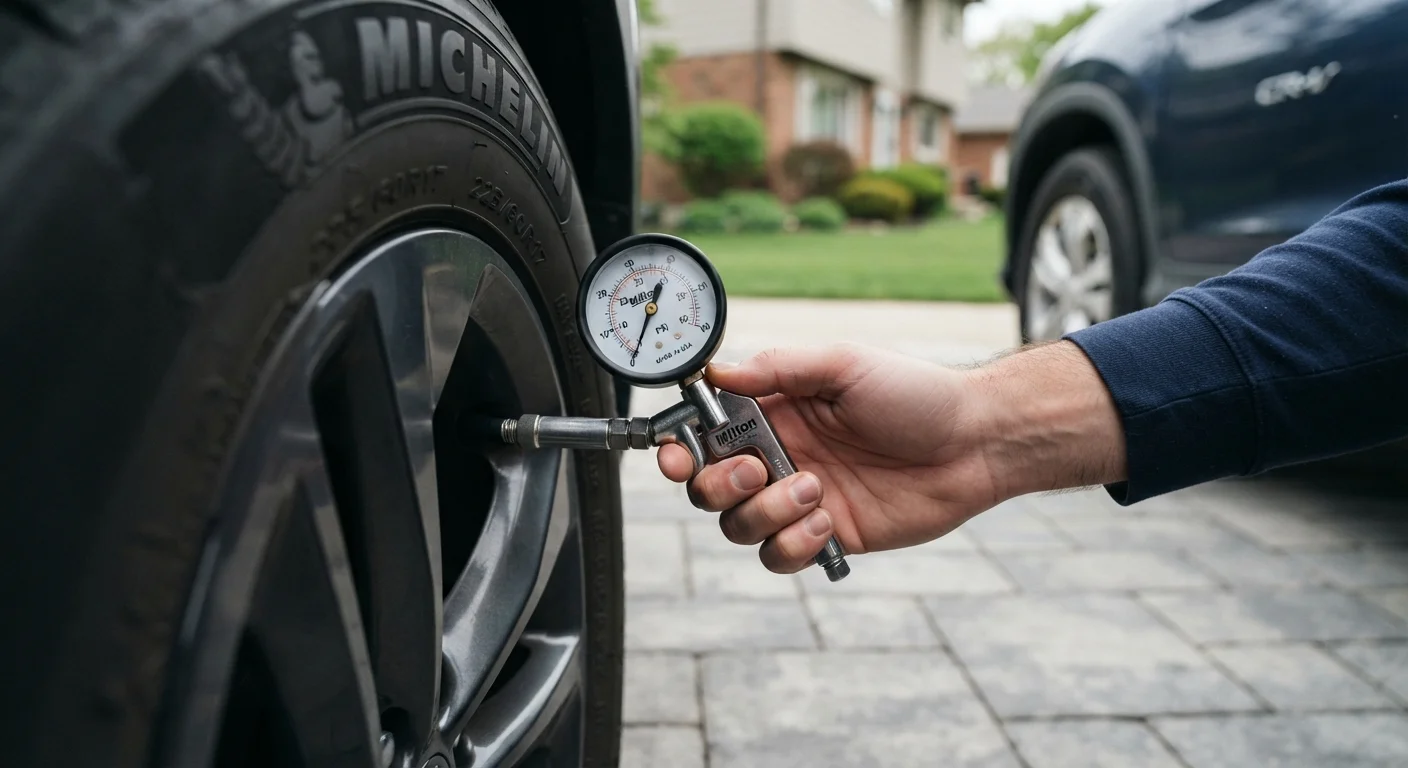
A tire pressure check takes under two minutes and requires only an inexpensive gauge — the kind available at any auto parts store. Making it a monthly habit, tied to something routine like filling the gas tank or the first of each month, removes the friction that causes most drivers to skip it.
Don't rely solely on the TPMS warning light. That system is designed to alert drivers when pressure falls 25% or more below the recommended level — already deep into underinflated territory. By the time the light appears, fuel economy has likely been suffering for some time. A manual gauge check catches gradual losses early, before they affect performance or safety.
Tire pressure also connects to broader fuel-saving habits. Drivers who monitor their fuel economy readout may notice improvements after correcting inflation, reinforcing the habit. Pairing proper inflation with smooth driving techniques compounds the benefit further.