

Key Takeaways
Authentic Travel
In travel, 'authentic' generally refers to experiences that feel genuinely connected to a place's local culture, history, or everyday life — as opposed to experiences staged primarily for tourist consumption. The word signals a desire to encounter something real rather than performed. However, because cultures are living and always evolving, the line between authentic and inauthentic is rarely as clear as travel marketing suggests.
Anthropologists and tourism researchers often distinguish between 'objective authenticity' (things that are historically or culturally genuine) and 'existential authenticity' (the personal sense of feeling genuinely engaged), noting the two don't always overlap.
Why Travelers Reach for This Word
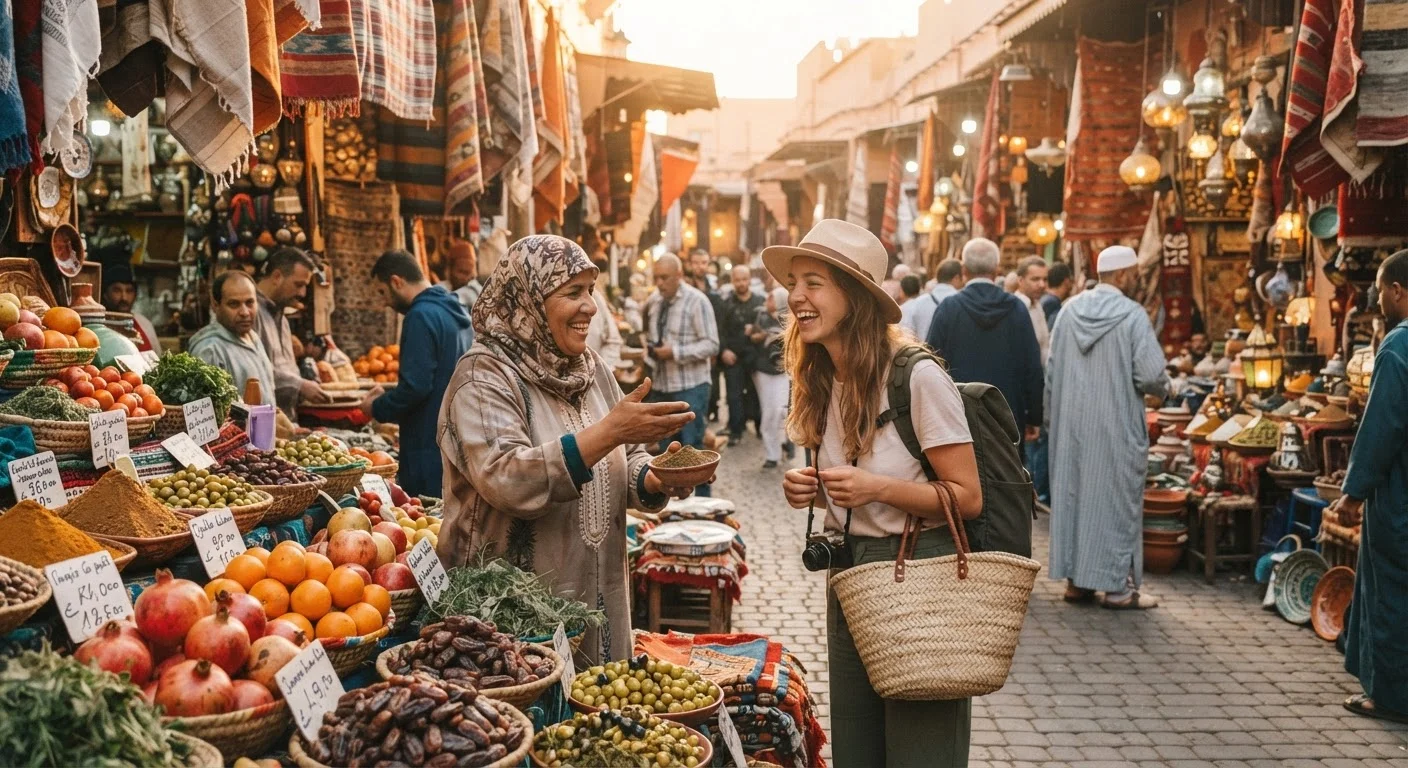
Scroll through any travel forum or tour description and you'll spot the word almost immediately: authentic. Authentic local cuisine. Authentic cultural immersion. Authentic off-the-beaten-path adventure. The appeal is obvious — travelers want to feel like they're encountering something real, not a theme-park version of a destination assembled for their convenience.
The impulse underneath the word is genuinely good. It reflects a desire for depth over surface, for connection over transaction. Nobody books a two-week trip hoping to feel like they never left their hotel lobby. But the word itself has drifted far enough from any stable meaning that it often creates more confusion — and occasionally more harm — than clarity.
69%
Travelers who prioritize local cultural experiences
According to Booking.com's 2023 Sustainable Travel Report, roughly 69% of travelers said they want to make more effort to seek out local cultural experiences on trips.
1 in 3
Destinations facing overtourism pressure
The UNWTO has noted that a growing number of heritage destinations are managing visitor pressures that threaten both resident quality of life and the cultural fabric visitors come to experience.
The Core Problem: Cultures Don't Stand Still
The most fundamental flaw in how travelers use 'authentic' is a hidden assumption: that cultures have a fixed, original state worth preserving — and that any change since then counts as contamination. This treats living communities as museum exhibits rather than dynamic societies with their own agency over what they keep, adapt, or invent.
Consider a traditional craft. A weaving technique passed down through generations may now use synthetic dyes unavailable a century ago. Is it less authentic? A regional dish beloved as 'traditional' may have incorporated ingredients introduced by trade routes a few hundred years back. Novelty, adoption, and adaptation are themselves part of how cultures have always worked.
Authenticity Is Also Subjective
Tourism researchers distinguish between experiences that are historically or culturally genuine (objective authenticity) and experiences that make the traveler personally feel engaged and present (existential authenticity). Many of the most memorable travel moments people describe fall into the second category — and they don't require an unmarked alley or a crowd-free ruin to happen.
When travelers insist on an imagined purer past, they can inadvertently pressure communities into performing a frozen version of themselves rather than living freely. That dynamic benefits the visitor's narrative far more than the community being visited.
When the Word Does Real Harm
Beyond conceptual fuzziness, authenticity-seeking can tip into something actively problematic. The hunt for the 'undiscovered' village, the restaurant with no English menu, the festival with no other tourists — these impulses, however well-meaning, can drive overtourism into fragile communities, strip away privacy, and create perverse incentives for locals to perform poverty or tradition rather than pursue their own economic and cultural choices.
There's also a troubling selectivity in how authenticity gets applied. A local artisan selling work in a polished gallery is sometimes dismissed as less authentic than one working in rustic conditions — a judgment that says more about the traveler's aesthetics than the artisan's legitimacy. For a more grounded approach to finding meaningful local connection, see our guide on finding locally meaningful experiences without the authenticity trap.
“Authenticity is not a property of places — it's a relationship between people and their sense of meaning. When we demand authentic experiences from destinations, we're often really asking them to validate our own preconceptions.”
— Dean MacCannell, Sociologist and author of 'The Tourist: A New Theory of the Leisure Class'
A More Useful Way to Think About It
None of this means the underlying desire is wrong — only that 'authentic' is a blunt instrument for a nuanced goal. A sharper question to carry into any destination isn't Is this real? but rather: Is this respectful, fair, and genuinely engaging for everyone involved?
Experiences that go deep rather than wide — joining a community workshop, cooking alongside a local family, attending a neighborhood gathering — tend to be meaningful not because they're more authentic by some external standard, but because they involve real exchange rather than passive observation. The traveler contributes something — attention, curiosity, presence — rather than just extracting an experience.
Slowing down helps too. The philosophy behind slow travel — spending real time in fewer places — creates the conditions for genuine encounters to happen organically, rather than scheduling them like attractions on a checklist.
Replace 'Authentic' With Better Questions
Before booking an experience billed as authentic, ask: Who organized this, and do community members benefit directly? Is participation voluntary and fairly compensated? Does this experience exist for locals as well as visitors, or was it created entirely for outsiders? These questions lead to more meaningful choices than chasing a label.