

Key Takeaways
Why the Usual Approach Falls Short
Most travel platforms surface the same cluster of experiences — the neighborhood everyone already knows, the tour every visitor takes, the restaurant that cracked a major publication's list. That information isn't wrong, but it's also heavily filtered toward what's easiest to package and sell. The result is a version of a place that's legible to outsiders but doesn't necessarily reflect how locals actually live in it.
Finding locally meaningful experiences isn't about avoiding anything popular — it's about adding layers. The goal is to move through a destination in a way that creates real contact with its daily life, not just its highlights reel. That requires a different set of inputs and a different pace than most itineraries allow.
Before you start, make sure you have the basics covered. See trip planning tips for logistics, budgeting, and packing fundamentals that free up mental bandwidth for the experiences themselves.
What you will need
The Step-by-Step Approach
The following steps work whether you have a week or a long weekend. For shorter trips, prioritize steps 2, 3, and 5 — they deliver the highest return on limited time. For more on making the most of a compressed schedule, getting the most out of a short trip offers complementary strategies.
Local events calendar or community board
Surfaces neighborhood-specific happenings — farmers markets, readings, open rehearsals — that don't appear on mainstream travel platforms.
City or regional library website
Many public libraries list free or low-cost community events, lectures, and cultural programming open to all visitors.
Offline maps with neighborhood layers
Helps you navigate residential areas and locate points of daily life — markets, parks, plazas — rather than only tourist landmarks.
A basic phrasebook or translation app
Even rudimentary local-language phrases signal respect and open doors to conversations that English alone often closes.
Research Before You Arrive — But Leave Gaps
Before departure, look beyond travel aggregator sites. Check local newspapers, city subreddits, neighborhood Facebook groups, and public library event pages for your destination. Identify one or two community events — a weekly market, a public lecture, a neighborhood festival — that happen to coincide with your dates.
Then deliberately leave gaps in your daily schedule. An over-packed itinerary is the single biggest barrier to unplanned discovery. Aim for no more than two anchored activities per day, leaving mornings or afternoons genuinely open.
Choose Accommodation in a Residential Area
Where you sleep shapes everything you encounter by default. Staying in a hotel district means your morning coffee comes from a lobby; staying in a residential neighborhood means it comes from a bakery where the same people show up every day. Guesthouses, short-term rentals in non-tourist districts, and smaller inns run by local families all tend to embed you in daily rhythms rather than visitor flows.
Check a map before booking: look for grocery stores, parks, and transit stops nearby — signs that real neighborhood life surrounds the property.
Navigate Using Points of Daily Life
On arrival, orient yourself not by monuments but by the infrastructure of daily life: the nearest market, the local transit hub, the public plaza where people gather in the evening. Walk these routes at different times of day. Morning markets, afternoon plazas, and evening streets each reveal a different layer of a place.
For deeper context on how urban and natural environments offer different kinds of discovery, see urban exploration vs. nature immersion.
Participate, Don't Just Observe
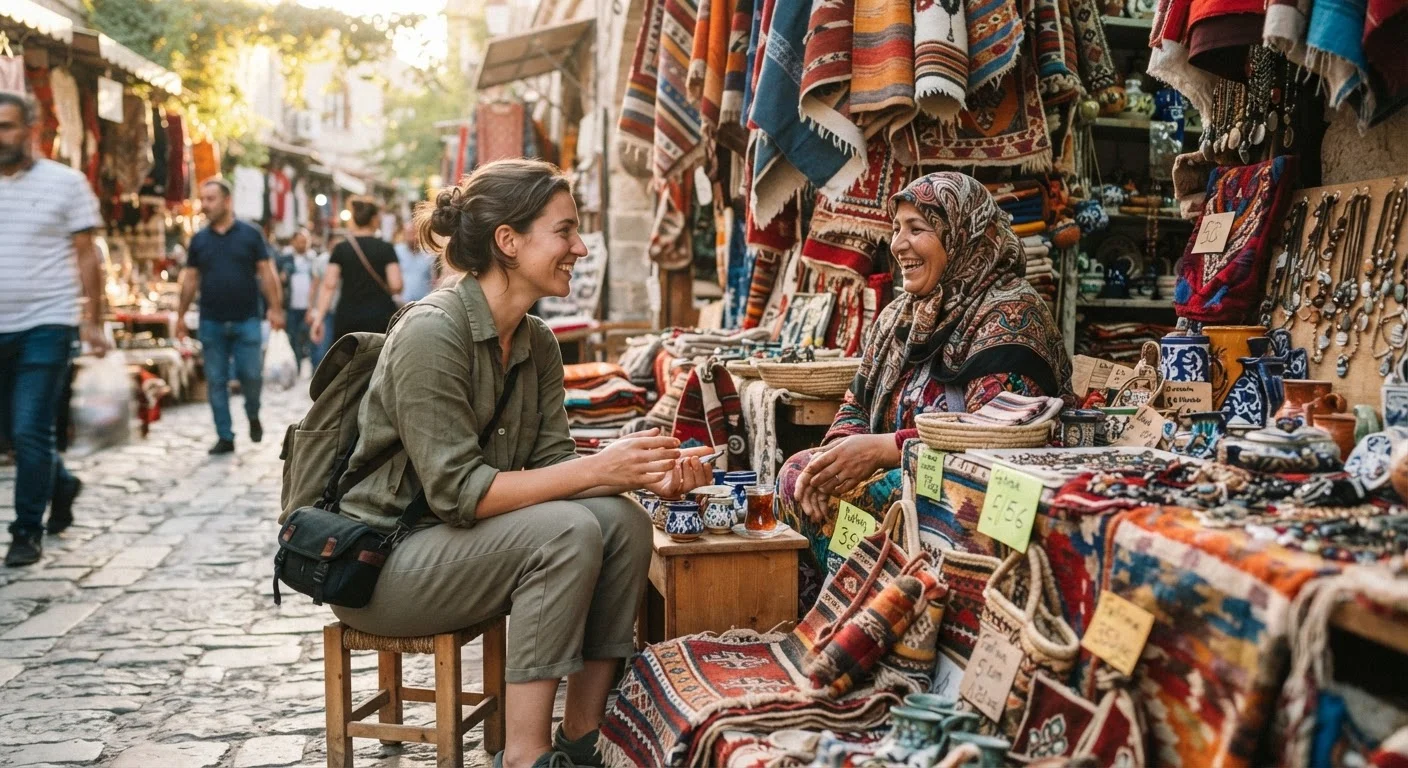
Watching a craft demonstration and joining a workshop are fundamentally different experiences. Seek out participatory formats: a cooking class taught by a home cook, an open community sports game, a public rehearsal. These put you in relationship with a place rather than in front of it.
Immersive experiences worth seeking out — from craft workshops to host-family stays — are a useful starting point for understanding what participatory travel actually looks like in practice.
Slow Down Your Pace Deliberately
Meaningful encounters rarely happen on a sprint. Return to the same café two mornings in a row. Spend a full afternoon in one neighborhood instead of checking off four. The repetition signals to locals that you're not just passing through, and conversations become possible that a single-visit schedule never allows.
If you want to explore the full case for this approach, slow travel — spending more time in fewer places breaks down the trade-offs honestly.
Reflect on Impact Before You Engage
Not every well-intentioned activity benefits a community. Volunteer programs, cultural tours, and community experiences vary enormously in how they affect local people. Ask who runs the experience, where the revenue goes, and whether local people shaped its design. For volunteer-specific travel, understanding the line between ethical programs and extractive voluntourism is worth researching before you commit — see volunteering abroad vs. voluntourism for a useful framework.
Ask the Right People the Right Questions
Rather than asking 'What should I do here?', try 'What are people in this neighborhood excited about right now?' Hotel concierges optimize for convenience; neighborhood residents optimize for life. Bakery owners, librarians, and hardware store clerks often give the most unexpectedly brilliant tips.
Authenticity Is Not a Destination Checkbox
The pursuit of 'authentic' experiences can slip into pressure — on yourself and on local communities. Treat every encounter as mutual and human rather than a box to tick. What feels meaningful to you may be an ordinary Tuesday for a local, and that's perfectly fine.
Common Pitfalls and How to Avoid Them
Even well-prepared travelers run into avoidable missteps. The most common is over-scheduling: filling every hour eliminates the idle time where unexpected connections actually happen. A close second is defaulting to English-language sources exclusively — local-language media, even roughly translated, surfaces events and spaces that never appear in international travel content.
Cultural missteps are another frequent issue. Small errors in dress, gesture, or etiquette can create distance before a conversation starts. Cultural etiquette mistakes travelers commonly make — and what they signal — is worth reading before you arrive anywhere unfamiliar.
Not Every Local Space Welcomes Tourists
Some neighborhood events, religious ceremonies, or community gatherings are not designed for outside visitors. Always look for posted guidelines, ask permission before entering, and follow the lead of locals in the space. When in doubt, step back — respectful restraint is itself a form of cultural appreciation.
Finally, resist the pressure to turn every experience into content. Reaching for a camera or phone at every moment subtly shifts your orientation from participant to documentarian — and locals notice. Some of the most memorable travel moments are the ones you simply lived through without performing them for an audience.
For a broader look at what experience-based travel terminology actually means — from agritourism to transformative travel — a traveler's quick reference to experience-based tourism terms is a useful companion glossary.