

Key Takeaways
Why Food Travel Myths Stick — and Why They Matter
Food is one of the most powerful lenses for understanding a place. It shapes how we plan itineraries, choose neighborhoods, and spend limited time and money abroad. But a handful of stubborn myths can send well-intentioned travelers chasing the wrong things — or dismissing genuinely rewarding experiences out of hand.
These misconceptions travel fast because they feel intuitively right, get reinforced by travel media, and occasionally even contain a kernel of truth. Understanding where they go wrong makes for smarter, more satisfying food travel. For a deeper look at how "authenticity" becomes a loaded concept in travel more broadly, see what the word actually means and where it leads people wrong.
Myth
Street food is always the most authentic option — if it's in a restaurant, it's been watered down for tourists.
Fact
Format doesn't determine authenticity. Many celebrated regional dishes have always been served in formal settings, and street food stalls in tourist zones are often adapted to visitor tastes just as much as any restaurant.
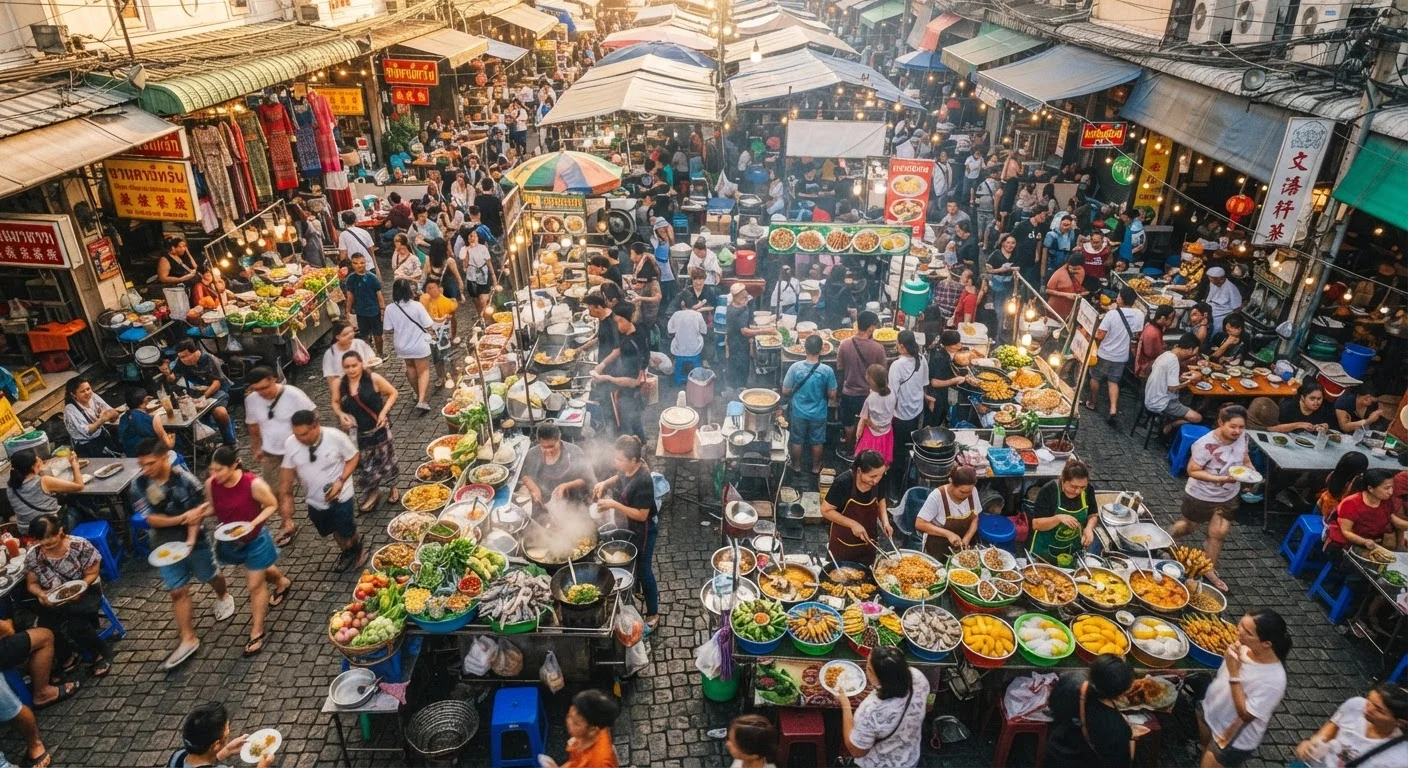
The street-food-equals-authentic equation is understandable but oversimplified. In cities across Southeast Asia, Mexico, and the Middle East, street food is indeed a central part of culinary culture — but so are long-established sit-down establishments that have served the same community for generations. The format of the meal tells you very little on its own.
What actually matters is who a place is cooking for, how regularly, and with what ingredients. A stall positioned at a major tourist attraction and a tucked-away canteen feeding the same neighborhood families for 30 years are both "street food" — but they serve very different purposes. Look for context, not just format.
Myth
Cooking classes are a reliable way to learn how locals actually cook at home.
Fact
Most tourist-facing cooking classes teach crowd-pleasing, simplified versions of dishes — they're great for fun and introduction, but rarely reflect everyday home cooking.
Cooking classes have become a travel staple, and many are genuinely enjoyable. But it's worth calibrating expectations. The majority of classes offered to visitors are designed for accessibility: shorter prep times, fewer unfamiliar techniques, and dishes that photograph well and travel easily back home as recipes.
Everyday home cooking in most cultures involves shortcuts, regional variations, inherited improvisation, and pantry staples that don't translate neatly to a 90-minute tourist experience. The best classes are upfront about this — they frame themselves as an introduction rather than an immersion. If you want to go deeper, look for classes run through culinary schools, community organizations, or small-group formats with a genuine connection to local food culture.
Myth
If you haven't heard of a dish, it must be rare or off the beaten path.
Fact
Unfamiliarity is a reflection of your own exposure, not a dish's rarity. Many staple everyday foods in a region are simply underrepresented in international food media.
Travel food content — guidebooks, food TV, social media — tends to cluster around a relatively small set of dishes that have crossed cultural borders and become internationally legible. That leaves enormous swaths of regional, everyday cooking largely invisible to outside audiences.
A dish you've never encountered might be the thing every local eats for breakfast three times a week. Conversely, some dishes get heavily featured in travel media precisely because they photograph well or appeal to outside palates — not because they're particularly central to local life. Approaching unfamiliar food with curiosity rather than the assumption that obscurity equals specialness will serve you better.
Myth
Eating where locals eat guarantees a more genuine experience.
Fact
'Local' is not a monolithic category. A city's residents include people of different incomes, backgrounds, and habits — where one local eats says little about the broader food culture.
"Eat where locals eat" is well-meaning advice, but it tends to flatten urban complexity. In any major city, locals eat at fast food chains, international restaurants, upscale tasting menus, food courts, and family-run spots — often all in the same week, depending on occasion, budget, and mood.
The framing also risks turning working-class neighborhood spots into destinations that, once discovered, shift in character entirely due to visitor attention. A more useful question than "where do locals eat?" might be: what am I curious about, and who can help me understand it better? That opens conversation rather than ending it with a location pin.
Rethinking How You Eat on the Road
Once you let go of the myth-driven checklist, food travel opens up considerably. The meal you remember most might happen in a neon-lit diner, a home kitchen, or a decades-old institution that caters to tourists and locals alike. What makes it stick is curiosity, conversation, and willingness to follow your nose rather than a ranking.
1 in 3
Travelers motivated primarily by food experiences
World Food Travel Association research has consistently found that a significant portion of leisure travelers cite food and drink as a primary motivation for destination choice.
70%+
Of travel spend going to food and drink in some markets
Studies from tourism researchers in destinations like Spain and Thailand suggest food and beverage can account for the majority of a traveler's in-destination expenditure.
Practical strategies — like asking hotel staff where they eat on a day off, or showing up to a market before tourist hours — tend to yield more interesting results than hunting for places that explicitly advertise as "authentic." For concrete techniques on connecting with a place on its own terms, the guide to finding locally meaningful experiences offers approaches that travel well across destinations.
And if you're weighing a cooking class or a food tour, approach them as learning experiences rather than authenticity certificates. The best ones offer context, history, and connection — not just recipes. For experiences that go beyond standard sightseeing, immersive travel experiences worth seeking out is worth a look before you book.
This article is for general informational and editorial purposes. Travel conditions, food safety standards, and local practices vary by destination; always verify current entry, health, and safety guidance with official government and provider sources before traveling.