

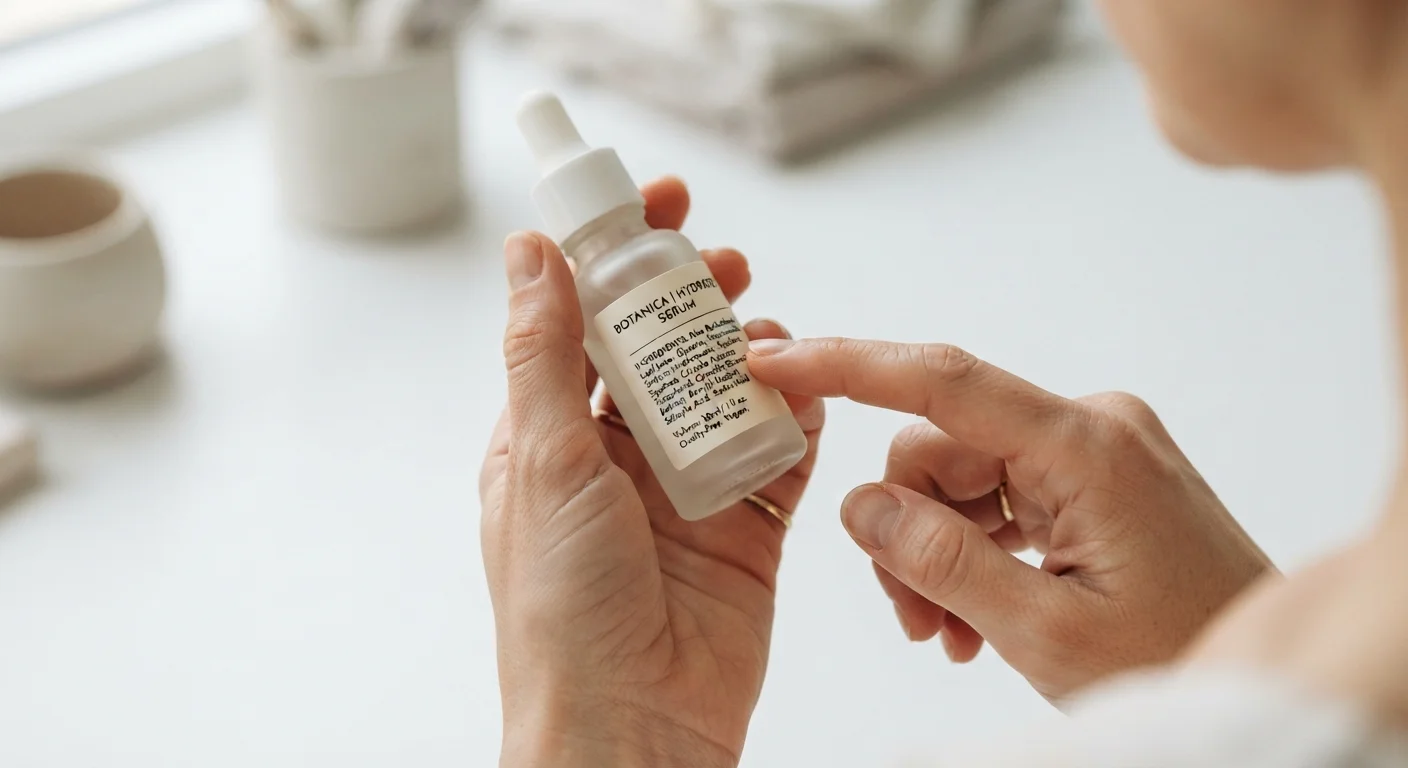
Key Takeaways
Summary
18 items · 10–20 minutes per product
Why the Label Deserves More Than a Glance
Skincare packaging is a mix of regulated information and marketing language, and the two look nearly identical at first glance. The ingredient list — technically called the INCI list — follows standardized rules enforced by the FDA for products sold in the U.S. The front-of-pack claims do not. Learning to separate the two is one of the most practical skills in any skincare routine.
This checklist walks you through what to examine, in what order, and what each section of the label actually tells you. For a deeper look at how specific actives work once you've identified them, the active ingredients reference guide is a useful companion resource. And if front-of-pack language like "clinically proven" or "dermatologist-tested" has ever swayed your decision, this breakdown of unsubstantiated skincare claims provides helpful context.
Ingredient List Basics
Active Ingredient Verification
Sensitizer and Allergen Scan
Expiry and Stability Signals
Front-of-Pack Claims Audit
What to Do With What You Find
Once you've audited a label, a few steps help translate that information into a smart purchase decision. If a product contains a new active ingredient you haven't used before, patch testing before full application is the safest next move. If the product duplicates actives you're already using, checking for ingredient overlaps in your existing routine can prevent both irritation and redundant spending.
Label-reading also connects directly to how products are layered. Knowing which actives are present informs sequencing — something covered in detail in the guide on layering skincare products without canceling their effects. The same interpretive skill set transfers to food packaging, where reading a nutrition label without getting lost applies a parallel framework.
INCI Decoder or EWG Skin Deep Database
Look up unfamiliar ingredient names, their function categories, and available safety data.
Magnifying glass or phone camera zoom
Read the fine-print ingredient list on small or dark-packaged products without eye strain.
Personal ingredient log or notes app
Track ingredients in products you currently use to spot overlaps or patterns in reactions.
Concentration Disclosure Is Not Required
U.S. cosmetic regulations do not require brands to disclose the exact percentage of most ingredients. When a potent active appears near the bottom of a long list — often after preservatives — its concentration may be too low to have a meaningful effect. Look for brands that voluntarily disclose concentrations, or treat position in the list as your primary proxy for potency.
"Fragrance-Free" and "Unscented" Are Not the Same
"Unscented" products may still contain masking fragrances designed to neutralize the smell of other ingredients. Only "fragrance-free" indicates the intentional absence of added scent compounds — though even this term has no formal regulatory definition and should be verified against the ingredient list.
This article is for general informational and educational purposes only. It is not a substitute for professional dermatological advice. If you have a diagnosed skin condition or known allergies, consult a qualified healthcare provider before introducing new skincare products.