

Key Takeaways
Skin Barrier Function
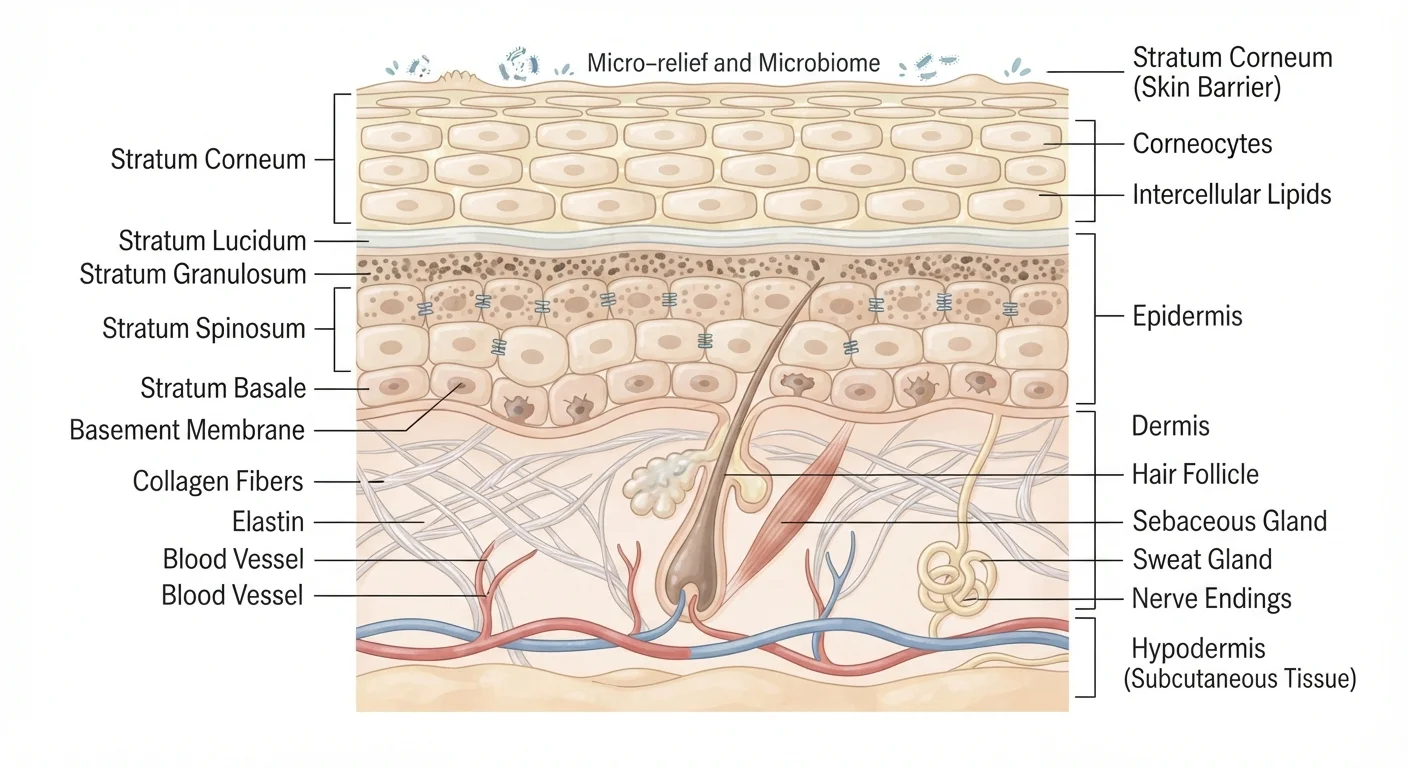
The skin barrier refers to the outermost layer of skin — the stratum corneum — and its ability to keep moisture in while blocking out irritants, allergens, and pathogens. Think of it as a structural wall made of skin cells (the bricks) held together by lipids like ceramides, fatty acids, and cholesterol (the mortar). When this wall is intact, skin stays hydrated, resilient, and calm. When it's compromised, skin becomes reactive, dry, or prone to flare-ups.
The stratum corneum is roughly 10–20 cell layers thick and maintained by a process called desquamation — the controlled shedding of dead cells — alongside ongoing lipid synthesis in the layers below.
The Barrier as Architecture, Not Just a Buzzword
The phrase "skin barrier" appears in nearly every skincare conversation, but it describes something genuinely structural. The stratum corneum — the outermost layer of the epidermis — is composed of flattened, protein-rich cells called corneocytes. These cells are surrounded by a lipid matrix made up primarily of ceramides, free fatty acids, and cholesterol. Dermatologists often describe this arrangement using a brick-and-mortar analogy: the cells are the bricks, and the lipids are the mortar filling the spaces between them.
This architecture serves two simultaneous purposes. First, it limits transepidermal water loss (TEWL) — the passive evaporation of moisture through skin. Second, it acts as a physical and chemical filter against environmental aggressors: UV radiation, pollution particles, microorganisms, and contact irritants. Both functions depend on the integrity of that lipid matrix. When ceramide levels drop or the ratio of lipids shifts, the barrier becomes more permeable in both directions — moisture escapes more easily and irritants penetrate more readily.
If you're building a skincare routine from scratch, understanding this structure explains why certain product categories — particularly moisturizers — aren't optional extras. They're working with (or compensating for) this physical system.
What Actually Disrupts the Barrier
Barrier damage is rarely dramatic. It accumulates through everyday habits and environmental exposures that don't feel significant in the moment.
~50%
Of stratum corneum lipids are ceramides
Research published in dermatology literature consistently identifies ceramides as the dominant lipid class in the intercellular matrix, with cholesterol and fatty acids making up most of the remainder.
4.5–5.5
Optimal skin surface pH range
This slightly acidic range supports the enzymatic activity needed for lipid processing and barrier maintenance; many harsh cleansers temporarily raise pH above this range.
2–4 weeks
Approximate barrier recovery window
Skin barrier repair timelines cited in dermatological research vary widely, but mild to moderate disruption generally responds within this range when trigger factors are removed.
Cleansing frequency and formulation are among the most common culprits. Surfactants — the cleansing agents in most face washes — work by temporarily disrupting lipid membranes to lift sebum and debris. Harsh surfactants (particularly those based on sodium lauryl sulfate) do this more aggressively and can leave the barrier compromised if used repeatedly without adequate recovery time between washes.
Active ingredient overuse is another well-documented disruptor. Exfoliating acids (AHAs, BHAs) and retinoids accelerate cell turnover and, at high concentrations or with excessive frequency, outpace the barrier's ability to regenerate. Layering multiple actives without adequate hydration support amplifies this effect. See our guidance on layering skincare products without canceling their effects for how product sequencing affects this dynamic.
Environmental factors matter too. Low humidity — common in both winter air and air-conditioned spaces — increases TEWL by creating a steeper moisture gradient between skin and surrounding air. This is why the same routine can feel inadequate in different climates or seasons. Our related piece on why your moisturizer stops working mid-winter goes deeper on this seasonal shift.
Simplify Before You Troubleshoot
If your skin is reacting unexpectedly, resist the urge to add a new product to address each symptom. Instead, pare your routine back to a gentle cleanser and a ceramide-containing moisturizer for one to two weeks. This gives the barrier a chance to recover and makes it much easier to identify which product was causing the issue when you reintroduce items one at a time.
Recognizing Compromise and Supporting Recovery
A disrupted barrier doesn't always announce itself with dramatic redness. More commonly, it appears as unexplained sensitivity to products that previously worked fine, persistent tightness after cleansing, stinging when applying toners or serums, or a rough texture that standard moisturizer doesn't resolve. These are signs that the barrier's filtration function has broken down — previously tolerated ingredients are now reaching nerve endings and immune cells they shouldn't reach.
Supporting recovery generally means reducing complexity, not adding more products. Switching to a gentle, low-surfactant cleanser, temporarily pausing exfoliating actives, and applying a moisturizer containing ceramides, glycerin, or hyaluronic acid gives the barrier the conditions and building blocks it needs to regenerate. Occlusives — ingredients like petrolatum or dimethicone — can help seal the surface and reduce TEWL while repair occurs underneath.
Longer term, consistent sun protection is part of barrier maintenance, not separate from it. UV exposure degrades the ceramides in the stratum corneum and impairs the skin's lipid synthesis processes over time, accelerating barrier vulnerability. Skin type shapes baseline vulnerability as well — the needs of dry, oily, and sensitive skin types differ enough that barrier support strategies aren't one-size-fits-all.
“The skin barrier is the foundation of everything we do in dermatology. When it's working well, skin tolerates treatments, retains moisture, and resists irritants. When it's not, even the gentlest interventions can cause problems.”
— A board-certified dermatologist, Clinical dermatologist with a focus on barrier-related skin conditions
This article is for informational purposes only and is not a substitute for personalized advice from a licensed dermatologist or healthcare provider.