

| Framework origin | Adapted from fashion theory and Jungian archetype concepts |
| Typical number of archetypes | 6–12 depending on the system used |
| Most common blends | 2–3 archetypes with one dominant |
| Primary use case | Clarifying aesthetic identity before shopping or wardrobe editing |
| Related design parallel | Interior design style frameworks use similar organizing logic |
What Is a Style Archetype?
A style archetype is a broadly recognized aesthetic identity — a constellation of silhouettes, textures, color palettes, and moods that consistently show up together. Think of it less as a rigid box and more as a gravitational center: a place where your instincts keep returning, even when trends pull in different directions.
The framework draws on ideas from fashion theory, visual communication, and even Jungian archetypes — the premise being that certain aesthetic patterns recur across cultures and individuals. When applied to personal style, they offer a shared vocabulary. Instead of describing your wardrobe as "kind of soft, but also structured, and I like things that feel timeless," you might simply say: Classic with Romantic undertones.
For a broader look at how the framework operates, see our practical overview of style archetypes. And if you're still building a foundation, what personal style actually means is worth reading first.
| Framework origin | Adapted from fashion theory and Jungian archetype concepts |
| Typical number of archetypes | 6–12 depending on the system used |
| Most common blends | 2–3 archetypes with one dominant |
| Primary use case | Clarifying aesthetic identity before shopping or wardrobe editing |
| Related design parallel | Interior design style frameworks use similar organizing logic |
The Core Archetypes, Defined
Most style frameworks recognize somewhere between six and twelve archetypes. The definitions below represent the most widely used categories — each with distinct visual markers and underlying values.
Classic
Anchored in tailoring, clean lines, and enduring silhouettes. The Classic archetype prioritizes quality construction and versatility over novelty. Neutral palettes, structured cuts, and heritage fabrics are its hallmarks.
Romantic
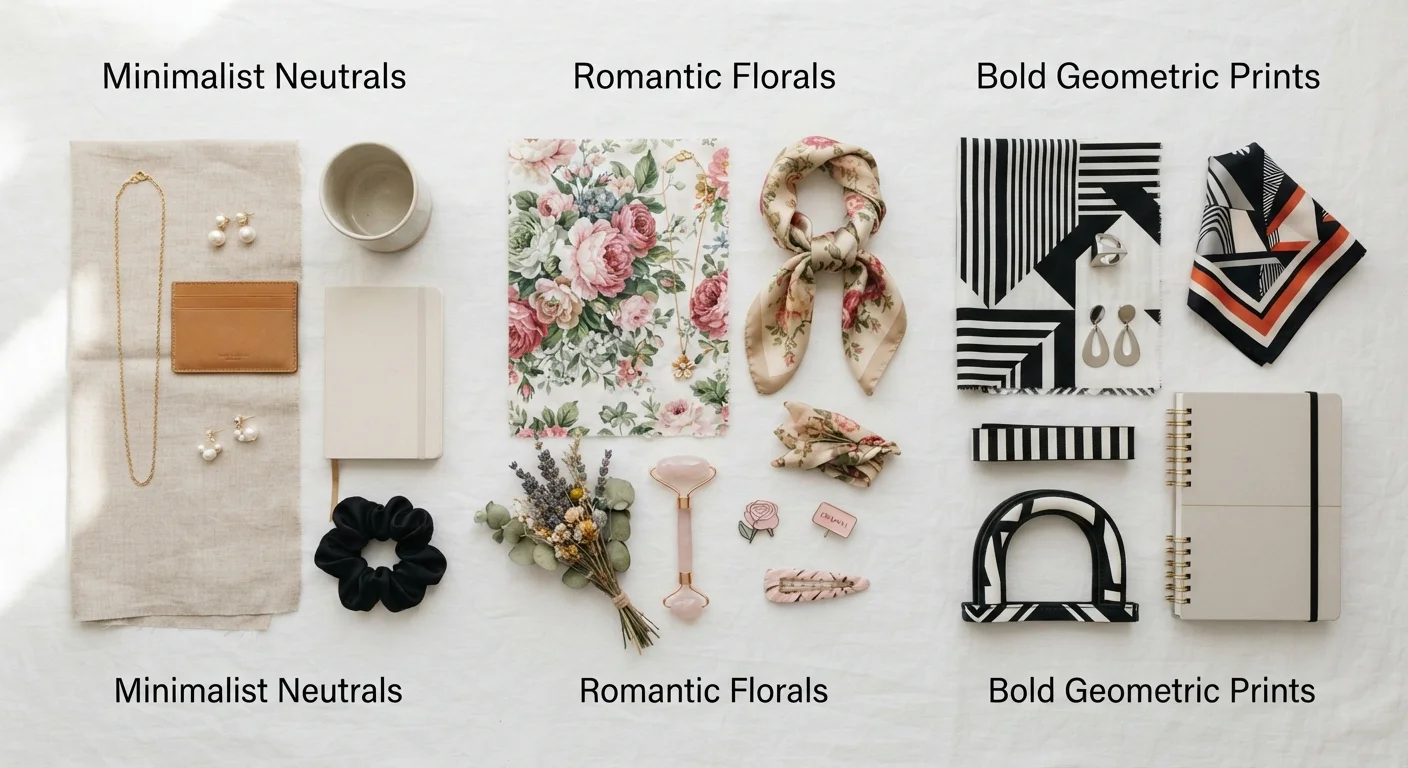
Defined by softness, femininity, and sensory richness — florals, flowing fabrics, delicate detailing, and warm or blush-toned palettes. The Romantic archetype emphasizes mood and emotional resonance in dress.
Minimalist
Characterized by intentional restraint: limited color ranges (often monochromatic or neutral), clean silhouettes, and an absence of decorative excess. The Minimalist archetype values precision and coherence.
Avant-Garde
Driven by experimentation — unconventional silhouettes, unexpected material combinations, and a willingness to challenge aesthetic norms. The Avant-Garde archetype treats dress as conceptual expression rather than convention.
Natural / Relaxed
Grounded in comfort, organic textures, and an unpretentious sensibility. Earth tones, linen, cotton, and unfussy layering define this archetype, which values ease over formality.
Dramatic
Bold, high-contrast, and visually commanding. The Dramatic archetype leans into strong silhouettes, saturated or high-contrast palettes, and statement-scale details — dressing as presence-making.
Eclectic / Creative
Resists single-archetype categorization by mixing references, eras, and aesthetics with intentionality. The Eclectic archetype is defined not by a single visual language but by a skilled, personal synthesis of many.
Polished / Sophisticated
Closely related to Classic but with a sharper edge — favoring refined tailoring, elevated basics, and understated luxury signals. Proportion and fit carry more weight than individual statement pieces.
Keep in mind: most people operate as a blend of two or three archetypes, with one dominant and others acting as accents. A Minimalist who gravitates toward unexpected silhouettes likely has an Avant-Garde thread. A Romantic who values practicality might also identify with the Natural archetype.
Visual references accelerate self-recognition here. If you haven't built a style moodboard yet, moodboarding is one of the most effective ways to surface patterns in what genuinely draws your eye — without the noise of shopping or trend cycles.
How to Use This Framework Practically
Identifying your archetype isn't an end goal — it's a tool. Once you have language for your aesthetic, you can apply it at every decision point: when decluttering, when evaluating a new piece, or when planning a wardrobe that actually works together.
The most common mistake is treating archetypes as a shopping filter before you've done the reflective work. Developing a style identity before shopping is a sharper approach — one that prevents the cycle of disconnected purchases that fills closets but not wardrobes.
It's also worth noting that archetypes aren't permanent. Life stage, environment, and shifting values all influence aesthetic instincts over time. The framework is most useful when revisited periodically rather than applied once and shelved.
Archetypes Shift — and That's Normal
Your dominant archetype at 25 may not match your aesthetic at 40. Major life changes — a new city, career shift, or shift in values — often surface in wardrobe instincts before they're consciously named. Treat any archetype identification as a current snapshot, not a permanent label. Revisiting the framework every few years can be genuinely clarifying.
Style archetypes apply to dress, but the underlying logic — organizing aesthetic preferences into coherent identities — extends further. If you're curious how similar frameworks apply to living spaces, interior design styles decoded is a useful parallel reference.