

Key Takeaways
Option A
Open Shelving
The display-forward, personality-rich option.
Best for: Homeowners who enjoy curating visual displays and are comfortable keeping items tidy and organized on an ongoing basis.
Option B
Closed Cabinets
The streamlined, clutter-concealing approach.
Best for: Households that prioritize a clean, low-maintenance look and need to store a mix of practical and decorative items out of sight.
If you love showcasing books, art objects, and plants
Open Shelving
Open shelves act as a living display, letting you express style and rotate pieces seasonally without major effort.
If you have young children or a busy household
Closed Cabinets
Cabinet doors conceal clutter instantly, making it easier to keep shared spaces looking presentable with minimal daily tidying.
If you want to make a small room feel larger
Open Shelving
Open shelves avoid the visual bulk of full cabinet boxes and can make walls feel lighter and more airy.
If you prefer low-maintenance storage
Closed Cabinets
With doors closed, dust settles only on exterior surfaces — a significant time saver compared to dusting individual items on open shelves.
If you're decorating a living space from scratch
Open Shelving
Open shelving is often a more affordable starting point and gives you flexibility to adapt your arrangement as your style evolves.
What Sets These Two Storage Approaches Apart
At their core, open shelving and closed cabinets represent two different philosophies about living with your belongings. Open shelves put everything in view — creating a room where books, ceramics, plants, and decorative objects become part of the décor itself. Closed cabinets draw a boundary between the everyday clutter of life and the room's visual identity, keeping storage separate from style.
Neither approach is inherently superior. The right choice depends on what you own, how you live, and what kind of atmosphere you want to create. If you're starting a room from scratch, the first-time decorator's guide walks through the foundational decisions — layout, scale, and layering — that should shape any storage choice.
| Criterion | Open Shelving | Closed Cabinets |
|---|---|---|
| Visual effect | Airy, display-forward, lighter feel | Solid, grounded, streamlined look |
| Dust & cleaning | Frequent dusting of all items | Exterior surfaces only |
| Storage flexibility | Best for curated, decorative items | Handles mixed and practical items well |
| Clutter management | Requires consistent organization | Conceals clutter behind doors |
| Cost (general range) | Often lower starting cost | Generally higher, especially custom |
| Styling effort | Ongoing curation required | Minimal once installed |
| Room size impact | Makes small rooms feel more open | Adds visual weight; suits larger rooms |
The Real Maintenance Difference
One of the most underappreciated differences between these two options is maintenance. Open shelving requires regular dusting of every individual item displayed — books, vases, frames, and figurines all collect particles over time. In high-traffic rooms or homes in drier climates, that dust accumulation can happen faster than most people expect.
Closed cabinets confine the dust problem to exterior surfaces only. A quick wipe of the doors — usually a once-a-week task — keeps the unit looking clean, regardless of how mixed or practical the contents are inside. For households managing allergies or simply trying to reduce weekly cleaning time, this is a meaningful advantage.
~60%
Homeowners who cite clutter as a top home stress factor
A Houzz survey on home organization found that a majority of respondents identified clutter as a significant source of household stress.
2–3x
More surface area to dust on open shelving vs. closed
Cleaning professionals generally estimate that open shelving creates significantly more dustable surface area compared to a closed cabinet unit of similar dimensions.
That said, open shelving encourages a different kind of discipline: because everything is visible, owners tend to be more intentional about what they keep and display. This aligns naturally with a more curated, edited approach to belongings — similar in spirit to what the capsule wardrobe philosophy applies to clothing.
Visual Impact and Room Feel
Open shelves — particularly floating varieties — create a sense of lightness. They don't interrupt the wall plane the way a full cabinet unit does, which can help a smaller room feel less boxed-in. They also invite the eye to move across the wall, especially when shelves are styled with a thoughtful mix of heights, textures, and negative space.
Closed cabinets read as more grounded and substantial. In a larger living room, a well-proportioned cabinet unit can serve as an anchor — much the way statement furniture does — giving the space a sense of weight and permanence. Floor-to-ceiling cabinet configurations can also make ceilings appear taller when finished consistently.
For styling guidance on what to display once you've chosen open shelving, every approach to styling a bookshelf covers everything from color organization to object grouping in practical detail.
Lighting Changes Everything
Both open shelving and closed cabinets look markedly different depending on ambient and accent lighting. Under-shelf lighting can elevate open shelves into a feature wall, while interior cabinet lighting (common in glass-door designs) adds warmth and dimension to closed units. Before committing to either configuration, consider how natural and artificial light move through the room at different times of day.
When a Hybrid Setup Makes the Most Sense
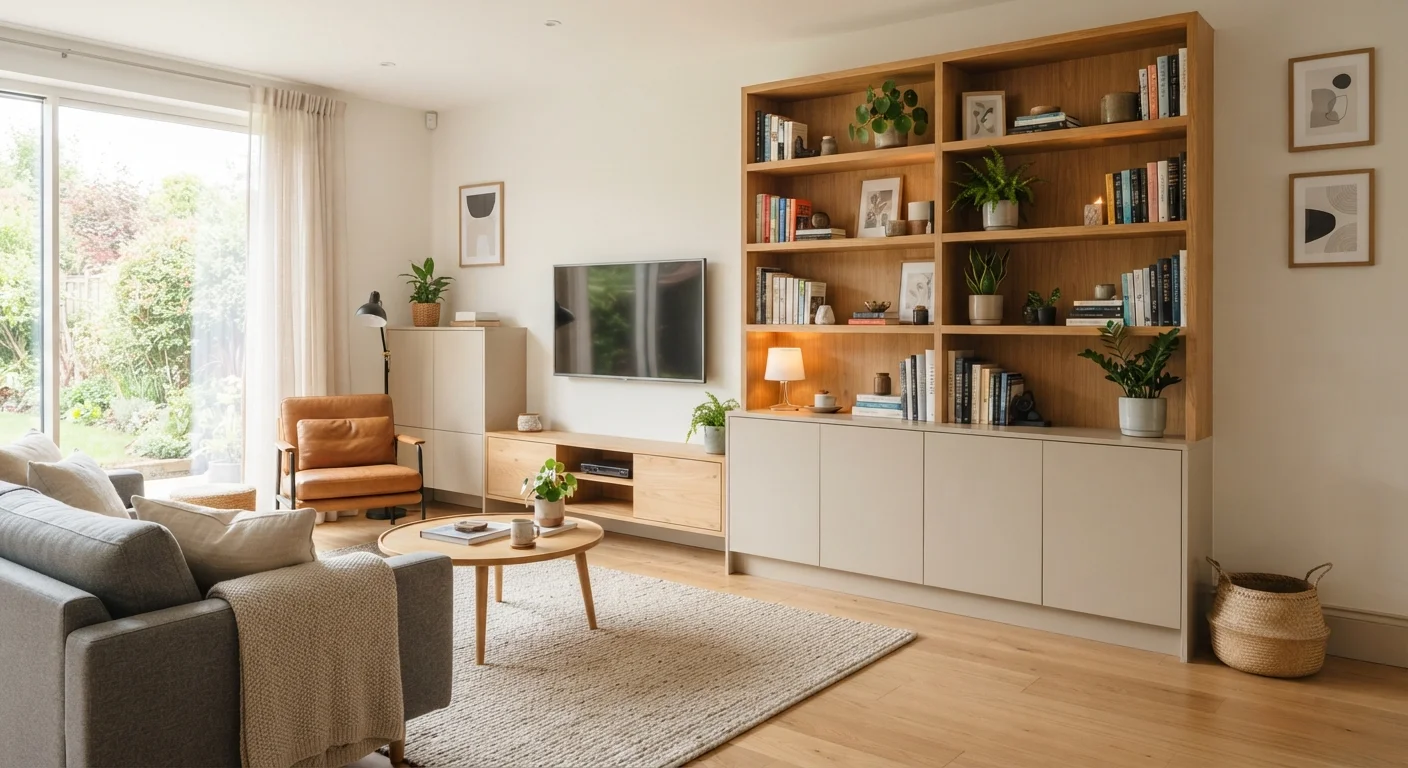
Many designers and experienced homeowners land on a combination of both: open shelving for curated display areas and closed cabinets for practical storage below or beside them. This hybrid model lets you enjoy the visual interest of styled open shelves while keeping the everyday stuff — remote controls, chargers, board games, extra linens — neatly out of sight.
In open-plan living areas especially, this balance matters. When the living room flows directly into a dining or kitchen space, visual consistency becomes more important. Keeping the lower half of storage closed reduces perceived clutter across the entire shared space. For a deeper look at how open-plan layouts affect storage and organization decisions, see Open-Plan Layouts: The Trade-Offs No One Talks About.
Ultimately, the most functional setup is the one that matches your actual habits — not the one that looks most aspirational in a showroom. Honest self-assessment about how tidy your household tends to be day-to-day will serve you better than any design trend.