

Key Takeaways
Soil pH
Soil pH is a measure of how acidic or alkaline your soil is, expressed on a scale from 0 to 14. A reading of 7.0 is neutral; anything below is acidic, and anything above is alkaline. This number has a direct impact on whether your plants can access the nutrients already present in your soil.
pH stands for 'potential of hydrogen' and reflects the concentration of hydrogen ions in the soil solution. Even small shifts on the scale represent tenfold changes in acidity or alkalinity.
Why pH Is the Hidden Lever in Your Garden
Gardeners often focus on fertilizer, sunlight, and water when plants struggle — and those factors genuinely matter. But soil pH is frequently the underlying issue that makes everything else less effective. When pH is out of range for a given plant, the nutrients in your soil become chemically locked up and unavailable, no matter how well you've amended or fertilized.
Think of soil pH as a gate controlling nutrient access. Nutrients like iron, manganese, and phosphorus behave very differently at pH 5.5 versus pH 7.5. Iron, for instance, becomes far less soluble as pH rises, which is why acid-loving plants like blueberries and azaleas develop yellowing leaves — a condition called iron chlorosis — when grown in alkaline soil.
6.0–7.0
Optimal pH range for most garden plants
This is the general range recommended by soil science educators and cooperative extension services across the U.S. for the widest variety of vegetables and ornamentals.
10x
Change in acidity per pH unit
The pH scale is logarithmic, meaning a soil at pH 5.0 is ten times more acidic than one at pH 6.0 — a detail that underscores why small pH shifts can have large effects on plant health.
4.5–5.5
Preferred pH range for blueberries
As noted by university extension programs, blueberries are among the most pH-sensitive common garden plants and require a significantly more acidic environment than most vegetables.
Understanding pH doesn't require a chemistry background. It simply requires knowing your soil's current number and what your plants need.
How to Test Your Soil pH
Testing is the essential first step, and it's more accessible than most gardeners assume. There are three main approaches:
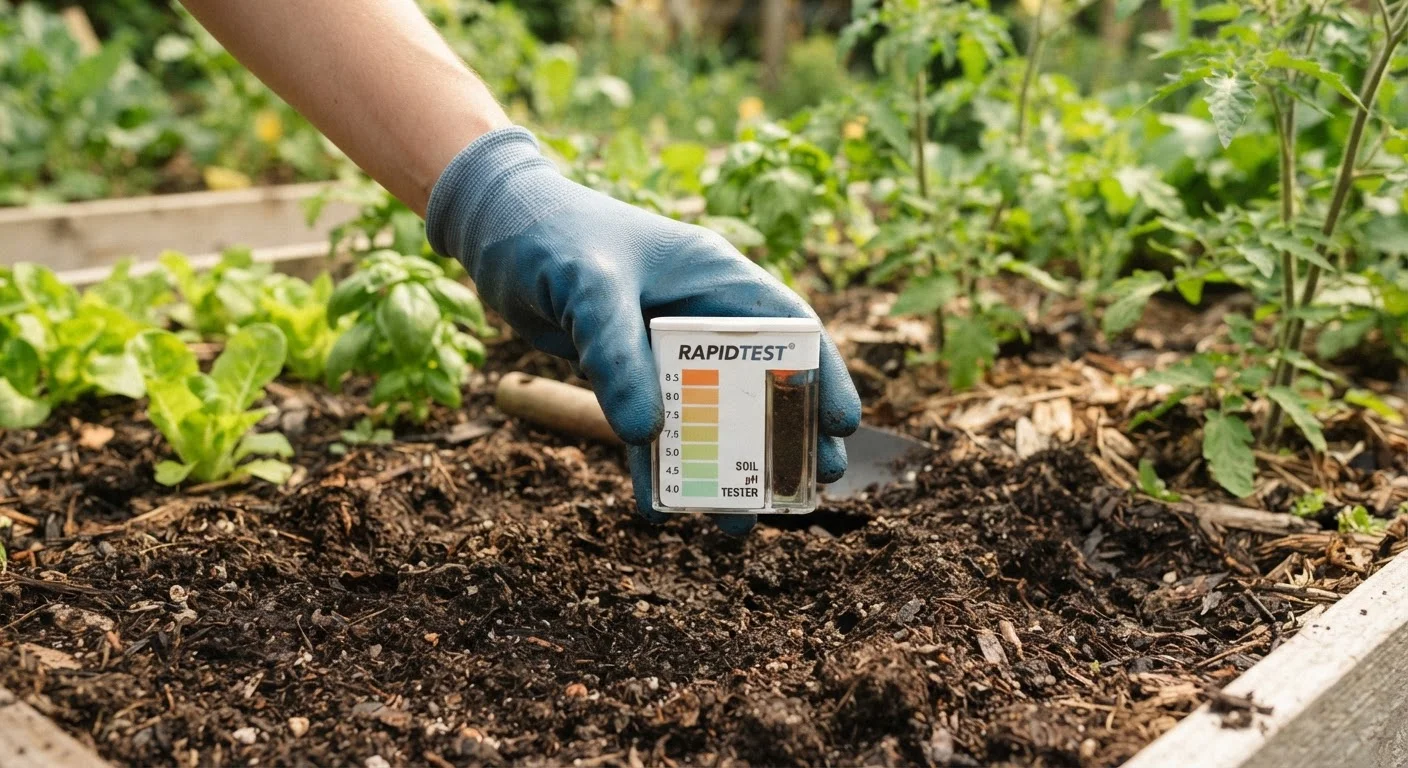
- Home test kits: Affordable and widely available, these use a color-matching method to give you a general pH range. They're useful for a quick baseline reading.
- Digital pH meters: Probe-style meters inserted directly into moist soil give faster, more precise readings. Accuracy varies by model quality.
- Cooperative extension testing: Many state university extension offices offer soil testing services — often for a modest fee — that return detailed results including pH and nutrient levels. This is generally the most reliable option for serious garden planning.
Collect samples from multiple spots in your garden and mix them before testing, since pH can vary within a single bed. If you're comparing raised beds versus in-ground planting, note that raised beds often allow better pH control because you're working with a defined, contained soil volume.
Test Before You Amend
Never apply pH amendments — lime or sulfur — without first knowing your baseline pH. Overcorrecting in either direction creates a new set of problems. Retest your soil after three to six months of amendment to track progress and adjust accordingly.
Adjusting Soil pH: What Works and What Takes Time
Once you know your soil's pH, you can make targeted adjustments. Two amendments do most of the work:
- To raise pH (make soil less acidic):
- Apply ground agricultural limestone (lime). Calcitic lime works well in most situations; dolomitic lime also adds magnesium. Work it into the top several inches of soil and water thoroughly. Results take weeks to months.
- To lower pH (make soil more acidic):
- Elemental sulfur is the standard amendment. Soil microbes convert it into sulfuric acid over time, gradually lowering pH. It works slowly — plan several months ahead of planting if possible. Aluminum sulfate works faster but should be used carefully to avoid over-application.
Application rates depend on your starting pH, your target pH, and your soil type — sandy soils require less amendment to shift pH than clay soils. Work from your soil test recommendations rather than guessing.
pH Varies Across Your Property
Soil pH is not uniform. Areas near concrete foundations or walkways often test higher due to lime leaching. Areas under acid-forming trees like oaks may test lower. Testing different zones separately gives you a more accurate picture before you amend.
pH management also intersects with other gardening decisions. If your plants show signs of stress despite good light and appropriate watering, a pH check is a logical next step — especially before adding more fertilizer. Poor pH can compound watering-related plant stress in ways that make diagnosis confusing.
Matching Plants to Your Soil's Natural pH
Rather than constantly battling your soil's natural tendencies, consider working with them. Many plants are adapted to specific pH ranges, and choosing plants suited to your existing conditions reduces ongoing maintenance significantly.
Native plants are a strong example of this principle — they've evolved to thrive in local soil chemistry, including regional pH norms, which often makes them more resilient than non-native alternatives. Similarly, shade gardening often involves working in soil under tree canopies, where decomposing leaf litter tends to gradually acidify the ground — an important consideration when selecting shade-tolerant species.
If you're designing a garden with both perennials and annuals, pH compatibility between your plant selections matters more than it might seem. Some perennials are long-lived investments in specific soil conditions, so testing pH before planning a mixed planting helps avoid correctable failures down the road.
“Soil pH is perhaps the single most important soil chemical property for gardeners to understand. It affects the availability of virtually every essential plant nutrient.”
— University Cooperative Extension Soil Science Educators, As commonly summarized in U.S. cooperative extension soil testing guidance