

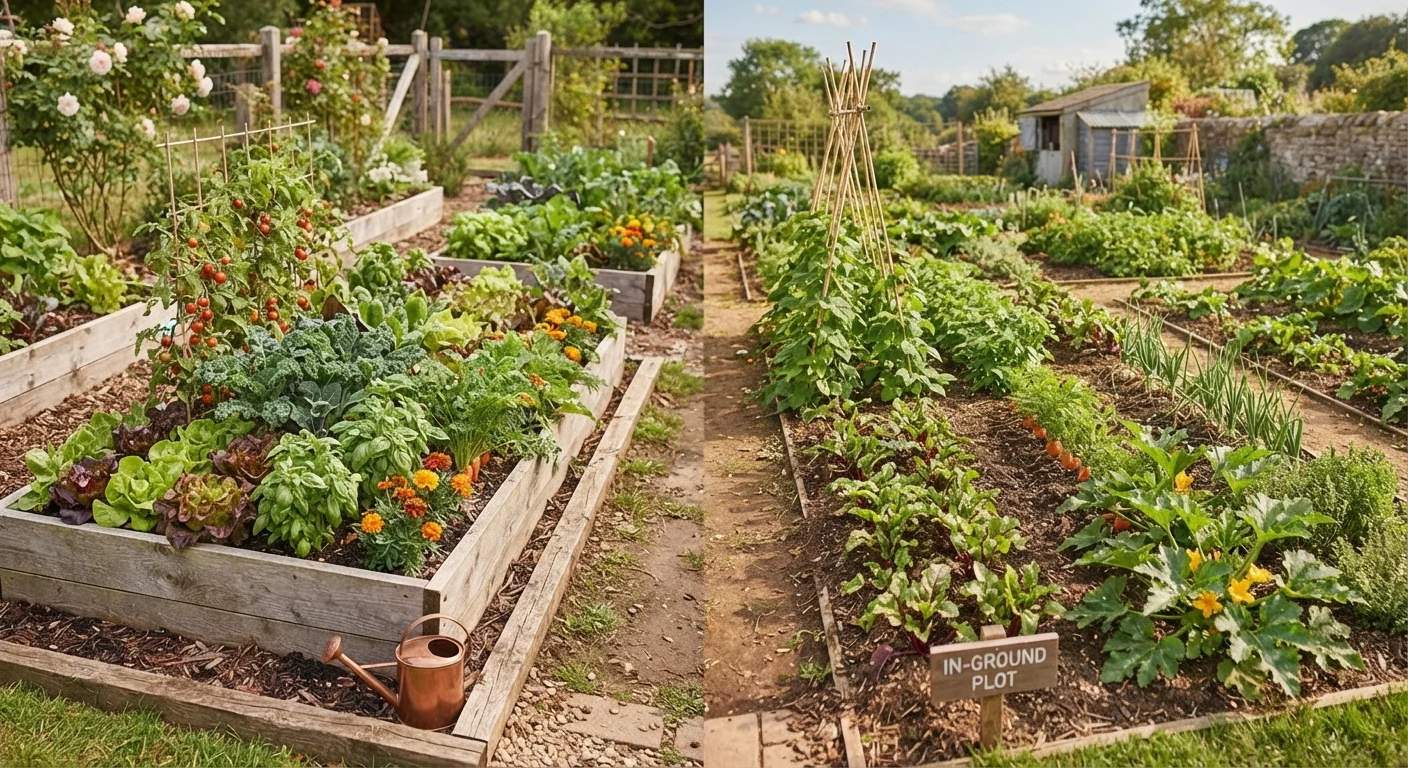
Key Takeaways
Option A
Raised Beds
The controlled, high-performance growing environment.
Best for: Gardeners dealing with poor native soil, drainage issues, or limited mobility who want precise control over growing conditions.
Option B
In-Ground Planting
The traditional, low-barrier approach to garden growing.
Best for: Homeowners with healthy native soil, larger growing ambitions, or tighter budgets who prefer a lower-cost setup.
If your native soil is compacted, clay-heavy, or contaminated
Raised Beds
Raised beds let you fill with a custom, well-draining mix entirely independent of what's beneath. This bypasses poor soil without the time and expense of extensive ground remediation.
If you're working with a tight initial budget
In-Ground Planting
In-ground gardens require little more than amendments and seeds. Raised beds involve material costs for framing and purchased growing mix that can add up quickly.
If you have mobility limitations or back problems
Raised Beds
A bed built to 24–30 inches tall eliminates the need to kneel or bend deeply. This makes gardening far more accessible and sustainable over time.
If you want to grow large quantities of a single crop
In-Ground Planting
In-ground plots are easier and cheaper to scale. Growing large volumes of corn, squash, or potatoes in raised beds becomes cost-prohibitive at scale.
If you're gardening in a short growing season or cold climate
Raised Beds
The elevated soil in raised beds warms up several weeks earlier than ground-level soil in spring, extending your effective growing season in colder regions.
Soil Control and Drainage: Where the Biggest Differences Live
For most gardeners, soil quality is where this decision gets made. Raised beds give you a clean slate: you fill them with a custom blend — typically a mix of topsoil, compost, and an aerating material like perlite — that's optimized for drainage and root development. This is especially valuable if your yard has heavy clay, rocky ground, or soil with a history of contamination.
In-ground planting works with whatever exists beneath your feet. If your native soil is loose, loamy, and rich in organic matter, you may need only modest amendments before planting. But poor-draining or nutrient-depleted soil requires significant work: repeated additions of compost, possible raised-grade contouring, and patience over multiple seasons before it reaches its potential.
Drainage behaves differently in each system too. Raised beds drain freely from all sides and the bottom, which reduces root rot risk considerably. In-ground beds in low-lying areas can pool water after heavy rain, stressing or killing shallow-rooted crops. For a deeper look at how watering strategy compounds these differences, see our guide on garden watering habits that quietly kill plants.
| Criterion | Raised Beds | In-Ground Planting |
|---|---|---|
| Upfront cost | Higher (materials + fill) | Lower (amendments only) |
| Soil control | Complete — custom fill mix | Dependent on native soil |
| Drainage | Excellent, free-draining | Varies by yard and grade |
| Spring warm-up | Faster — 2–4 weeks earlier | Slower in cold climates |
| Scalability | Limited by material cost | Easy to expand |
| Weed pressure | Generally lower | Typically higher |
| Deep-rooted crops | Requires deep bed construction | Unlimited root depth |
| Accessibility | High (adjustable height) | Requires bending/kneeling |
Cost, Setup, and Long-Term Maintenance
Initial costs favor in-ground gardens significantly. Preparing a ground-level bed may cost little beyond a bag of compost and a few hours of work. Raised beds require framing materials — cedar, pine, or composite lumber — plus enough growing mix to fill the structure, which can run $100–$300 or more per bed depending on size and materials. That cost is a one-time investment, but it's a real barrier for many gardeners.
Over time, both approaches require maintenance, though the nature of that work differs. Raised bed soil compacts more slowly and is easier to weed because it stays loose. However, the growing mix does break down and settle over years, requiring periodic top-dressing with compost to keep volume and fertility up. In-ground beds accumulate weeds more aggressively — especially from underground rhizomes — and may need more frequent turning and amending.
Pest management also plays out differently. Raised beds make it straightforward to add row cover or fine mesh framing, and physical barriers against burrowing pests (like gopher wire laid at the base) are easy to install during construction. In-ground gardens offer fewer structural options for exclusion but are less likely to suffer from the rapid moisture loss that can stress raised bed plants during dry stretches.
6–8 weeks
Earlier planting possible in raised beds
University extension services in northern US states have documented raised bed soil warming several weeks ahead of in-ground soil, allowing earlier transplanting in spring.
2–3x
Faster soil drainage in raised beds
Well-constructed raised beds with quality growing mix drain significantly faster than compacted clay-based in-ground soil, reducing waterlogging risk after heavy rain.
~30%
More water needed per square foot in raised beds
Because raised bed soil drains freely and has more air exposure, it tends to dry out more quickly, often requiring more frequent irrigation than equivalent in-ground plots.
Which Setup Works Best for Your Plants and Yard
The right choice often comes down to what you're growing and your yard's specific conditions. Raised beds excel for vegetables, herbs, and annual flowers — plants with moderate root depth that benefit from consistent, well-aerated soil. Root vegetables like carrots and parsnips do particularly well in deep, loose raised bed mixes. Deep-rooted perennials, fruit trees, and large shrubs are almost always better suited to in-ground planting, where roots can spread freely without hitting a wall.
If you're planning a mixed garden with both annual vegetables and longer-lived perennial plants, a combination approach often makes the most sense: raised beds for your kitchen garden and in-ground beds for perennial borders. Our comparison of perennials vs. annuals explains how to structure this kind of layered approach.
Watering infrastructure also deserves early consideration. Raised beds typically dry out faster and may benefit from dedicated drip lines, while in-ground gardens often work well with broader coverage methods. Exploring drip vs. sprinkler irrigation before you commit to a setup can save considerable retrofitting later. If you're starting completely from scratch, our guide to starting a vegetable garden from scratch walks through site selection and first steps for either approach.
A Note on Contaminated Urban Soils
In older urban and suburban neighborhoods, in-ground soil may contain elevated levels of lead, arsenic, or other contaminants from historic land use, paint, or construction debris. If you're in an older neighborhood or have any uncertainty about your soil history, consider getting a basic soil test through your local cooperative extension service before planting edibles directly in the ground. Raised beds with a physical barrier at the base offer a practical way to grow food safely in these situations.