

Key Takeaways
Understanding Your Shade: Not All Low Light Is the Same
Before choosing a single plant, take time to observe how light actually moves through your space across a full day. Shade conditions fall into a few distinct categories that have a big impact on what will grow successfully:
- Partial shade: Two to four hours of direct sun, typically in the morning or late afternoon. A wide range of plants tolerate this well.
- Dappled shade: Filtered light through a tree canopy. Conditions shift through the day, offering brief windows of brighter exposure.
- Full shade: Fewer than two hours of direct sun. This is the most limiting condition, but it doesn't mean bare ground — it means a narrower plant palette.
Note that what appears shady in spring may become more exposed once neighboring vegetation leafs out, and vice versa. Walk your yard at different times of day and in different seasons to get an accurate read before you commit to a design. This observation step is what separates successful shade gardens from frustrated ones.
Choosing the Right Plants for Your Conditions
Plant selection is where shade gardening either succeeds or stalls. The key principle is to work with the light you have rather than fight it. Many gardeners try to force sun-loving plants into shady spots only to end up with leggy, underperforming specimens.
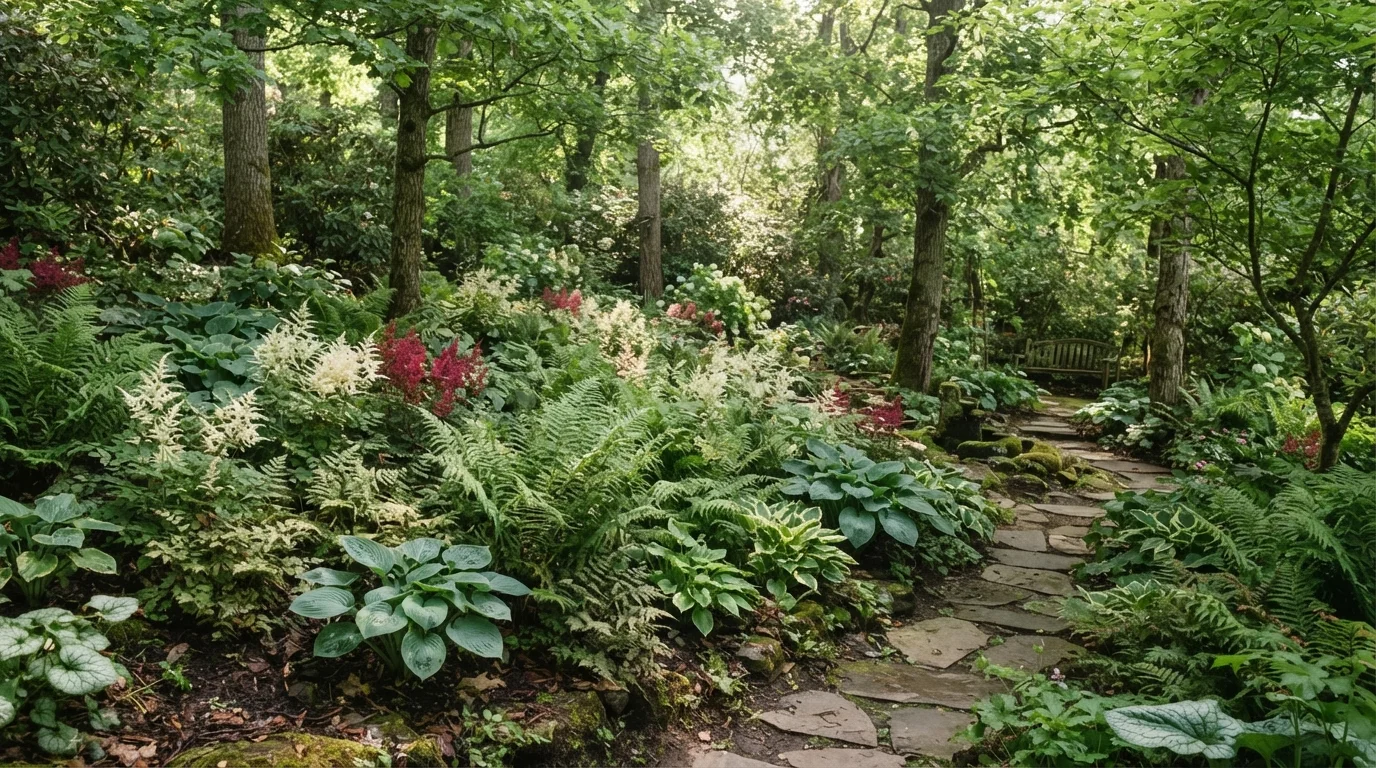
For partial shade, consider expanding beyond the usual suspects. While hostas and ferns are reliable workhorses, plants like astilbe, heuchera (coral bells), bleeding heart, and Solomon's seal add seasonal color and texture. In full shade, focus on foliage interest — Japanese forest grass, epimedium, and pachysandra all perform without direct sun. Native woodland plants such as wild ginger and trillium are worth exploring too; see our guide to growing native plants for how to incorporate them effectively.
If you're mixing perennials and annuals to keep the space dynamic, our article on perennials vs. annuals can help you balance structure with seasonal color.
Preparing and Improving Shaded Soil
Shade gardening often means gardening beneath trees — and that creates a specific soil challenge. Tree roots compete aggressively for water and nutrients, and the canopy can intercept rainfall before it reaches the ground. Compaction is also common in high-traffic shaded areas.
Work Around Tree Roots Carefully
Deep tilling under established trees can sever major feeder roots, stressing or damaging the tree. Instead, amend soil shallowly and use raised planting mounds or contained beds where tree root competition is heavy. Always check with a certified arborist if you're unsure how much root disturbance a tree can tolerate.
Amending with organic matter — compost, aged leaf mold, or well-rotted bark — improves both drainage and moisture retention and gives newly planted specimens a better start. Avoid tilling deeply in areas with established tree roots, as this causes damage. Work amendments into the top few inches instead, and mulch generously. A 2–3 inch layer of mulch helps regulate soil temperature, suppress weeds, and reduce surface evaporation. Our comprehensive mulching guide covers which types work best and how to apply them correctly.
Be cautious about waterlogged areas. Shade slows evaporation, so poorly drained spots can stay wet far longer than you'd expect — creating conditions where root rot becomes a real risk. If drainage is a concern, consider whether raised bed planting might give you better control over soil conditions.
Designing for Depth and Year-Round Interest
Shade gardens often get criticized for looking flat or monotonous. Good design solves this through layering — just as a natural forest has canopy, understory, shrub, and ground-cover layers, your garden can mirror this structure at a smaller scale.
Vary plant heights deliberately: taller specimens like oakleaf hydrangea or native serviceberry at the back, mid-height plants like astilbe or ferns in the middle, and low ground covers like sweet woodruff or creeping Jenny at the front. Textural contrast does much of the visual work in shade — pair bold hosta leaves against fine-textured ferns, or glossy foliage against matte surfaces.
To keep the garden looking purposeful through the seasons, refer to a month-by-month seasonal maintenance reference so you know when to cut back, divide, and feed each plant group. Shade gardens tend to require less watering than sun borders, but they still need consistent attention at planting time and during dry spells.
Finally, remember that shade gardening and vegetable growing serve very different goals. If you're weighing where to invest effort, our guide on starting a vegetable garden is a useful contrast — most edibles need full sun, making shaded areas a natural candidate for ornamental planting instead.