

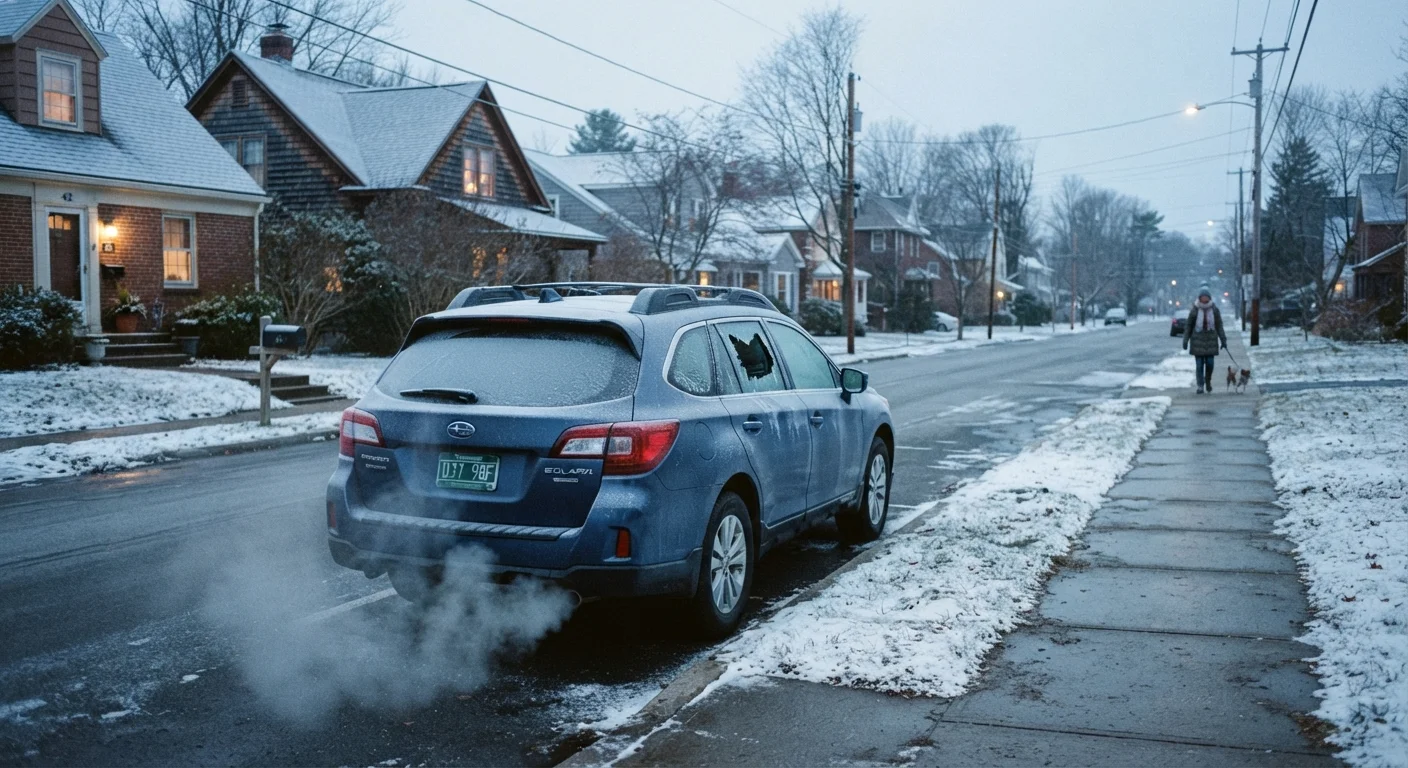
Key Takeaways
Where the Warm-Up Habit Comes From
For millions of American drivers, letting the car idle for several minutes on a cold morning feels like responsible ownership — a ritual passed down from parents and grandparents. That instinct wasn't always wrong. Older vehicles built before the mid-1980s used carburetors, mechanical devices that mixed air and fuel in ratios that could be unstable in cold temperatures. Those engines genuinely needed time to stabilize before being driven hard.
But virtually every vehicle sold in the U.S. since the late 1980s uses electronic fuel injection (EFI), a system that automatically adjusts the air-fuel mixture based on temperature sensor data. The core reason for long warm-ups disappeared with the carburetor — the habit just didn't. For a broader look at beliefs like this that quietly drain your wallet, see our guide on car maintenance myths that cost drivers money.
Common Myths — Corrected
The myths below are among the most persistent in American car culture. Each one shapes real morning routines. Here's what the evidence actually supports.
Myth
You need to idle your car for five to ten minutes before driving in winter to protect the engine.
Fact
Modern fuel-injected engines only need about 30 seconds of idle time to build oil pressure before gentle driving.
This belief traces directly to carburetor-era vehicles that struggled in cold air. Today's EFI systems adjust instantly using temperature sensors, so a long idle provides no additional protection. The engine actually warms to operating temperature faster when driven gently than when sitting still, because combustion load speeds thermal transfer through the engine block and coolant system.
Myth
Idling in cold weather lubricates the engine before you put stress on it.
Fact
Extended idling at cold temperatures can actually wash oil off cylinder walls, increasing wear rather than preventing it.
In cold conditions, a slightly richer fuel mixture is used during startup. If the engine idles too long before reaching operating temperature, unburned fuel can pass the piston rings and dilute the oil film on cylinder walls. This is sometimes called fuel wash, and it's a documented source of premature cylinder and ring wear — the opposite of the protection drivers assume they're getting.
Myth
Your car's heater won't work properly unless you idle for several minutes first.
Fact
The cabin heater works off engine coolant temperature, which rises faster under a gentle driving load than at idle.
Cabin heat depends on hot coolant circulating through the heater core. An idling engine warms coolant slowly; one under light driving load warms it noticeably faster. In practical terms, driving gently for two minutes typically delivers usable cabin heat sooner than sitting in the driveway for five. If defrost performance matters — particularly for rear window defrost, which is electrically powered — driving is the faster path.
Myth
Idling to warm up the engine saves it from cold-start damage that shortens its life.
Fact
Most engine wear occurs in the first few seconds after a cold start, regardless of whether the car is then driven or allowed to idle.
The critical wear window is the moment between startup and when pressurized oil reaches all moving components — typically under 10 seconds with a healthy oil pump. After that brief window, whether you idle or drive gently makes little difference to wear rates. What matters far more is using the correct oil viscosity for your climate and maintaining oil change intervals. See the DIY oil change guide for details on viscosity grades.
Myth
Warming up the car is just about the engine — everything else is ready to go immediately.
Fact
Transmission fluid, differential fluid, wheel bearings, and tires also need time to reach operating temperature.
While the engine warm-up myth is overstated, there's a valid reason to avoid aggressive driving immediately in cold weather: drivetrain fluids throughout the vehicle are thicker when cold and take longer to fully circulate than engine oil. Automatic transmissions in particular benefit from gentle initial use. Driving conservatively for the first several miles — rather than idling in the driveway — addresses this concern for the entire drivetrain, not just the engine.
What You Should Actually Do on Cold Mornings
The most engine-friendly cold-weather routine is straightforward: start the vehicle, let it sit for no more than 30 seconds — enough for oil pressure to build — then drive away gently. Keep engine RPMs low for the first few miles rather than accelerating aggressively. This approach circulates warm oil through the engine far more efficiently than idling ever could.
~30 sec
Recommended idle time before driving in cold weather
The U.S. Department of Energy and most automakers' owner's manuals suggest no more than 30 seconds of idling before gentle operation in modern vehicles.
Up to 12%
Fuel economy reduction from excessive cold idling
The U.S. Department of Energy estimates that idling a vehicle in cold weather for extended periods can reduce overall fuel economy by a meaningful margin versus prompt, gentle driving.
What actually matters in winter is everything outside the warm-up ritual: battery condition, tire pressure (which drops roughly 1 PSI for every 10°F temperature drop), coolant concentration, and wiper blade condition. These checks have a measurable impact on cold-weather safety. Our seasonal car care guide covers all of them in detail. And when you're already thinking about engine health, it's worth reviewing your oil change intervals — the DIY oil change walkthrough is a solid place to start.
One Thing You Should Genuinely Worry About
Carbon Monoxide Risk Is Real and Immediate
Never idle a vehicle inside a closed or semi-enclosed garage, regardless of how briefly you intend to do so. Carbon monoxide is colorless and odorless, and dangerous concentrations can build within minutes. Even idling just outside a garage with the door open can allow exhaust to drift indoors. If you warm your vehicle in cold weather, ensure the area is fully open and ventilated.
Beyond engine wear, extended idling carries a real safety risk: carbon monoxide buildup. Even outdoors, idling near a garage door, enclosed carport, or structure with limited airflow can allow exhaust to accumulate. Always ensure adequate ventilation if you do idle your vehicle, and never run an engine inside a closed garage — even briefly. This isn't a hypothetical concern; carbon monoxide is odorless and can incapacitate quickly. Treat it as a firm rule, not a precaution to weigh situationally.
For everything else winter throws at your vehicle, routine maintenance and realistic habit adjustments will serve you far better than any idling ritual. Check out the full car maintenance hub for trusted guidance across every aspect of vehicle upkeep.