

Key Takeaways
Why Style Consistency Gets Lost Between Seasons
Most wardrobe inconsistency isn't a taste problem — it's a systems problem. When seasons shift, many people approach their closet reactively: purging what feels wrong and buying what feels right in the moment. The result is a wardrobe that reads differently every few months, making it harder to get dressed with confidence.
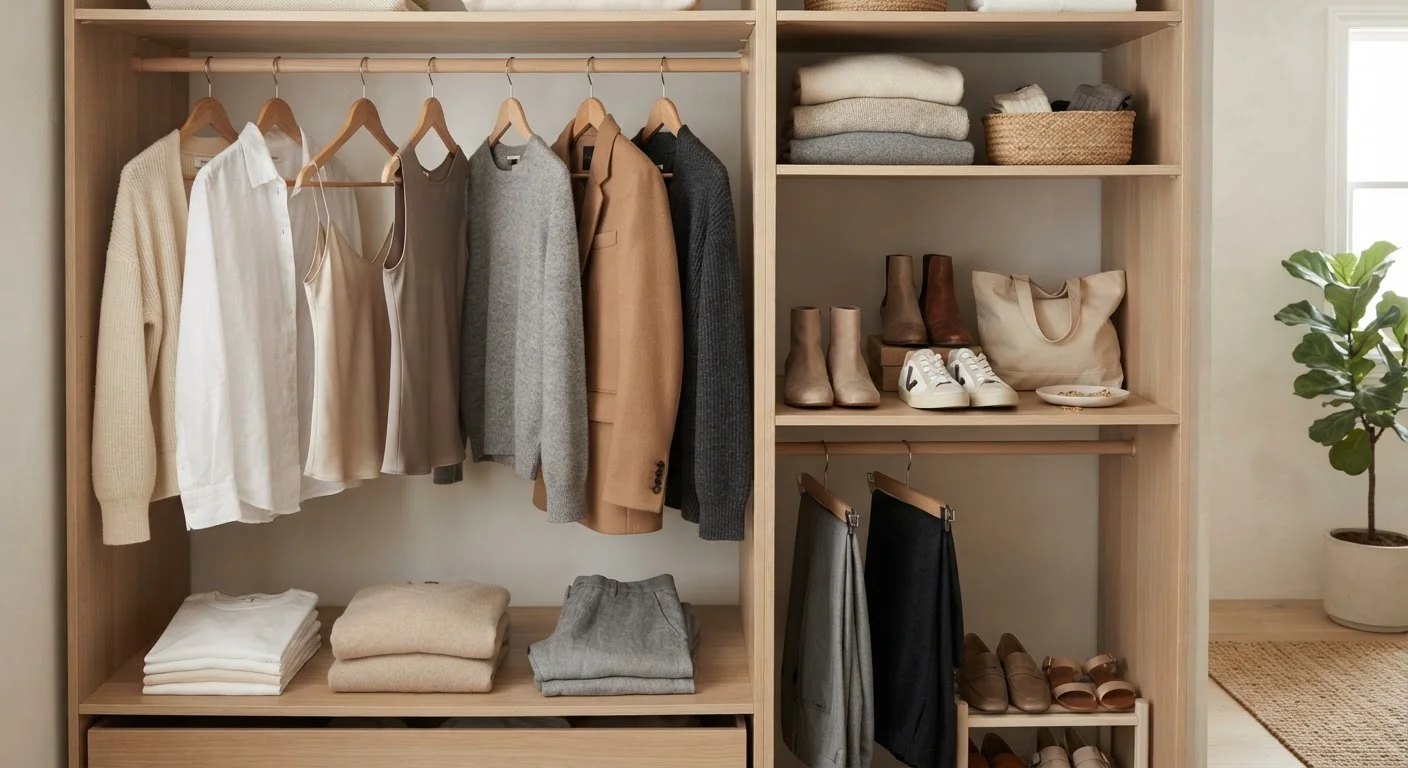
True style consistency doesn't mean wearing the same pieces year-round. It means that your summer linen separates and your winter wool layers both belong to the same visual identity. The bridge between them is a clear aesthetic framework — and that's something you define once, then revisit, rather than rebuild from scratch each year. If you're still working on establishing that identity, our guide on building a signature look from scratch is a useful starting point.
This Isn't About Minimalism
Style consistency doesn't require a capsule wardrobe or a strict item count. You can have a large, expressive closet and still maintain a coherent aesthetic — the key is whether pieces share a visual logic, not how many there are. Maximalist dressers can benefit from these principles just as much as those who prefer a pared-back approach.
The Core Practices That Hold a Look Together
Once you understand what actually anchors a personal aesthetic, maintaining it across seasons becomes a matter of applying consistent rules rather than reinventing them. The following practices form the structural backbone of a wardrobe that travels well through the year.
Define and document your aesthetic pillars before each seasonal transition.
Without a written or visual reference point, seasonal shopping decisions get made emotionally rather than strategically. A short list of your core silhouettes, textures, and color commitments acts as a filter that prevents drift.
Anchor your palette to a set of neutral and accent colors that function across seasons.
A consistent color story is the fastest way to make disparate pieces feel like a wardrobe. When your neutrals stay stable, seasonal accent colors can shift without the whole look fragmenting.
Invest in silhouettes, not trends, when adding new pieces.
Trend-driven silhouettes date quickly and rarely integrate with what already exists. Silhouettes that align with your established proportional preferences, by contrast, reinforce rather than disrupt the wardrobe's overall logic.
Use fabric and weight as your primary seasonal lever, not color or silhouette.
Swapping material weight — linen for cotton, cotton for wool — is the most invisible way to move through seasons without changing your look. The color and cut stay the same; only the hand of the fabric changes.
Evaluate each seasonal purchase against your existing wardrobe, not against the trend landscape.
The most common source of wardrobe inconsistency is pieces bought in isolation — chosen because they looked compelling on their own, not because they worked within the existing system. A simple integration test before purchasing reduces this significantly.
Adapting Seasonally Without Drifting Stylistically
Seasonal dressing is, at its core, a materials and layering challenge — not an identity challenge. Swapping wool for cotton, or trading a trench for a puffer, doesn't have to disrupt your visual story if the underlying palette and silhouette stay anchored. Our editorial on transitioning a wardrobe between seasons without starting over explores the practical layering mechanics in more depth.
Where many people go off course is in conflating seasonal newness with style evolution. Trends, in particular, can pull a wardrobe in directions that feel exciting in the store and incoherent at home. Understanding your seasonal colour palette can help you evaluate whether a trending piece genuinely extends your aesthetic or simply competes with it. For a sharper look at how trend-chasing quietly fragments a wardrobe, see our piece on trend-chasing pitfalls.
The Long-Term Payoff of Aesthetic Discipline
Consistency compounds. A wardrobe built around stable aesthetic principles becomes easier — not harder — to dress from over time, because each new piece is evaluated against a clear standard rather than an evolving mood. This is the opposite of the all-at-once overhaul approach, which tends to produce closets full of unrelated pieces that don't work together. If that pattern sounds familiar, our piece on where wardrobe overhauls go wrong breaks down why it happens and how to course-correct.
The goal isn't a static wardrobe — it's a stable one. Pieces will enter and exit. Tastes will evolve gradually. But when your aesthetic pillars are clearly defined, seasonal transitions become edits, not reinventions.
“A wardrobe is not a collection of clothes — it is a system. The pieces that last are the ones that were chosen with the whole system in mind.”
— Tim Gunn, Fashion educator and author on personal style