

Key Takeaways
Why a Signature Look Is a Practical Tool, Not a Vanity Project
A signature look is simply a consistent aesthetic identity — a set of repeating choices in silhouette, color, and texture that make getting dressed faster, cheaper, and more satisfying over time. It has nothing to do with trend fluency or fashion interest. As explored in our piece on what personal style actually means, a defined aesthetic operates below the trend cycle — it's durable by design.
The practical payoff is real: when every piece in your wardrobe is filtered through the same aesthetic logic, almost everything works together. Decision fatigue drops. Impulse purchases decrease. And your appearance becomes reliably expressive rather than accidentally assembled. If you've never approached fashion systematically, this guide for style beginners offers a useful parallel starting point.
Notebook or digital notes app
Record aesthetic patterns, color observations, and style words that surface during your audit.
Visual mood board tool (physical or digital)
Collect images that reflect the aesthetic direction you want to build toward.
Full-length mirror
Evaluate silhouette and proportion as you try on pieces during the wardrobe review.
The Six Steps to Building Your Look
The process below moves from observation to definition to curation. Each step builds directly on the last, so resist the urge to skip ahead to the editing phase before the audit is complete. Clarity about your aesthetic makes every downstream decision sharper — which is exactly why developing a style identity before shopping is worth the upfront investment.
What you will need
Define your lifestyle contexts
Before touching a single garment, map out where your life actually takes you on a weekly basis. Separate your time into real categories — professional settings, casual daily errands, social occasions, physical activity. Be honest, not aspirational. A wardrobe built for a life you wish you lived will consistently fail the one you're actually living. This step grounds everything that follows in practical reality rather than fantasy.
Audit what you already own
Pull everything out and group pieces by silhouette, color family, and texture — not by category like 'tops' or 'pants.' Patterns emerge quickly: most people already gravitate toward a consistent color palette and a preferred fit without realizing it. Note which pieces you reach for automatically versus which ones you skip. The items you wear consistently are your real style data, not your aspirational purchases.
Identify your aesthetic pillars
From your audit, extract three to five recurring descriptors — words like structured, minimal, warm, relaxed, or precise. These are your aesthetic pillars: the non-negotiable qualities that should show up in everything you own. They function as an editorial filter. If a piece doesn't express at least two of your pillars, it's likely to sit unworn. Keep the list short; more than five creates contradiction rather than cohesion.
Build a visual reference point
Collect images — from editorial sources, street photography, film, or art — that reflect the aesthetic your pillars describe. You are not copying looks; you are identifying the feeling and composition they share. Look for patterns in silhouette proportion, color temperature, and fabric weight. A mood board makes abstract aesthetic language concrete and gives you a reference to return to when decisions get blurry.
Establish a consistent color framework
Choose a core palette of three to four neutrals that work across your lifestyle contexts, then identify one or two accent tones that surface repeatedly in your audit. A defined color framework means pieces can be combined freely without friction — which is what makes a wardrobe feel effortless rather than assembled. Color consistency is often more visible and impactful than any single statement purchase.
Edit and fill gaps intentionally
Now apply your pillars and color framework as a filter to what you own. Remove pieces that contradict your aesthetic direction — they dilute it. Identify genuine gaps: a silhouette you need but don't have, a context that's underserved. Future purchases should address real gaps rather than impulse. This is the discipline that separates a signature look from a collection of disconnected clothes.
Consistency Beats Variety
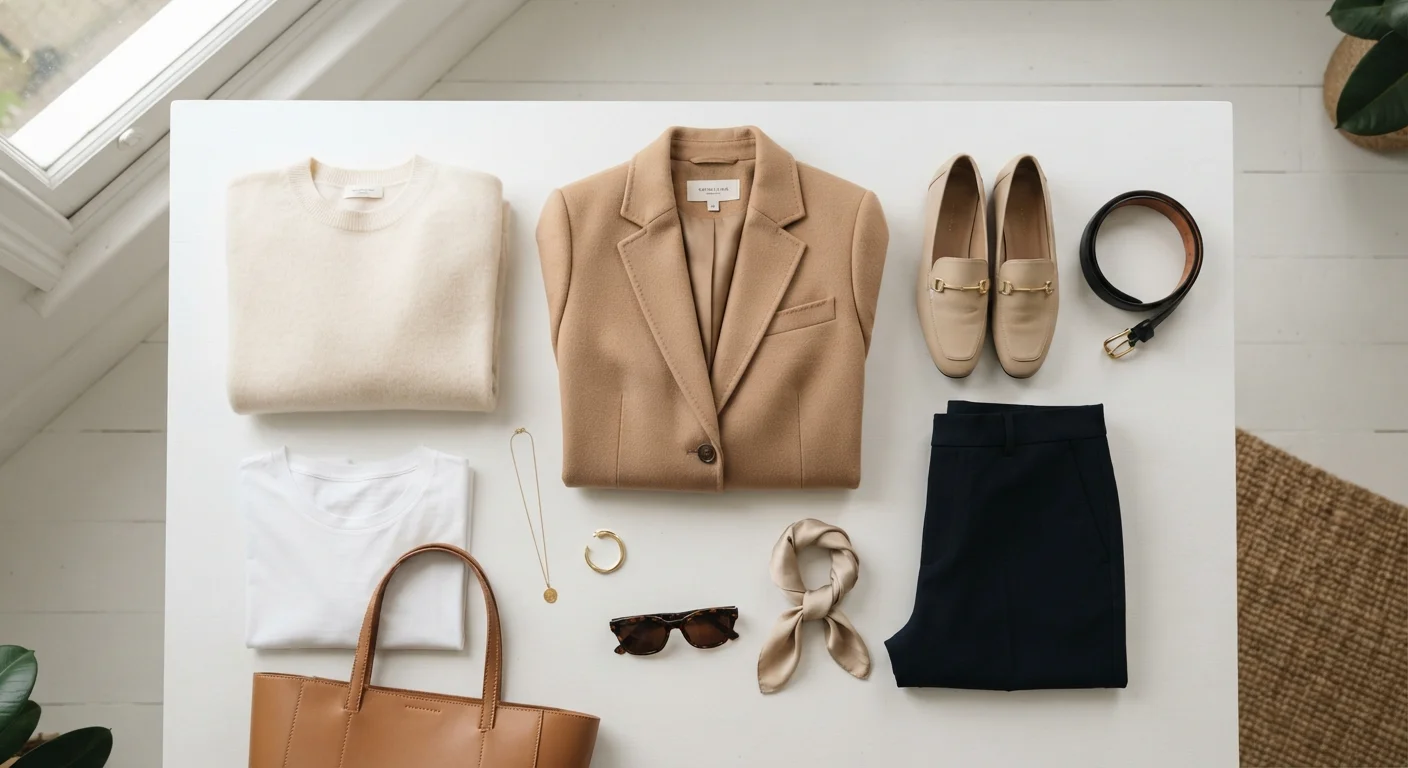
A signature look doesn't require a large wardrobe — it requires a coherent one. Repeating a limited set of silhouettes, colors, and textures across your pieces creates a recognizable aesthetic more effectively than accumulating variety. Think of style consistency as a creative constraint, not a limitation.
Sustaining the Look You've Built
A signature look isn't a finished project — it's a living framework that needs occasional recalibration. Lifestyle shifts, such as a new job, a move, or a change in daily routine, can make previously appropriate pieces feel misaligned. Revisit your aesthetic pillars annually rather than reactively. The goal isn't rigidity; it's intentionality. Our guide to style consistency across seasons covers how to maintain your aesthetic through wardrobe transitions without starting over.
Remember that your wardrobe should reflect how you actually live. How lifestyle shapes your wardrobe is a useful companion read for grounding aesthetic decisions in the reality of your daily contexts rather than an idealized version of them.
Define Your Aesthetic Before You Shop
Shopping without a defined style identity is the single most common cause of a wardrobe full of underused pieces. Clarifying your aesthetic pillars and color framework before making purchases ensures every addition strengthens rather than dilutes your look. The discipline happens before the checkout, not after.
Don't Build Around Trends
Trend-driven purchases rarely anchor a signature look — they fragment it. If a trend aligns with your existing aesthetic pillars, it can be incorporated thoughtfully. But buying into a trend that contradicts your defined aesthetic pulls your wardrobe in competing directions. Fashion trends are useful as cultural context, not as a personal style foundation.