

Key Takeaways
Option A
Interior Waterproofing
The accessible, less disruptive moisture management system.
Best for: Homeowners dealing with chronic water infiltration who need a practical solution without full-scale excavation.
Option B
Exterior Waterproofing
The comprehensive, source-addressing foundation protection method.
Best for: Homeowners building new construction or tackling significant foundation water intrusion where the source must be blocked from outside.
If you have an existing home with chronic seepage and a limited budget
Interior Waterproofing
Interior drainage systems can be installed without excavation, controlling water effectively at a fraction of the cost of full exterior work.
If you are building new construction or completing a major foundation repair
Exterior Waterproofing
Applying a waterproof membrane and drainage board during construction or full excavation is the most effective long-term barrier against moisture intrusion.
If water is entering through wall cracks caused by hydrostatic pressure
Exterior Waterproofing
Addressing hydrostatic pressure from outside the foundation wall prevents structural damage that interior systems alone cannot stop.
If you need a faster turnaround with minimal landscape disruption
Interior Waterproofing
Interior perimeter drains and sump pumps can typically be installed in days without disturbing landscaping, driveways, or utilities.
How Each Approach Works
Basement waterproofing is not a single solution — it is a category of strategies, each designed to address moisture at a different point in its path. Understanding the mechanics of each approach is essential before committing to a plan.
Interior Waterproofing
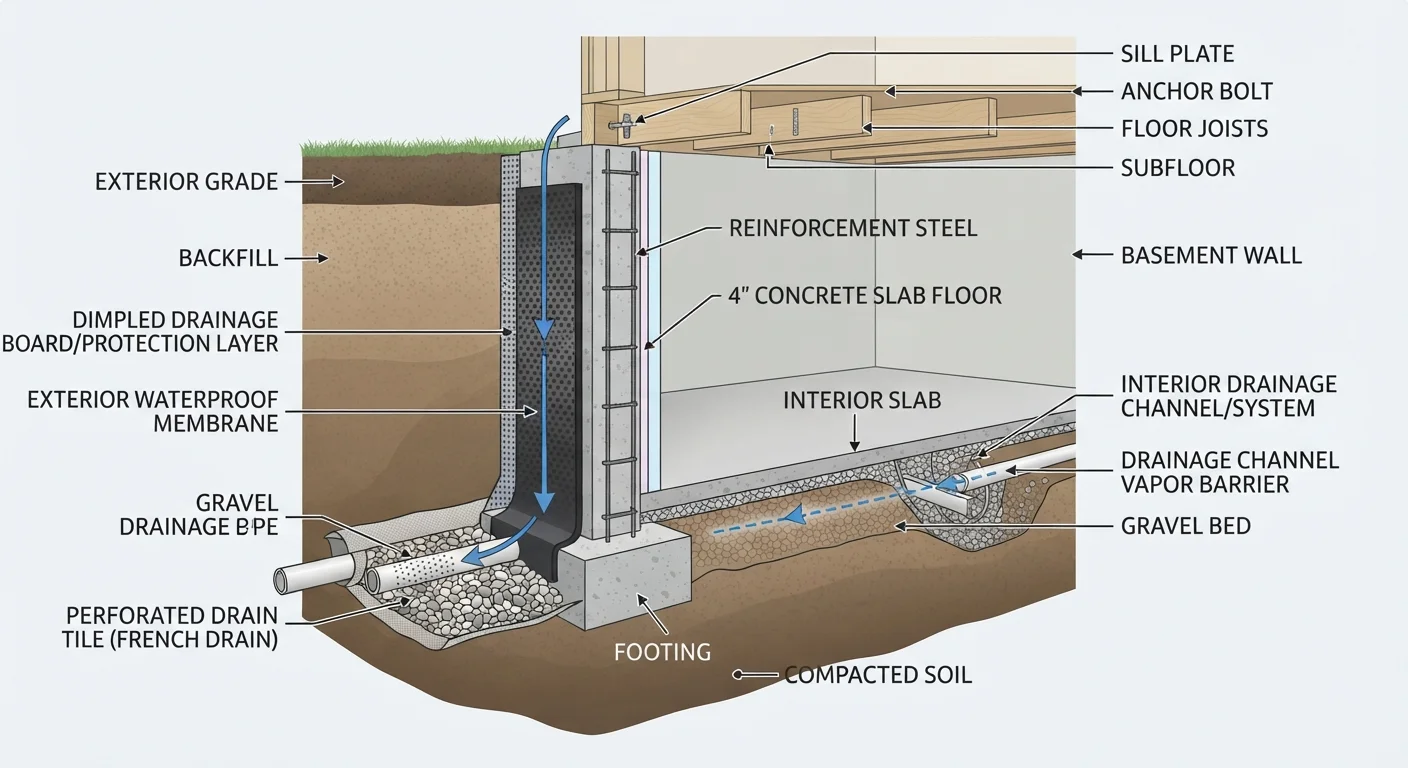
Interior systems intercept water that has already penetrated the foundation wall or slab. The most common method involves cutting a channel along the perimeter of the basement floor, installing a perforated drain pipe (often called a French drain or footing drain), and routing collected water to a sump pump pit. The pump then discharges water away from the home. Vapor barriers and wall panels may also be added to direct seepage downward into the drain rather than allowing it to pool on the floor.
Exterior Waterproofing
Exterior systems work by creating a barrier at the outside face of the foundation wall before water can enter. This typically involves excavating the soil down to the footing, cleaning and repairing the foundation surface, applying a waterproof membrane or coating, and installing a drainage board and gravel-filled trench with a drain pipe. Proper grading of the surrounding soil is also part of a complete exterior system. Because the work addresses the source directly, it is widely considered the most thorough method.
| Criterion | Interior Waterproofing | Exterior Waterproofing |
|---|---|---|
| Where it acts | Inside the foundation, after water enters | Outside the foundation, before water enters |
| Typical cost | Lower overall investment | Significantly higher due to excavation |
| Installation disruption | Confined to basement interior | Major exterior excavation required |
| Timeline | Often 1–3 days | Can take 1–2 weeks or more |
| Structural protection | Limited — water still contacts wall | High — wall is shielded from moisture |
| Best suited for | Existing homes, floor and joint seepage | New construction or severe hydrostatic issues |
| Permit requirements | Varies by locality | Commonly required; verify locally |
Key Differences in Cost, Disruption, and Effectiveness
The practical differences between these two approaches go well beyond how they work. Cost, installation timeline, and long-term performance all vary significantly.
Cost: Interior drainage systems are generally the less expensive option. Costs vary widely based on basement size, local labor rates, and the complexity of the sump pump setup, but interior systems typically run thousands of dollars less than full exterior excavation. Exterior waterproofing involves heavy equipment, significant labor, and landscaping restoration, all of which drive up the total investment.
Disruption: Interior work is confined to the basement itself. Homeowners may need to temporarily vacate the space, but landscaping, driveways, and underground utilities remain untouched. Exterior projects require excavating several feet down around the foundation perimeter — a process that can damage plantings, require utility locating, and take one to two weeks or longer depending on the home's footprint.
Effectiveness: Interior systems are highly effective at controlling water and preventing damage to finished spaces, but they do not stop water from contacting the foundation wall. Over time, continuous moisture exposure can contribute to efflorescence (white mineral deposits), mold growth, and potential structural concerns if wall cracks go unaddressed. Exterior membranes physically block water from reaching the wall, making them more effective at protecting the structure itself — provided the membrane remains intact.
98%
Of basements that will experience some water intrusion
The American Society of Home Inspectors has long cited that the vast majority of basements will experience some form of water infiltration over their lifetime.
3–5x
Cost multiplier: exterior vs. interior systems
Industry estimates from waterproofing contractors generally place exterior excavation projects at three to five times the cost of comparable interior drainage installations, depending on home size and soil conditions.
Choosing the Right Approach for Your Situation
No single method is universally superior. The right choice depends on your home's specific conditions, budget, and goals.
Consider Interior Waterproofing When:
- Water seeps through the floor-wall joint or up through the slab
- The home is already built and excavation would be highly disruptive or costly
- You need a solution installed quickly with minimal exterior impact
- The foundation walls are structurally sound with no significant cracking
Consider Exterior Waterproofing When:
- The home is under new construction or undergoing major foundation work
- Hydrostatic pressure is causing wall cracks or bowing
- Water is entering through the wall face rather than the floor joint
- A long-term, source-blocking solution is the priority and budget allows for it
In cases of persistent or severe moisture intrusion, waterproofing professionals frequently recommend combining both systems — exterior membrane to block infiltration and an interior drain as a backup for any moisture that does find its way through. Just as smart outdoor drainage planning applies across home and garden projects — from managing irrigation around your home to controlling soil drainage in garden beds — layering complementary systems often produces the most reliable results.
When to Involve a Structural Engineer
If you notice horizontal cracks, bowing walls, or significant wall displacement in your basement, moisture management alone is not sufficient. These signs may indicate structural failure that requires evaluation by a licensed structural engineer before any waterproofing work begins. Waterproofing a compromised foundation without addressing the underlying structural issue can mask serious problems. Always have such conditions assessed by a qualified professional.
This article is for general informational purposes. Waterproofing work can involve permitted construction and hazardous conditions. Always consult a licensed contractor and verify local building code requirements before beginning any foundation waterproofing project.