

Key Takeaways
Hydration and Nutrition Interaction
Hydration and nutrition interaction refers to the ways in which water intake influences how the body digests food, absorbs nutrients, and uses them for energy. Water is not just a thirst quencher — it is a functional participant in nearly every step of the digestive process. Without adequate water, even a nutrient-rich diet may not deliver its full potential benefit.
Water acts as a solvent and transport medium for water-soluble vitamins (B vitamins, vitamin C), electrolytes, and digestive enzymes, making fluid status a meaningful variable in overall nutritional status.
Water's Role in Digestion and Absorption
The digestive process begins before food ever reaches the stomach. Saliva — which is mostly water — initiates carbohydrate breakdown and lubricates food for swallowing. From there, water participates at every subsequent stage: it helps form the gastric juices that break down proteins, supports the production of bile and pancreatic enzymes in the small intestine, and creates the fluid environment needed for nutrients to move through the intestinal wall and into the bloodstream.
Water-soluble nutrients — including vitamin C, the full range of B vitamins, and key electrolytes — require an aqueous environment to be absorbed effectively. When fluid intake is consistently low, the digestive system can slow, and nutrient transport becomes less efficient. This doesn't mean mild under-hydration causes dramatic deficiencies, but it does highlight why water is often described as a "carrier" nutrient alongside the ones listed on a food label. For a closer look at those label figures, see our guide to reading a nutrition label.
Water-Soluble vs. Fat-Soluble Nutrients
Not all nutrients behave the same way with respect to hydration. Water-soluble vitamins (B vitamins and vitamin C) rely on fluid for absorption and are not stored in large amounts, making consistent intake — and adequate hydration — more important day to day. Fat-soluble vitamins (A, D, E, K) are absorbed alongside dietary fat and stored in body tissues, so they interact with hydration differently. Both groups matter; understanding the distinction helps clarify why fluid intake is relevant to overall nutritional status.
Hydration, Energy, and Physical Performance
Even mild dehydration — often defined in research as a fluid loss of around 1–2% of body weight — has been associated with measurable reductions in physical endurance and cognitive performance in some studies. The mechanism relates partly to blood volume: when fluid drops, the heart works harder to circulate oxygen and nutrients to working muscles and the brain.
Energy metabolism also depends on adequate hydration. Cellular reactions that generate ATP (the body's primary energy currency) occur in water-based environments. Electrolytes like sodium and potassium, which regulate fluid movement into and out of cells, are equally important here — they ensure that water reaches the places where it's needed. This is why endurance athletes, for instance, pay attention to electrolyte replenishment alongside fluid intake, particularly in heat.
~60%
Proportion of adult body weight that is water
The U.S. Geological Survey notes that water makes up roughly 60% of an adult's body weight, underscoring its role as a structural and biochemical necessity.
1–2%
Fluid loss associated with early performance effects
Some exercise physiology research suggests that fluid losses as small as 1–2% of body weight may begin to affect physical endurance and concentration in some individuals.
~20%
Daily fluid intake that comes from food
The National Academies of Sciences estimates that roughly 20% of daily water intake typically comes from foods, particularly fruits, vegetables, and dairy products.
Individual Hydration Needs Are Not One-Size-Fits-All
A commonly repeated rule — "drink eight glasses of water a day" — has limited scientific grounding as a universal prescription. Actual hydration needs are shaped by a cluster of factors: body composition, physical activity level, ambient temperature and humidity, dietary habits, and underlying health conditions all play a role.
Diet itself is a significant variable. People who eat generous amounts of fruits and vegetables — foods like cucumbers, watermelon, oranges, and leafy greens — receive meaningful fluid from their meals. These same foods also tend to supply potassium, magnesium, and other electrolytes that support fluid balance. By contrast, diets high in sodium or heavily processed foods can increase fluid needs. The Mediterranean and DASH dietary patterns, which emphasize plant foods and moderate sodium, align naturally with better hydration outcomes.
Urine color remains one of the most practical self-monitoring tools available: pale yellow generally indicates adequate hydration, while dark yellow or amber suggests a need for more fluids. That said, individual variation exists, and certain vitamins and foods can temporarily alter urine color independent of hydration status.
Use Your Plate as a Hydration Check
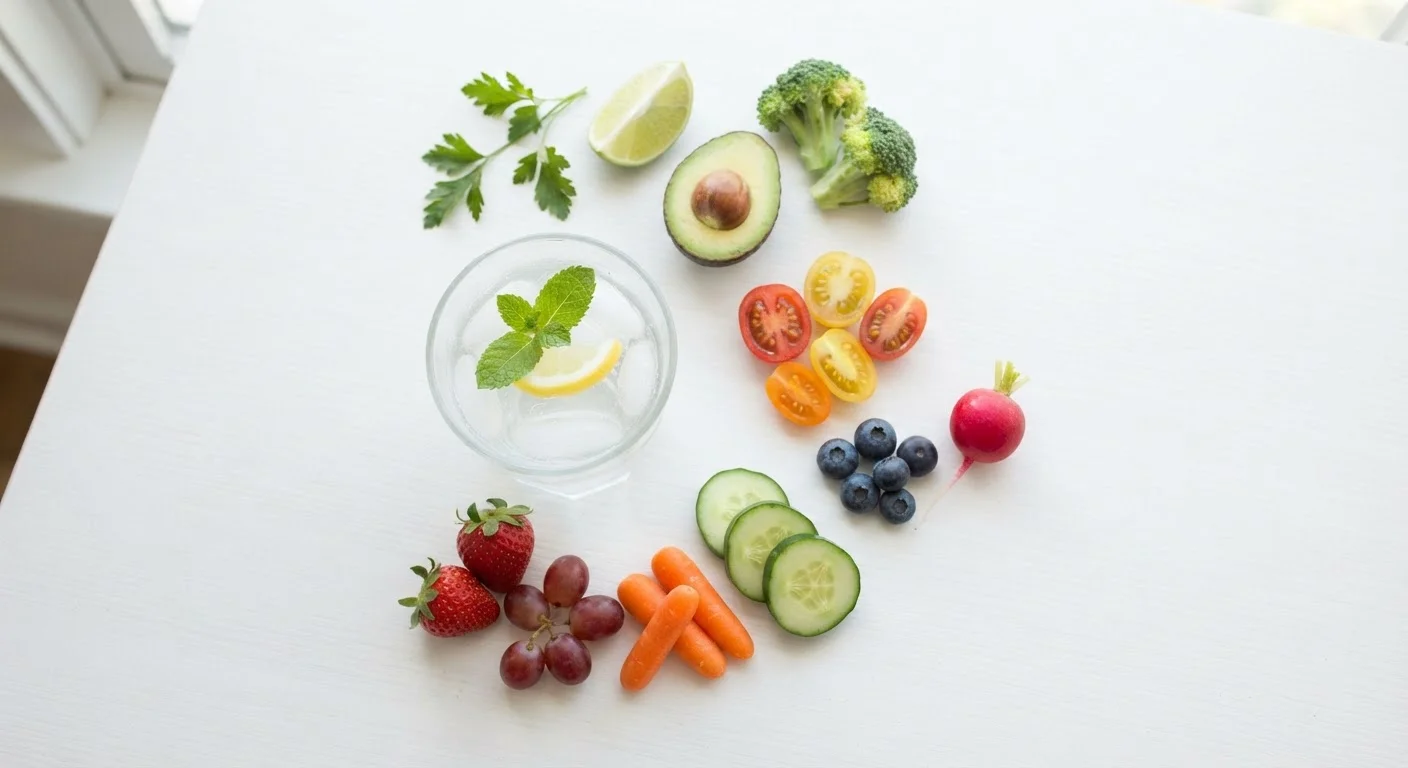
Aim to include at least one water-rich food — such as cucumber, berries, leafy greens, or broth-based soup — at most meals. This habit simultaneously supports micronutrient intake and contributes to daily fluid goals. Pairing hydrating foods with regular fluid intake throughout the day is more effective than trying to drink large amounts at once.
Putting It Together: Hydration as Part of Everyday Nutrition
Thinking of hydration as a separate concern from nutrition misses a fundamental connection. The vitamins and minerals your body depends on require adequate water to be transported, absorbed, and used. Dietary fiber, another underconsumed nutrient, works in concert with water to support digestive transit — fiber without adequate fluid can actually worsen constipation rather than relieve it.
A practical approach is to treat hydration as part of overall dietary quality rather than an isolated target. Choosing whole, minimally processed foods, being attentive to thirst signals, and checking in on urine color are straightforward habits that serve both nutrition and hydration simultaneously. For a structured way to review your dietary patterns, the weekly nutrition self-check offers useful prompts including hydration-related questions.
This article is for general informational and educational purposes only and is not a substitute for professional medical advice. Consult a qualified healthcare provider for personalized guidance on hydration, nutrition, or any health concern.