

Key Takeaways
Reduces driver fatigue on long, consistent grades
Maintaining a steady speed manually over hours of driving requires constant micro-adjustments; cruise control handles these automatically, keeping drivers more alert for actual hazards.
Prevents unconscious speed creep on mild descents
Drivers often unknowingly accelerate on downhill stretches. Cruise control holds the set speed, avoiding unintended speeding and the fuel waste of subsequent correction.
Improves consistency on long, gradual climbs
On gentle, sustained grades typical of rural interstates, cruise control's throttle response is measured enough to maintain efficient speed without aggressive fuel consumption.
Reduces speed variation that disrupts fuel economy
Frequent small speed fluctuations — even a few mph — add up in fuel cost. On moderate terrain, cruise control smooths these out better than most drivers do naturally.
Aggressive throttle response on steep uphill grades
To recover lost speed on a climb, the system opens the throttle hard — often more than a driver would — leading to significant fuel consumption spikes on sharp or frequent grades.
Cannot anticipate upcoming terrain changes
Unlike a driver who can see a crest or descent ahead and adjust in advance, cruise control reacts after speed has already changed, creating an inefficient catch-up cycle.
Less safe on wet or slick downhill roads
Fixed-speed systems can make sudden throttle inputs on slippery descents, reducing traction control effectiveness and limiting the driver's ability to modulate speed gradually.
Overrides engine braking on sharp descents
On steep downhill sections, maintaining set speed may require the system to partially counteract natural engine braking, causing the vehicle to ride brakes more or speed to fluctuate erratically.
Our Verdict
Cruise control is a genuinely useful tool on long, flat stretches — it smooths out speed variations and reduces driver fatigue. On hilly roads, however, it can work against both fuel efficiency and safety, particularly on steep or frequent grades where the system accelerates hard to maintain a set speed. The right call depends on the terrain, your vehicle's system type, and your own attentiveness.
Drivers covering long distances on relatively flat interstates who want to reduce fatigue and maintain consistent speed will get the most reliable benefit from cruise control.
How Cruise Control Responds to Grade Changes
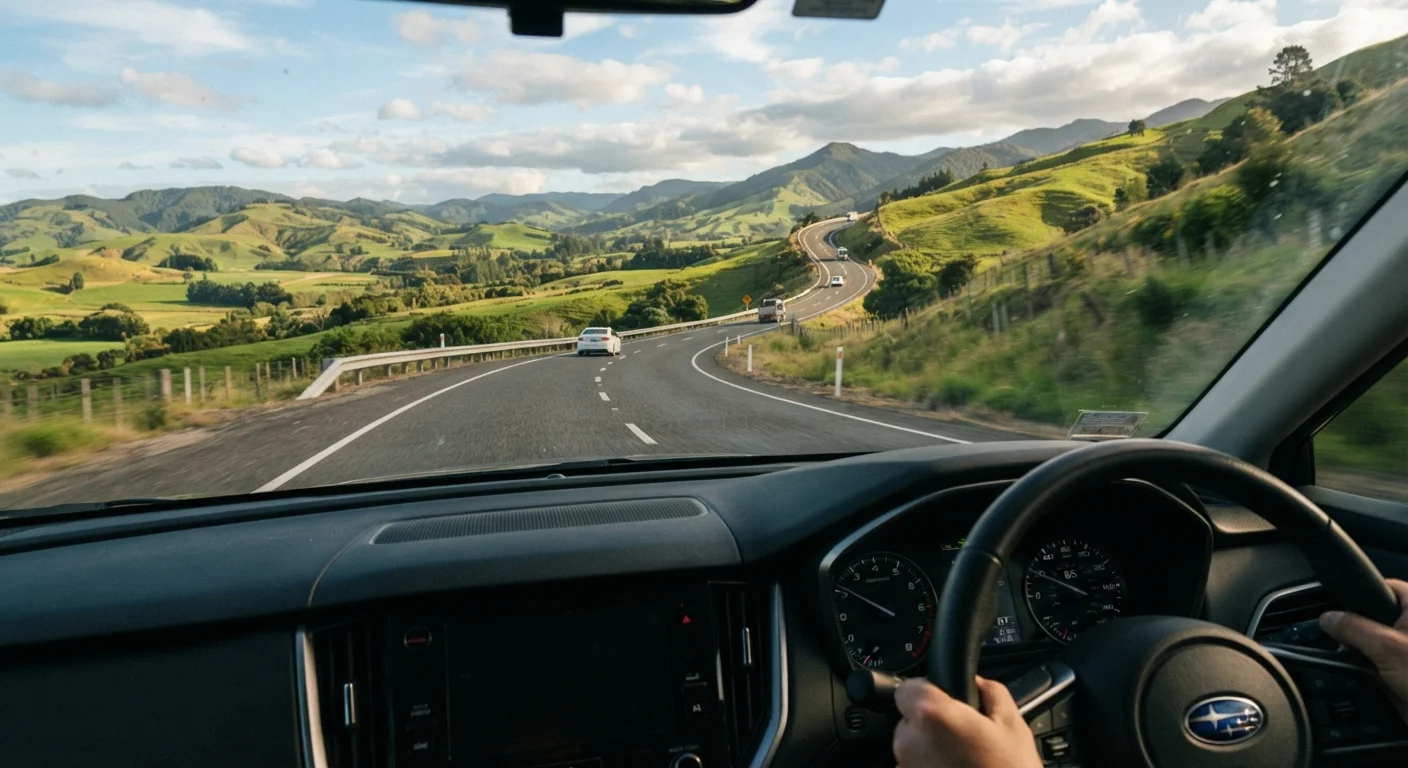
Standard cruise control has one job: hold your set speed. On a flat highway, that's straightforward — the throttle adjusts slightly, speed stays steady, and efficiency improves. But introduce a hill, and the system's single-minded focus becomes a liability.
When the road rises, the vehicle slows. The cruise control system responds by opening the throttle aggressively to recover the lost speed — often more aggressively than a driver would by feel. Coming downhill, the same logic applies in reverse: the system may resist engine braking and allow speed to creep up before correcting with a burst that overshoots. The result is a constant push-pull cycle that burns more fuel than a smooth, anticipatory driving style would.
Understanding this behavior is the first step toward using the system wisely. For a deeper look at how adaptive and standard cruise control differ, the gap in how each handles terrain becomes especially clear.
Reduces driver fatigue on long, consistent grades
Maintaining a steady speed manually over hours of driving requires constant micro-adjustments; cruise control handles these automatically, keeping drivers more alert for actual hazards.
Prevents unconscious speed creep on mild descents
Drivers often unknowingly accelerate on downhill stretches. Cruise control holds the set speed, avoiding unintended speeding and the fuel waste of subsequent correction.
Improves consistency on long, gradual climbs
On gentle, sustained grades typical of rural interstates, cruise control's throttle response is measured enough to maintain efficient speed without aggressive fuel consumption.
Reduces speed variation that disrupts fuel economy
Frequent small speed fluctuations — even a few mph — add up in fuel cost. On moderate terrain, cruise control smooths these out better than most drivers do naturally.
When Cruise Control Genuinely Helps on Hilly Terrain
Not all hills are created equal. Gentle, long-grade climbs — the kind common on rural interstates crossing low mountain ranges — are actually manageable for cruise control. The grade is gradual enough that the system's throttle response stays measured, and the consistency it provides prevents the subtle speed creep that fatigued drivers often allow.
Cruise control also shines on long descents where the slope is mild enough to hold speed without relying on brakes. In those situations, the system effectively acts as a steady foot, preventing the unconscious acceleration that tends to happen when a driver relaxes going downhill. This connects to broader fuel-saving habits — see how highway and city driving burn fuel differently for context on where consistent speed matters most.
~14%
Fuel savings from steady highway speed
The U.S. Department of Energy notes that avoiding speed fluctuations at highway speeds can improve fuel economy by roughly 14 percent compared to variable-speed driving.
60–70 mph
Optimal cruise control speed range
Most fuel economy guidelines cite 60–70 mph as the range where aerodynamic drag and engine load are best balanced for gasoline-powered passenger vehicles on flat terrain.
When to Switch It Off
On roads with frequent, sharp elevation changes — think mountain passes, coastal cliffs, or Appalachian switchbacks — the smarter move is often to disengage cruise control entirely. A human driver can read the road ahead, ease off the throttle before a descent begins, and let momentum carry the car over a crest without flooring it. Cruise control cannot do this; it reacts rather than anticipates.
The same logic applies in wet or slick conditions. Maintaining a fixed speed on a wet downgrade limits your ability to modulate speed naturally, and the sudden throttle inputs from the system can unsettle traction. Safety considerations should always override efficiency goals in those circumstances.
If you enjoy scenic driving routes with significant elevation changes — like a drive along California's coastal highways — understanding when to take manual control pays dividends. The PCH road trip guide includes useful pacing notes for exactly this kind of terrain.
Aggressive throttle response on steep uphill grades
To recover lost speed on a climb, the system opens the throttle hard — often more than a driver would — leading to significant fuel consumption spikes on sharp or frequent grades.
Cannot anticipate upcoming terrain changes
Unlike a driver who can see a crest or descent ahead and adjust in advance, cruise control reacts after speed has already changed, creating an inefficient catch-up cycle.
Less safe on wet or slick downhill roads
Fixed-speed systems can make sudden throttle inputs on slippery descents, reducing traction control effectiveness and limiting the driver's ability to modulate speed gradually.
Overrides engine braking on sharp descents
On steep downhill sections, maintaining set speed may require the system to partially counteract natural engine braking, causing the vehicle to ride brakes more or speed to fluctuate erratically.
The Human Advantage: Smooth Anticipatory Driving
An attentive driver who reads ahead — easing off the gas before a hill crest, coasting into a descent, and maintaining momentum through the valley — can meaningfully outperform cruise control on undulating roads. This technique, sometimes called hypermiling-adjacent driving, is less about extremes and more about eliminating unnecessary throttle inputs.
The foundation is anticipation: if you can see the grade change coming, you can pre-adjust rather than react. Coasting and anticipating traffic covers the mechanics of this style in detail. Combined with proper tire pressure maintenance, smooth driving on hills can yield meaningful fuel savings over long trips.
Adaptive Cruise Control Handles Hills Differently
Newer adaptive cruise control (ACC) systems use radar or camera data not only to track vehicles ahead but also, in some implementations, to respond more gradually to grade changes. Some systems integrate GPS topographic data to begin adjusting speed before a hill is reached. If your vehicle has ACC, consult your owner's manual to understand what terrain-response features, if any, are included — the capability varies significantly by manufacturer and model year.