

Key Takeaways
Check Engine Light
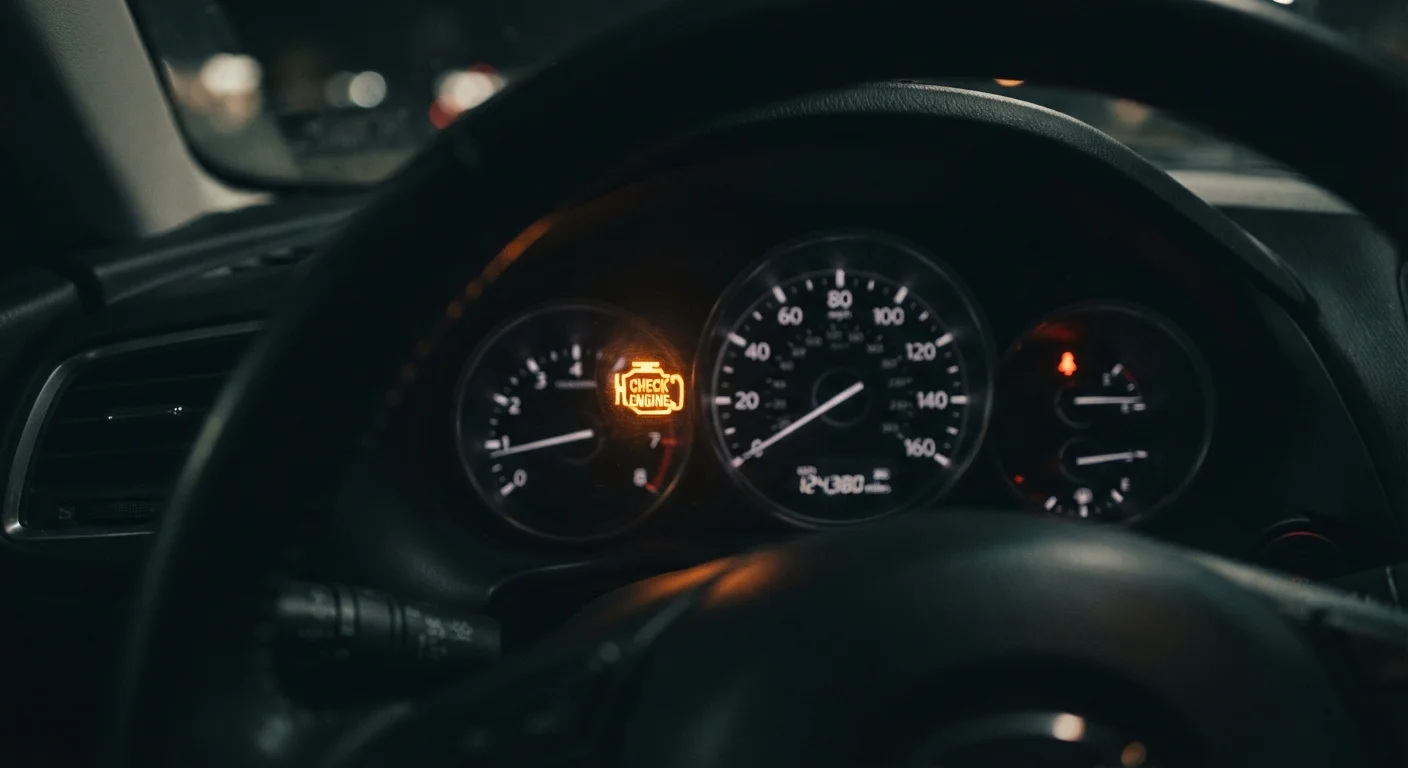
The check engine light — formally called the Malfunction Indicator Lamp (MIL) — is a dashboard warning triggered by your vehicle's onboard diagnostic system (OBD-II) when it detects a problem with the engine, emissions system, or related components. It can signal anything from a loose gas cap to a misfiring engine. The light itself doesn't tell you what's wrong; it only signals that the system has stored a diagnostic trouble code (DTC) that needs to be read.
OBD-II became mandatory on all cars sold in the US after 1996. A scan tool or code reader — available at most auto parts stores — retrieves the specific DTC, which is the starting point for any diagnosis.
Why One Light Covers So Many Problems
Your car's OBD-II system continuously monitors dozens of sensors across the engine, transmission, and emissions equipment. When any reading falls outside expected parameters, the system logs a diagnostic trouble code and lights up the dashboard. Because that single light represents such a wide net — spanning more than 200 possible codes — it understandably causes confusion. Is this serious? Can I finish my commute? Do I need a tow right now?
The honest answer depends almost entirely on what the code actually says. That's why your first step after seeing the light should always be a diagnostic scan, not a guess. As part of a broader approach to vehicle care, the check engine light fits into the larger picture described in our complete car maintenance guide.
~$400
Average catalytic converter replacement cost
Industry repair estimates commonly place catalytic converter replacement between $400 and $2,000+ depending on vehicle type, underscoring why catching upstream issues early matters.
200+
Possible OBD-II diagnostic trouble codes
The SAE and ISO OBD-II standard defines hundreds of standardized codes covering powertrain, emissions, and related systems — which is why a scan tool is essential, not optional.
Flashing vs. Solid: The Distinction That Matters Most
Before anything else, note whether the light is solid or flashing.
- Solid light: The system has detected a problem, but it's not actively destroying anything at this moment. You can typically drive carefully to a shop or auto parts store for a scan — avoid highway speeds and monitor for any changes in how the car feels or sounds.
- Flashing light: This indicates a severe misfire is occurring, meaning unburned fuel is entering the exhaust and can rapidly damage the catalytic converter — a repair that often runs into the hundreds or thousands of dollars. Stop driving as soon as it's safe to do so and have the vehicle towed.
Keep a Simple OBD-II Reader in Your Glove Box
Basic Bluetooth OBD-II adapters are widely available and pair with free smartphone apps to read and clear codes. Having one means you can pull a code within minutes of the light appearing, giving you real information before making any decisions. It's a straightforward tool for any driver who wants to stay informed about their vehicle's health.
Pay equal attention to any accompanying symptoms: rough idling, loss of power, burning smells, overheating, or unusual noises. Any of these alongside a check engine light elevates urgency significantly.
The Most Common Triggers Explained
While the full list of possible codes is long, a handful of causes account for a disproportionate share of check engine lights on American roads:
- Loose or damaged gas cap
- The fuel system is sealed to prevent vapor leaks. A cap that's loose, cracked, or missing triggers an evaporative emissions fault. Tighten or replace it first — it's the cheapest possible fix.
- Oxygen (O2) sensor failure
- Oxygen sensors monitor exhaust gases to help the engine maintain the right fuel-to-air mixture. A failing sensor wastes fuel and can eventually harm the catalytic converter if ignored.
- Catalytic converter issues
- The catalytic converter reduces harmful exhaust emissions. It often fails as a downstream consequence of neglected oxygen sensors or persistent misfires — another reason early attention saves money.
- Spark plugs or ignition coils
- Worn spark plugs cause misfires, rough running, and poor fuel economy. These are wear items that follow manufacturer replacement intervals.
- Mass airflow (MAF) sensor fault
- The MAF sensor measures air entering the engine. A dirty or failing sensor throws off fuel delivery calculations, reducing performance and efficiency.
Keeping fluids in good condition supports many of these systems indirectly — our guide on fluids every car relies on covers what to check and how often.
“The check engine light is not an emergency light — but it is a communication. The mistake is treating it as either a crisis or as something to ignore. It's an invitation to investigate.”
— Automotive Diagnostic Technician, ASE-Certified Master Technician with over 20 years of dealership and independent shop experience
What to Do After the Light Comes On
Follow this straightforward sequence to handle the situation calmly and cost-effectively:
- Check the gas cap. Remove it, reseat it firmly, and drive normally for a day or two. If the light clears, you're done.
- Get a diagnostic scan. Most national auto parts retailers offer this free of charge. Write down the exact code — it's formatted like P0420 — and research what it typically indicates before committing to repairs.
- Assess urgency. A solid light with no drivability symptoms allows time to schedule a mechanic. A flashing light or any rough running means stop driving.
- Consult a qualified mechanic. A code identifies a circuit or system with a fault — it doesn't always pinpoint the failed component. A trained technician has the tools and expertise to confirm the actual cause before parts are replaced.
If you're planning any long drive, a check engine light should be resolved beforehand. The pre-road-trip checklist is a practical resource for making sure your vehicle is ready before you leave the driveway. For a broader look at driving smarter, including habits that reduce wear and catch problems early, those fundamentals apply every day — not just before long trips.
Clearing the Code Isn't the Same as Fixing the Problem
Some drivers — or shops — clear the stored code without addressing the underlying fault. The light will return once the system runs its diagnostics again, often within a few drive cycles. If a code has been cleared prior to an emissions inspection, the vehicle may also fail because the readiness monitors haven't completed. Always resolve the root cause, not just the warning.