

| Average annual vehicle ownership cost (US) | Approximately $10,000–$12,000 (AAA Your Driving Costs study, general industry estimate) |
| Depreciation share of 5-year ownership cost | Roughly 35–40% (Consumer finance industry general estimate) |
| Typical new-car value loss in year one | 15–25% (General industry guidance; varies by make and model) |
| Insurance as share of annual TCO | Approximately 15–20% (AAA and general insurer data; varies by state and driver profile) |
| Fuel cost variable: mileage and efficiency | Price per mile = fuel cost ÷ MPG (Simple formula; apply local fuel prices and EPA ratings) |
What Total Cost of Ownership Actually Means
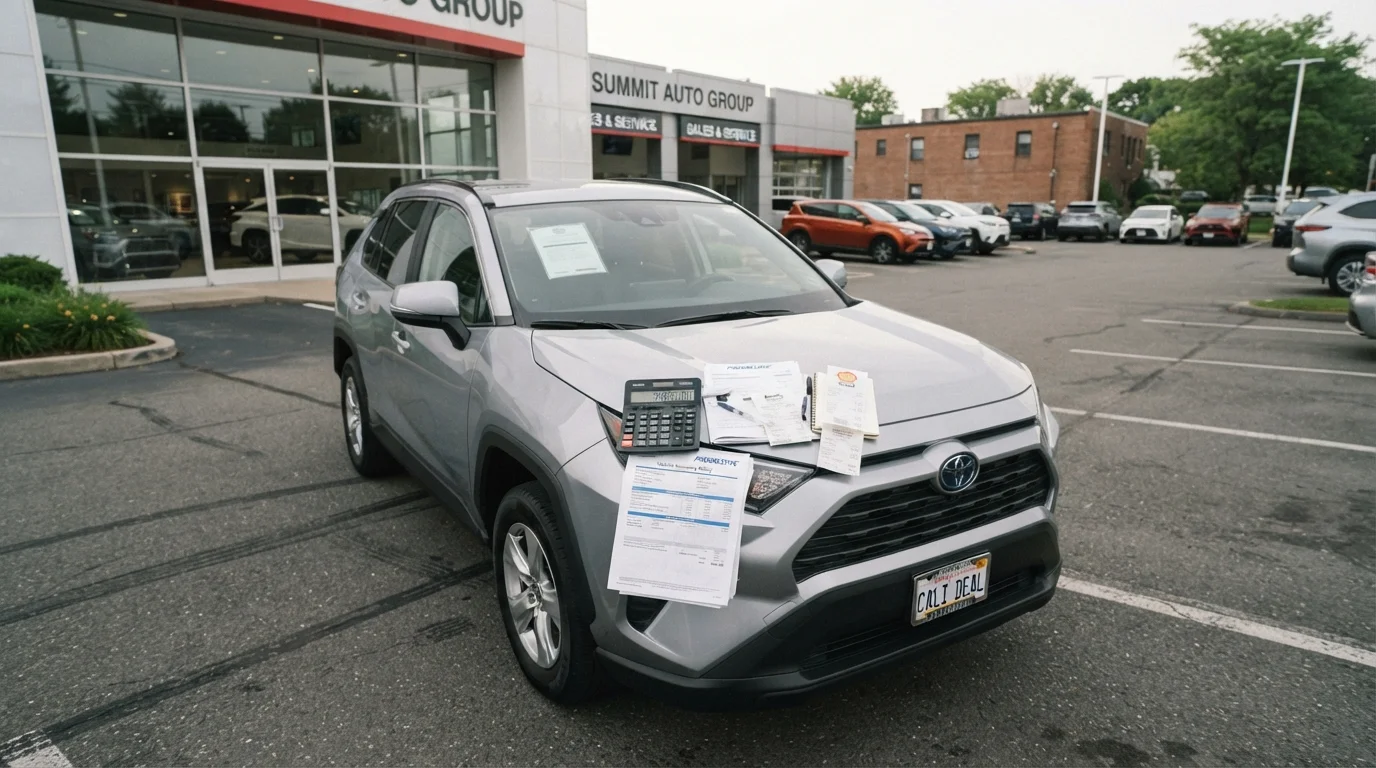
Walk onto any car lot and the number on the windshield tells you one thing: what it takes to drive the vehicle off the property. What it doesn't tell you is what the vehicle will cost you every year you own it. That fuller picture — insurance, fuel, financing, taxes, maintenance, and depreciation — is what analysts call Total Cost of Ownership (TCO).
TCO matters because two vehicles with identical sticker prices can diverge dramatically in annual expenses. A compact sedan and a midsize SUV may both carry a $32,000 price tag, yet one might cost $3,000 more per year to fuel and insure. Over a five-year ownership period, that gap compounds into real money.
Understanding TCO is especially useful when comparing vehicles across different categories or powertrains. See how powertrain choice shapes long-run costs in our guide to gas, hybrid, and electric vehicles.
| Average annual vehicle ownership cost (US) | Approximately $10,000–$12,000 (AAA Your Driving Costs study, general industry estimate) |
| Depreciation share of 5-year ownership cost | Roughly 35–40% (Consumer finance industry general estimate) |
| Typical new-car value loss in year one | 15–25% (General industry guidance; varies by make and model) |
| Insurance as share of annual TCO | Approximately 15–20% (AAA and general insurer data; varies by state and driver profile) |
| Fuel cost variable: mileage and efficiency | Price per mile = fuel cost ÷ MPG (Simple formula; apply local fuel prices and EPA ratings) |
The Six Cost Categories You Need to Estimate
Calculating TCO doesn't require a finance degree — it requires knowing which buckets to fill. Here are the six core categories, with typical annual cost ranges based on general industry guidance (actual figures vary by vehicle, location, and driving habits):
- Depreciation: The largest single cost for most owners. New vehicles can lose 15–25% of value in the first year. Used vehicles depreciate more slowly but still decline.
- Financing/Interest: The interest paid on an auto loan is a real cost often overlooked. A longer loan term lowers monthly payments but raises total interest paid. For a deeper look, see our article on APR vs. monthly payment traps.
- Insurance: Premiums vary widely based on the vehicle's safety ratings, theft rates, repair costs, and the driver's profile. Get quotes before you decide, not after.
- Fuel: Multiply your expected annual mileage by the vehicle's EPA combined fuel economy figure and your local average fuel price to get a rough annual fuel cost.
- Maintenance & Repairs: Scheduled service, tires, brakes, and unplanned repairs all belong here. Our car maintenance hub covers what to expect at each service interval.
- Taxes, Fees & Registration: Annual registration fees, personal property taxes in some states, and inspection fees are recurring — not one-time — costs for many owners.
Total Cost of Ownership (TCO)
The complete financial cost of a vehicle over time, including purchase price, financing, insurance, fuel, maintenance, taxes, and depreciation. TCO provides a more accurate basis for comparison than sticker price alone.
Depreciation
The reduction in a vehicle's market value over time. Depreciation is typically the largest annual cost of car ownership and accelerates most sharply in the first few years.
APR (Annual Percentage Rate)
The yearly cost of borrowing money, expressed as a percentage. On an auto loan, APR includes the interest rate and may include certain fees, making it a more complete cost measure than the interest rate alone.
MPGe (Miles Per Gallon Equivalent)
A metric used to compare the energy efficiency of electric and plug-in hybrid vehicles to traditional gasoline fuel economy. It allows apples-to-apples cost-per-mile comparisons across powertrain types.
Out-of-Pocket Cost
The actual cash or financed amount a buyer pays to acquire a vehicle, including sale price, taxes, dealer fees, and documentation charges — distinct from the advertised sticker price.
Running the Numbers: A Practical Framework
A reliable TCO estimate doesn't need to be precise to the dollar — it needs to be directionally accurate enough to inform a real decision. Follow this four-step framework:
- Start with the out-of-pocket purchase cost. Factor in sales tax, dealer fees, and any financing interest you'll pay over the loan term, not just the sale price. Resources like hidden purchase costs walk through what dealerships commonly add.
- Estimate annual fuel costs. Divide your expected yearly miles by the vehicle's MPG (or MPGe for EVs), then multiply by current average fuel costs in your area.
- Get real insurance quotes. Contact your insurer with the VIN or at minimum the year, make, model, and trim. Don't use a ballpark — insurance can vary by hundreds of dollars between vehicles that look similar on paper.
- Add maintenance reserves. For most vehicles, budgeting $800–$1,500 annually for scheduled maintenance and minor repairs is a reasonable starting point. Higher-mileage or luxury vehicles may run significantly more.
Once you've assembled all six cost categories, divide the five-year total by 60 to get a true monthly cost of ownership — a figure worth comparing against any lease offer. Our leasing vs. financing guide puts these numbers in context.
TCO Tools Are Available — With Caveats
Several automotive data providers and consumer research organizations publish TCO estimates for specific vehicles. These can be a useful starting point, but they rely on national averages that may not reflect your local fuel prices, insurance market, or driving patterns. Treat published TCO figures as benchmarks to calibrate your own estimates, not as guarantees of what you'll spend.