

Key Takeaways
Car Depreciation
Car depreciation is the decline in a vehicle's market value over time. It begins the moment a new car is purchased and continues throughout the vehicle's life, meaning the car is worth less each year than it was the year before. Depreciation is one of the largest — and most overlooked — costs of vehicle ownership.
Depreciation is typically measured as a percentage of the original purchase price lost over a set period. Industry data suggests new vehicles can lose a substantial portion of their value within the first few years of ownership, though exact rates vary by make, model, and market conditions.
Why Depreciation Is a Real Cost — Not Just a Number
Most car buyers focus on the sticker price, monthly payment, or interest rate. Depreciation rarely gets the same attention — but it arguably should. Over a typical ownership period, the value a vehicle loses can rival or exceed what you spend on fuel, insurance, and maintenance combined.
Unlike a house, which has historically appreciated in value over long periods, a car is a depreciating asset by nature. The wear on mechanical parts, advances in technology, and shifting consumer preferences all ensure that a vehicle becomes worth less over time. This isn't inherently bad — it's simply the reality of owning a vehicle, and understanding it helps you make smarter choices. See our guide to sticker price vs. total cost of ownership for a fuller picture of what a vehicle really costs.
~20%
Average value lost in year one
Industry estimates commonly suggest new vehicles lose roughly 15–25% of their value in the first year, though rates vary by model and market conditions.
~50%
Estimated value retained after five years
Many vehicles retain approximately half their original value after five years of ownership, according to general automotive market analyses — figures vary widely by segment.
72 months
Common extended auto loan term
Six-year loan terms have become increasingly common in the U.S. auto market, extending the period during which buyers may owe more than their vehicle is worth.
How Depreciation Actually Works Over Time
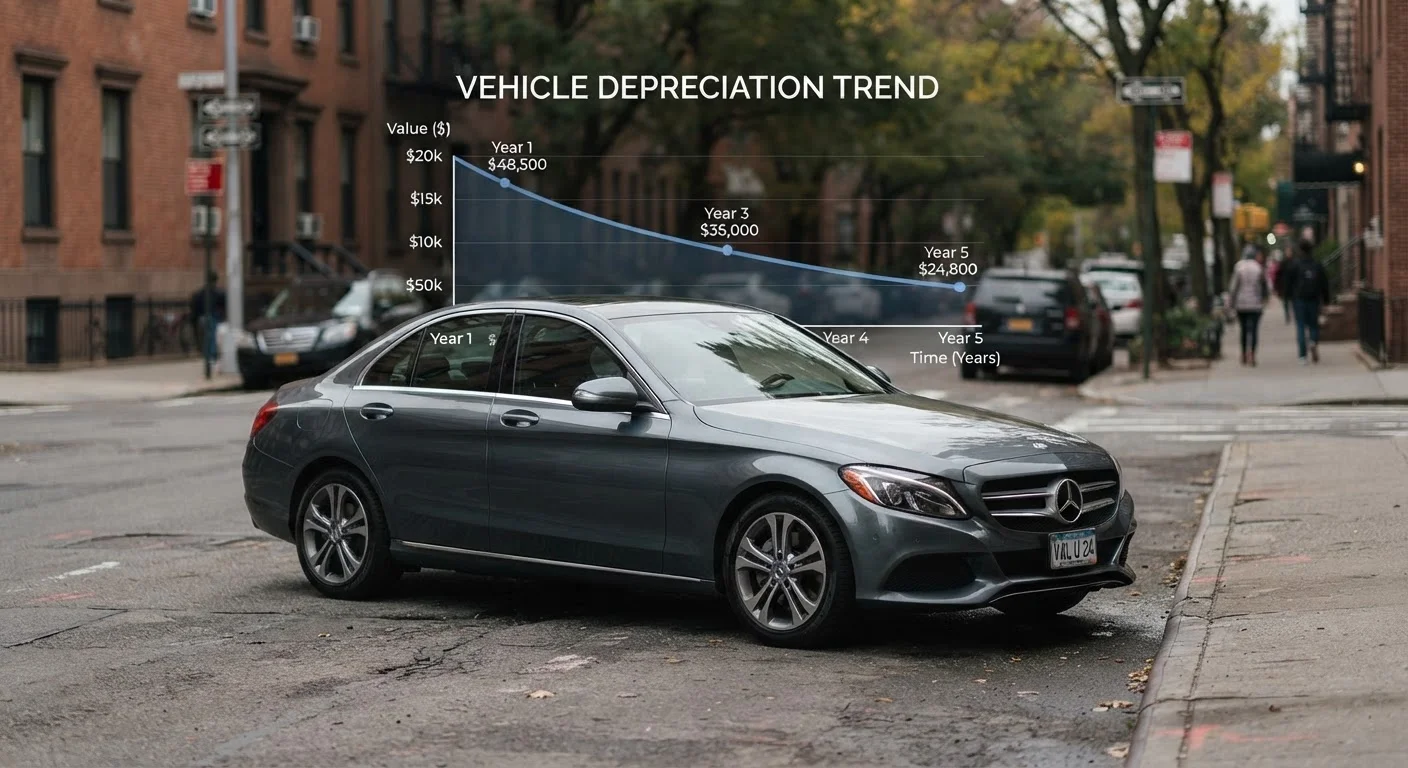
Depreciation is not a flat, even decline. The steepest drops tend to occur early in a vehicle's life. A new car driven off the dealership lot immediately begins losing value — partly because it transitions from "new" to "used" the moment ownership transfers, and partly because supply, warranty terms, and buyer psychology all shift.
After those first few years, the rate of depreciation typically slows. An older vehicle that has already absorbed its sharpest decline will lose a smaller dollar amount each year going forward, even if it continues to depreciate as a percentage. This uneven curve is why the age of a used vehicle at purchase matters considerably.
Several factors shape how fast any specific vehicle depreciates:
- Mileage: Higher annual mileage accelerates wear and lowers resale value more quickly.
- Condition: Cosmetic damage, maintenance history, and mechanical reliability all affect what a buyer will pay.
- Market demand: Vehicles buyers actively want hold value better than those with shrinking appeal.
- Vehicle type: Trucks and SUVs have historically depreciated at different rates than sedans, partly driven by consumer trends.
- Fuel economy: When gas prices spike, fuel-efficient models often retain value better; the reverse can also hold.
Check Historical Resale Values Before You Buy
Before committing to any vehicle, look up how similar models have held their value over two to five years using publicly available used car pricing resources. A model with strong resale retention will cost you less over your ownership period, even if the sticker price is slightly higher than a competitor. This research takes minutes but can meaningfully affect your long-term costs.
Depreciation and the New vs. Used Decision
One of the most practical implications of depreciation is its role in the new-versus-used trade-off. Buying a vehicle that is two to four years old means the previous owner absorbed that initial steep drop. You effectively pay a price that reflects the car's current market value rather than its original retail premium.
That said, buying used involves its own considerations: limited or no factory warranty, unknown ownership and maintenance history, and potentially higher financing rates than new-car incentives. Our practical comparison of new vs. used vehicles walks through the full trade-off. Reviewing a vehicle history report is also a valuable step — see what a vehicle history report actually tells you before committing.
Depreciation, Financing, and the Risk of Negative Equity
Depreciation interacts directly with how you finance a vehicle. When you take out an auto loan, your balance decreases according to the repayment schedule — but the car's value decreases according to market forces, not your payment plan. Early in a loan, these two curves can diverge significantly, leaving you owing more than the vehicle is worth.
This gap is commonly called negative equity or being "underwater" on a loan. It creates risk: if the car is totaled or you need to sell before the loan is paid off, you may owe money after the insurance payout or sale proceeds are applied. Longer loan terms amplify this risk because they extend the period during which your balance may exceed the car's market value. Understanding how loan terms and monthly payments are calculated is essential context here.
A larger down payment reduces the initial loan balance, helping keep your equity position healthier from the start — though it does not change the vehicle's depreciation rate itself.
Using Depreciation to Make a Smarter Purchase
Thinking about depreciation before you buy — not after — changes the quality of your decision. A few practical considerations:
- Research the model's historical resale value to understand how quickly similar vehicles have lost value in past years.
- Factor in your ownership timeline. If you plan to keep a vehicle for ten or more years, early depreciation matters less than long-term reliability. If you trade frequently, buying used may reduce your exposure to the steepest drops.
- Account for depreciation in your total cost calculations. The total cost of ownership framework treats the value you'll lose as a real annual expense alongside insurance and fuel.
- Be cautious with long loan terms. Extended financing may lower the monthly payment, but it also increases the window during which negative equity is likely.
Depreciation is neither avoidable nor inherently negative — it's simply the financial reality of owning a vehicle. The buyers who fare best are those who account for it honestly before signing anything, rather than discovering it when they try to sell.
“Depreciation is the single largest cost of car ownership for most people — it just doesn't show up on a monthly bill, so it gets ignored until it's too late.”
— Consumer Financial Educators, Auto finance literacy advocates