

Key Takeaways
Why Venture Off Bourbon Street?
Bourbon Street delivers spectacle — and there's nothing wrong with that. But visitors who limit their New Orleans experience to the French Quarter often leave feeling like they've seen a performance of the city rather than the city itself. The real cultural fabric — the second-line parades, the local jazz clubs, the century-old corner groceries — is stitched through the surrounding neighborhoods, each with its own personality, history, and pace.
Whether you're a first-timer with an extra afternoon or a repeat visitor ready to dig deeper, these four neighborhoods reward curiosity. If you've ever wondered whether city-based exploration can match the depth of a natural-immersion trip, our guide to urban vs. nature adventure makes a compelling case for both — and New Orleans is Exhibit A for the urban side.
Tremé: America's Oldest African American Neighborhood
Just a short walk from the French Quarter across Esplanade Avenue, Tremé carries the deepest musical and cultural roots of any neighborhood in New Orleans — and arguably in America. This is where jazz was born, where Mardi Gras Indians have sewn their elaborate suits for generations, and where second-line parades still roll through the streets on Sunday afternoons.
Visit the Backstreet Cultural Museum on St. Claude Avenue for an intimate look at Mardi Gras Indian traditions, jazz funerals, and social aid and pleasure clubs. Grab a coffee at Café Enrique or settle into Dooky Chase's Restaurant — a cornerstone of the neighborhood since 1941 — for a plate of fried chicken or red beans that tells its own story. Congo Square in Louis Armstrong Park is worth a quiet moment; it's the historic gathering place where enslaved people once preserved African musical traditions that eventually shaped jazz itself.
Tremé is where jazz was born and where its living traditions still pulse through every block.
Faubourg Marigny: Creative Energy and Live Music Every Night
Directly downriver from the French Quarter, the Marigny (pronounced MARE-ih-nee) has long been a hub for artists, musicians, and anyone drawn to an alternative creative scene. The neighborhood's main artery, Frenchmen Street, hosts a cluster of live music venues — the Spotted Cat, d.b.a., and Snug Harbor among them — where you can hear serious jazz, funk, and brass band music without a cover charge at most spots.
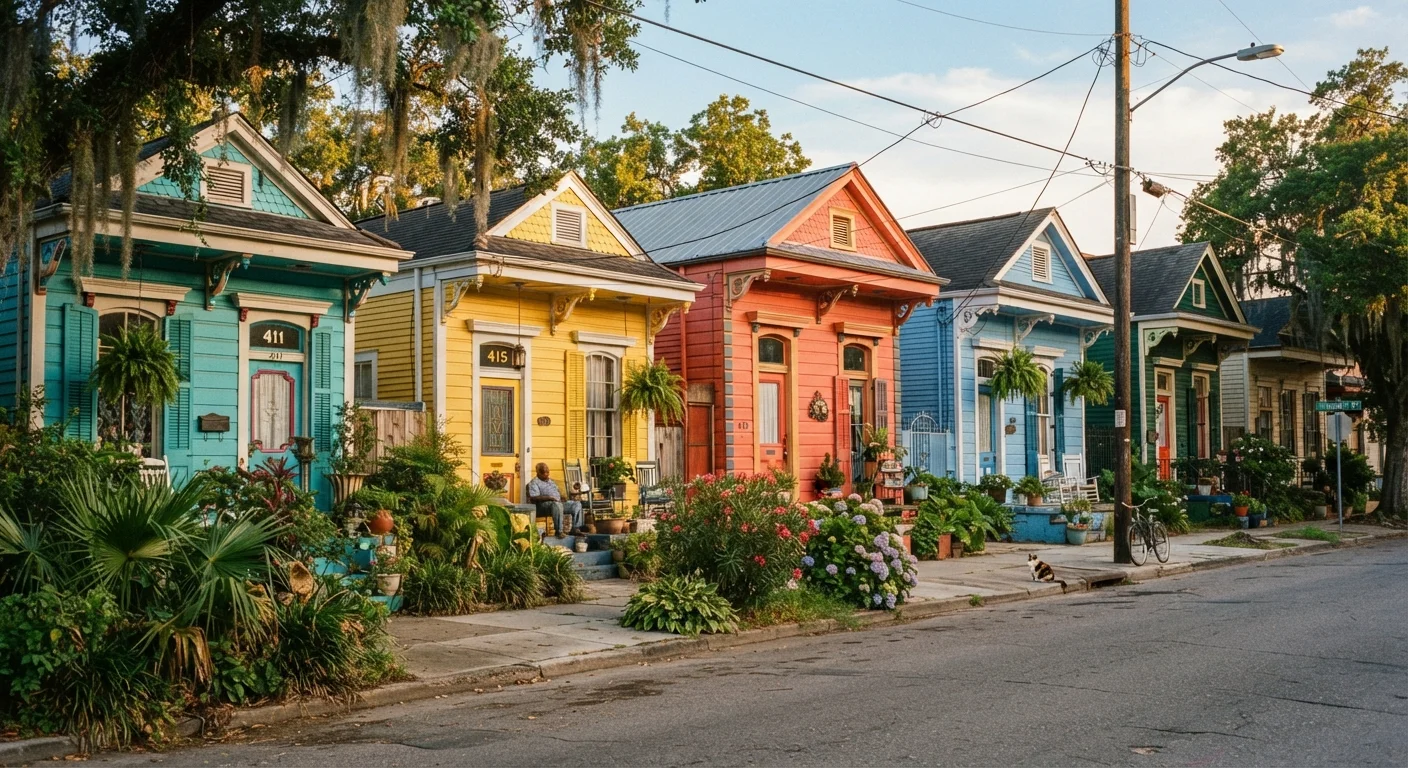
Beyond the music, the Marigny rewards slow walking. Its streets are lined with Creole cottages and double shotgun houses painted in vivid colors, and the Faubourg Marigny Art and Books store has been a neighborhood institution for decades. Sunday's outdoor art market on Frenchmen Street draws local vendors and musicians in a laid-back setting that feels genuinely rooted in the community.
Frenchmen Street offers nightly live music that locals actually attend — no tourist markup required.
Bywater: The City's Creative Frontier
Continue downriver past the Marigny and you'll land in Bywater, a neighborhood that has evolved rapidly while maintaining strong local character. This is where working-class New Orleans history intersects with a thriving art scene — repurposed warehouses share blocks with neighborhood corner bars and community gardens.
Crescent Park, a linear green space along the Mississippi River, is one of the city's most pleasant spots for a morning walk with views of the river and the bridge. The neighborhood's restaurant and café scene is genuinely creative: Maurepas Foods serves farm-focused Louisiana cooking, and the local coffee shops double as gallery spaces. Keep an eye out for large-scale murals around Poland Avenue — Bywater's outdoor art is as much a landmark as anything you'd find in a museum.
Bywater's Crescent Park offers some of the most unhurried, scenic Mississippi River views in the city.
Garden District: Antebellum Architecture and Leafy Avenues
Upriver from the French Quarter and accessible via the historic St. Charles Avenue streetcar, the Garden District offers a different kind of New Orleans entirely. The neighborhood takes its name from the elaborate gardens that once surrounded the grand antebellum mansions built by American merchants in the 19th century — and many of those homes, now private residences, remain remarkably intact.
A self-guided walk along Prytania Street or Coliseum Street reveals Greek Revival and Italianate architecture draped in oak canopy. Lafayette Cemetery No. 1, one of the city's famous above-ground cemeteries, offers free self-guided tours and a quiet, historically rich hour. Magazine Street, the neighborhood's commercial spine, is lined with local restaurants, bookshops, and galleries worth lingering in without any agenda.
A Garden District walk is an architecture lesson wrapped in one of America's finest urban canopy streets.
Mid-City: Where Locals Actually Live
Less frequented by visitors but deeply beloved by residents, Mid-City stretches from the edge of Bayou St. John toward the cemeteries along Canal Street. This is where New Orleans feels most like a livable, breathing city rather than a backdrop for revelry. Bayou St. John itself is a natural waterway flanked by walking paths, kayakers, and neighborhood families — a calm contrast to the Quarter's bustle.
The New Orleans Museum of Art (NOMA) anchors City Park, one of the largest urban parks in the country, with 1,300 acres of live oaks, botanical gardens, and the Sculpture Garden. On weekends, the park's paths fill with joggers, cyclists, and picnickers. Mid-City also claims several of the city's most beloved local restaurants, including Parkway Bakery & Tavern, famous for its roast beef po'boys.
Bayou St. John and City Park reveal a quieter, greener New Orleans most visitors never see.
Planning Your Neighborhood Circuit
The good news: these neighborhoods form a loose crescent that's highly walkable in good weather and easily navigable by bike or streetcar. The Tremé and Marigny sit just across Esplanade Avenue from the French Quarter, while Bywater extends further downriver along the Mississippi. The Garden District requires a short streetcar ride along St. Charles Avenue — one of the most scenic urban rail journeys in the country.
Get the Most Out of Each Neighborhood
Download the RTA Streetcar app before your trip to navigate the St. Charles and Canal lines without fumbling for cash. For Tremé and the Marigny, plan your visit around a Sunday afternoon — that's when second-line parades and outdoor markets are most likely to be happening. Always verify current parade and event schedules through official city or neighborhood association sources, as times and routes can change.
Set aside at least half a day per neighborhood if you want to eat, wander, and linger without rushing. The best moments in New Orleans rarely appear on a schedule.