

Key Takeaways
Option A
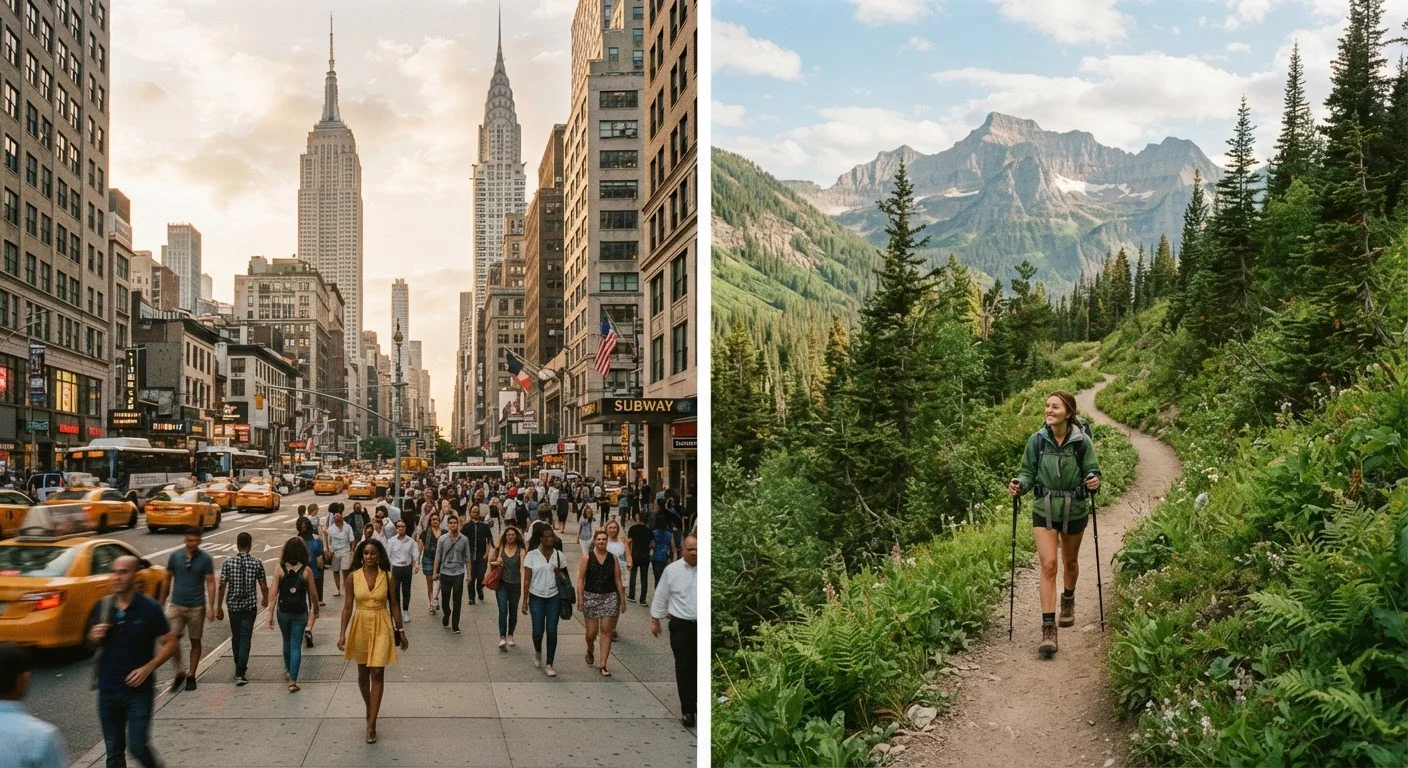
City Break
The fast-paced, culture-rich urban getaway.
Best for: Travelers who want dense experiences — food, art, history, and nightlife — packed into a short window.
Option B
Nature Escape
The restorative, wide-open outdoor adventure.
Best for: Travelers seeking physical activity, scenic immersion, and a genuine mental reset away from screens and noise.
If you have 2–3 days and crave cultural stimulation
City Break
Cities pack museums, restaurants, and neighborhoods into walkable distances, making short trips feel satisfyingly full without heavy logistics.
If you're feeling burned out and need genuine mental space
Nature Escape
Research consistently links time in natural settings with reduced stress markers — wilderness simply delivers a kind of reset that urban environments can't replicate.
If you're traveling with young children
City Break
Urban destinations typically offer more accessible infrastructure, indoor backup options, and varied pacing that adapts to unpredictable energy levels.
If physical activity is a core travel priority
Nature Escape
Hiking, paddling, cycling, and climbing are seamlessly built into nature itineraries rather than requiring special arrangements.
If you want to blend both styles on a single trip
City Break
Many gateway cities sit near parks or coastlines — a city base lets you day-trip into nature while keeping comfortable amenities close.
What Each Travel Style Actually Delivers
A city break is fundamentally about density of experience. Within a few square miles, a traveler can cycle through a world-class art museum, sample three distinct food cultures, and catch live music — all before midnight. That compression is genuinely exciting, but it also tends to be mentally taxing. Urban travel rewards those who can keep moving and stay curious under a constant stream of input.
A nature escape operates on a different rhythm entirely. Whether you're backpacking in a national park, renting a cabin by a lake, or paddling a river, the experience unfolds at the pace of terrain and weather rather than a curated itinerary. The payoff is a quality of presence that's hard to manufacture in a city — but it requires more comfort with uncertainty and, often, more physical preparation.
For a deeper look at how slowing your pace changes what travel gives you, see our exploration of slow travel. And if you're weighing how to get to either destination, the road trip vs. fly-and-explore breakdown covers logistics in practical detail.
| Criterion | City Break | Nature Escape |
|---|---|---|
| Ideal trip length | 2–4 days | 4–7+ days |
| Planning lead time | Days to weeks | Weeks to months |
| Gear requirements | Minimal | Moderate to significant |
| Daily cost (typical) | Higher (accommodation, dining) | Lower once on-site |
| Physical demand | Low to moderate (walking) | Moderate to high |
| Weather dependency | Low | High |
| Mental stimulation | Very high | Low to moderate |
| Restorative quality | Moderate | High |
Planning Effort, Logistics, and Budget
City breaks are generally easier to arrange on short notice. Flights into major hubs are frequent, accommodation is plentiful across every price point, and most cultural attractions can be booked the day before — or walked into. The main budget pressure in cities is accommodation cost, particularly in popular destinations where central hotels carry a significant premium.
Nature escapes front-load planning effort. Campsite reservations at popular national parks often fill months in advance. Gear — whether owned or rented — adds upfront cost. Weather contingencies need thinking through. That said, once you're there, daily spending often drops sharply: many outdoor activities are free or low-cost, and cooking your own food at a campsite is genuinely affordable.
120 days
Advance booking for top U.S. park campsites
Recreation.gov data shows that many high-demand campsites in national parks like Yosemite and Glacier open reservations up to 6 months out and fill within hours.
74%
Americans who say travel reduces stress
A survey by the American Psychological Association found that a strong majority of respondents reported lower stress levels after taking a vacation, regardless of destination type.
Neither style is categorically more expensive — it depends on the destination, time of year, and the choices you make on the ground. The Trip Planning Tips hub has practical budgeting frameworks that apply to both.
How to Match Trip Style to Your Current Needs
The most honest question isn't "which is better?" — it's "what do I actually need right now?" If your daily life is already high-stimulus, adding a jam-packed city itinerary may leave you more depleted than when you left. If you rarely get outdoors and lack basic gear, a remote wilderness trip may introduce more stress than rest.
Consider your travel companions too. A solo traveler comfortable with solitude may find nature escapes deeply rewarding; someone who energizes around people and novelty may wilt in remote quiet. Families with young children often find cities more adaptable — when plans go sideways, a city has indoor alternatives that a trailhead simply doesn't.
It's also worth noting that the binary isn't absolute. Many American travelers find a middle path: base yourself in a smaller city or coastal town with genuine natural access nearby. You get walkable infrastructure and good coffee in the morning and a serious hike by afternoon. For more on how to make any trip format work harder for you, this guide to maximizing short trips is worth your time. And if you're still weighing broader adventure formats, urban exploration vs. nature immersion offers a complementary breakdown of what each truly delivers.
Accessibility Matters for Both Styles
Neither city breaks nor nature escapes are universally accessible. Urban destinations vary widely in walkability, transit quality, and accommodation for travelers with mobility needs. Many natural areas have significant terrain and infrastructure limitations. Researching specific accessibility features at your chosen destination — before booking — is always worthwhile. Official park and city tourism websites are the most reliable starting points.