

Key Takeaways
Trend Forecasting
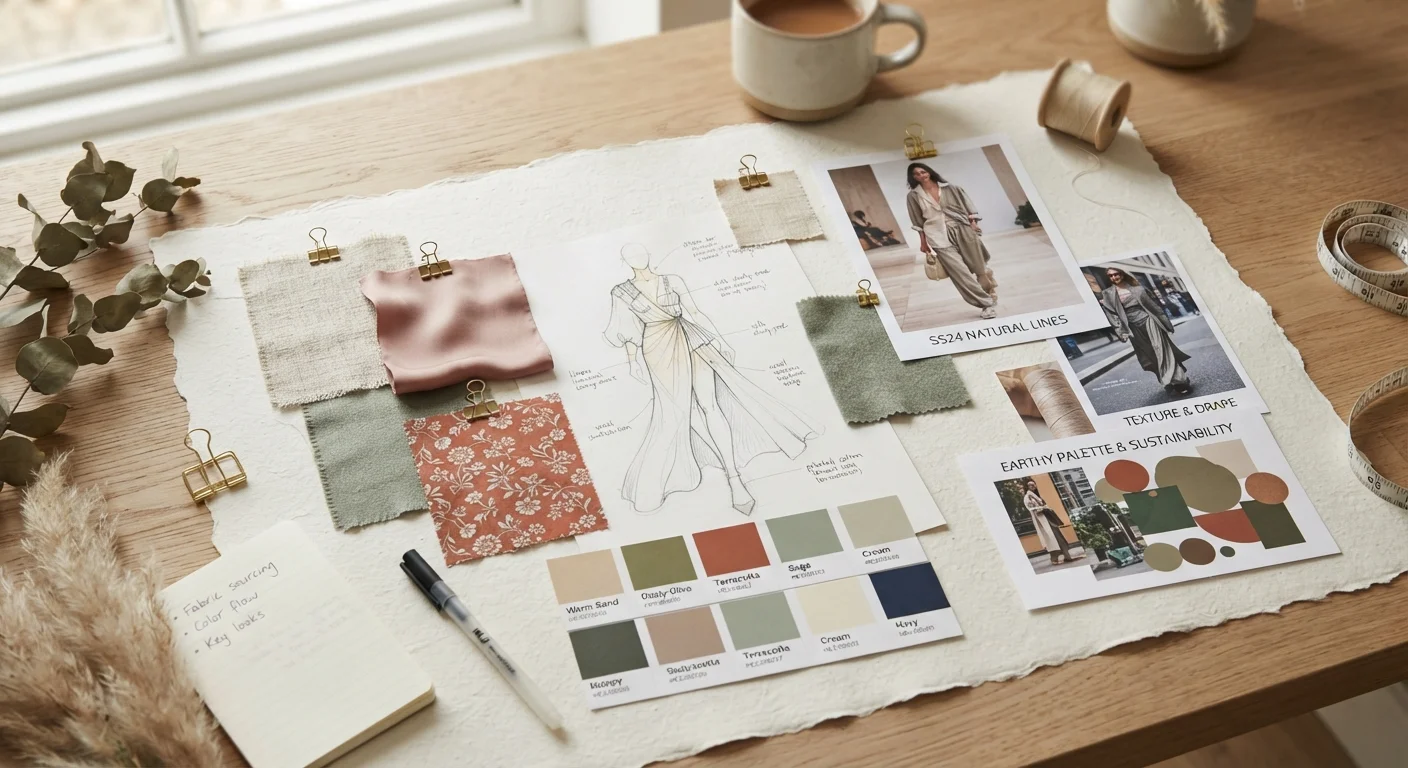
Trend forecasting is the process of predicting which colors, silhouettes, fabrics, and styles will resonate with consumers in upcoming fashion seasons. Specialized agencies, designers, and retailers use it to make production and buying decisions long before clothes appear in stores. It draws on cultural analysis, consumer behavior data, runway observation, and historical pattern recognition.
Forecasting agencies typically operate on two timelines: macro forecasting (18–24 months out) focuses on broad cultural shifts, while micro forecasting (6–12 months out) translates those signals into specific product directions for retail buyers.
The Pipeline: How a Trend Travels from Concept to Store
Fashion's supply chain runs on long lead times, which is why trend forecasting exists in the first place. A retailer can't wait until consumers ask for a silhouette—they need to have ordered fabric, approved samples, and confirmed production runs months earlier. Forecasting closes that gap by making educated, research-backed predictions about what people will want to wear.
The pipeline generally works like this: forecasting agencies publish macro trend reports covering broad cultural and aesthetic directions 18–24 months out. Designers and creative directors absorb these signals—alongside their own research—when developing collections. Buyers from department stores and retail chains then select pieces from those collections at trade shows and showrooms, further filtering what reaches the sales floor. By the time a trend is visible in a chain store, it has passed through multiple editorial layers.
For shoppers, this means the "new" pieces on a rack today were decided on well over a year ago. Understanding that timeline helps explain why trends sometimes feel both surprising and inevitable at once.
18–24 months
Typical runway-to-retail pipeline length
Industry standard lead times mean most retail trend decisions are made well over a year before consumers see them in stores.
~52 seasons
Annual new-collection drops at major fast-fashion retailers
Compared to the traditional two-season calendar, some fast-fashion retailers now introduce new inventory on a near-weekly basis, reflecting accelerated trend cycles.
Who Shapes the Forecast
Trend forecasting isn't a single voice—it's a conversation between several distinct players, each contributing a different kind of intelligence.
- Forecasting agencies conduct cultural research, consumer surveys, and trade analysis to publish directional reports. Retailers and brands subscribe to these reports as a foundation for planning.
- Runway designers translate cultural energy into physical garments. Their collections are analyzed for recurring signals—a color appearing across multiple shows, a specific collar shape, a return to volume in outerwear.
- Retail buyers apply commercial judgment, deciding which trend signals have the broadest consumer appeal and fit their customer's lifestyle.
- Fashion media and influencers accelerate or suppress trends by amplifying certain looks and downplaying others, affecting how quickly a signal moves through the cultural ecosystem.
The vocabulary of fashion trends reflects how each of these players communicates—often in shorthand that can feel opaque from the outside.
“Forecasting is less about predicting the future and more about reading the present carefully enough to understand what people are ready for before they know it themselves.”
— Li Edelkoort, Influential trend forecaster and founder of Trend Union
From Runway Signal to Wardrobe Reality
The gap between a runway look and a wearable everyday piece is significant, and intentional. Runway collections function partly as editorial statements—they're designed to communicate a mood or concept, not always to be worn as shown. Forecasters and buyers extract the elements that translate: a proportion shift, a fabric texture, a color story.
A structural oversized blazer on a runway might arrive in stores as a slightly relaxed-shoulder version at a lower price point. A runway-dominant color—say, a specific warm burgundy—might show up as a scarf, a shoe, or a sweater rather than a full coordinated look. This filtering process is how trends become accessible without requiring a total wardrobe overhaul.
For practical guidance on weaving new trend pieces into an existing closet, the seasonal wardrobe transition guide offers a useful framework. And while trend awareness has real value, proportion and fit remain the non-negotiable foundation that determines whether any trend actually works on a real body.
Track a Trend Before It Peaks
Following runway coverage and fashion media early in a season lets you spot which trends have genuine momentum versus one-season novelty. If a color or silhouette appears across multiple designers with different aesthetics, it's more likely to have staying power. Waiting for early retail adoption—rather than peak trend saturation—also typically means more options at a wider range of price points.
Why Trend Cycles Feel Faster Now
Traditional fashion operated on two primary seasons—spring/summer and fall/winter—with forecasting built around those cycles. The rise of fast fashion introduced more drops per year, and social media has since fractured the cycle further. Micro-trends now emerge on platforms and peak within weeks, sometimes before mass retail can even respond.
This acceleration has made forecasting both more complex and more necessary. Agencies now track digital culture signals—search trends, social engagement patterns, street style documentation—alongside traditional runway and trade show data. The goal remains the same: identify what's coming before it peaks.
For shoppers, the compressed cycle creates a real risk. Buying into a trend at its peak often means it's already fading by the time the item is worn consistently. The pitfalls of trend-chasing are worth understanding before making trend-driven purchases. A better approach: track a trend as it's entering its growth phase, then decide deliberately whether it integrates with an existing wardrobe—a strategy informed by tools like texture, pattern, and layering that help make new pieces work alongside what's already there.