

Key Takeaways
Start here
What Fabric Weight Actually Means
Next
Understanding Drape — and Why It Matters
Then
Common Fabrics and How They Behave
Apply it
Matching Fabric to Your Lifestyle
Final step
Reading a Garment Label With Confidence
What Fabric Weight Actually Means
When textile professionals talk about fabric weight, they mean one specific, measurable thing: how many grams a square meter of that fabric weighs, abbreviated as GSM. This number is one of the most reliable predictors of how a garment will perform in everyday use.
Light fabrics generally fall below 150 GSM. Think the gauzy cotton of a summer blouse or the translucent layers of a chiffon skirt. Mid-weight fabrics — most everyday T-shirts, button-downs, and casual trousers — cluster between 150 and 300 GSM. Above that threshold, you're in the territory of structured blazers, heavy denim, and outerwear.
Weight alone doesn't determine quality. A lightweight linen and a lightweight polyester may share a GSM reading but behave entirely differently in wear. Weight is a starting point — one variable among several that shapes how a garment actually feels and functions.
GSM (grams per square meter)
The standard unit for measuring fabric weight. A higher number means a heavier, more substantial fabric; a lower number indicates something lighter and often more sheer.
Drape
How a fabric falls and flows under its own weight. High-drape fabrics move fluidly; low-drape fabrics hold their shape independently of the body beneath.
Fiber content
The raw material a fabric is made from — cotton, wool, polyester, silk, and so on. Fiber type heavily influences how a fabric feels, wears, and is cared for.
Weave
The pattern in which threads are interlocked to form a fabric. A tight weave produces a denser, stiffer material; a loose weave allows more air flow and flexibility.
Silhouette
The overall outline or shape that a garment creates when worn. Fabric weight and drape are two of the primary factors that determine a garment's silhouette.
Blended fabric
A textile made from two or more different fiber types combined in a single yarn or weave, aiming to combine the desirable properties of each fiber.
Understanding Drape — and Why It Matters
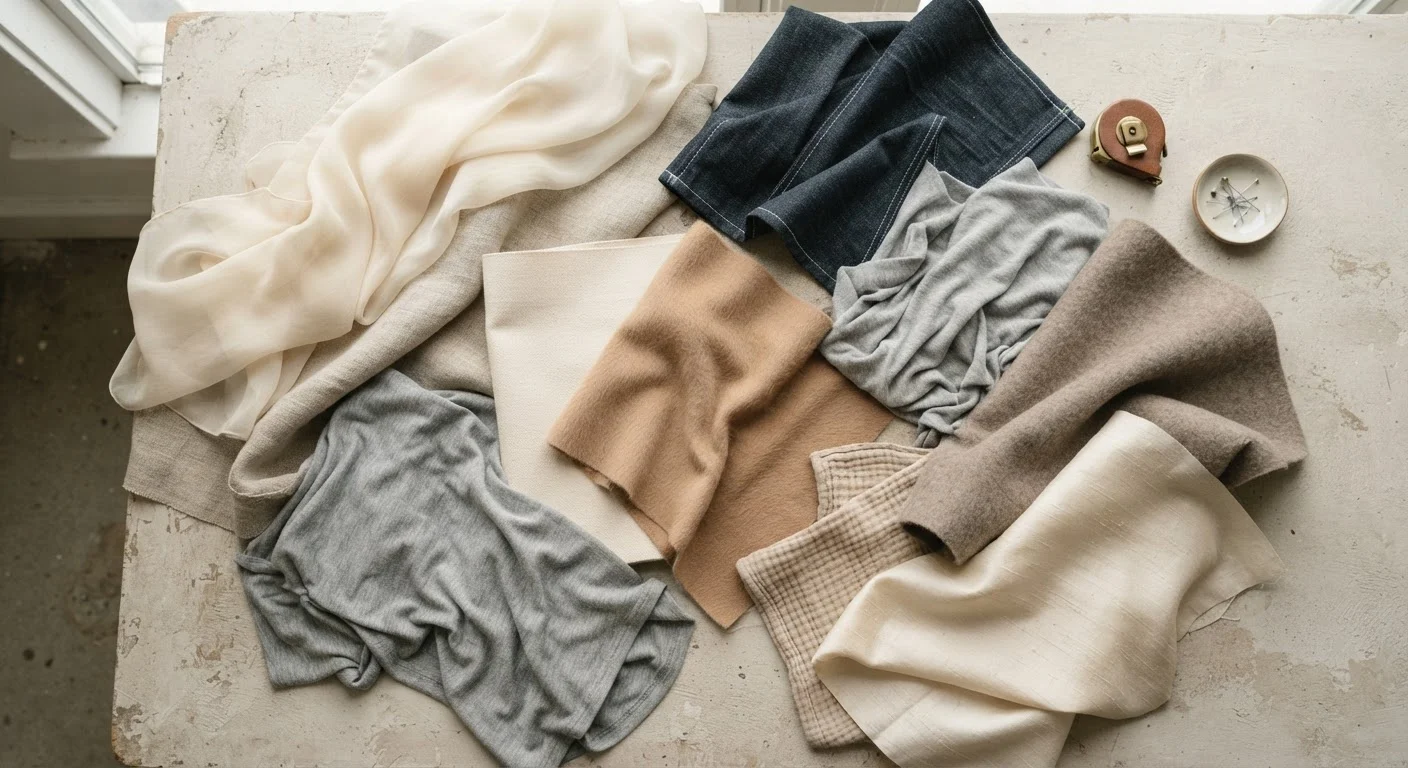
Drape is more intuitive than weight: it describes how a fabric falls when it leaves its own flat structure and interacts with gravity and a body. A high-drape fabric moves fluidly, following curves and shifting with motion. A low-drape fabric stands away from the body, holding a constructed silhouette regardless of what's underneath.
Drape is shaped by several factors working together: fiber type, weave density, finishing treatments, and yes, weight. Silk charmeuse is both lightweight and extremely drapey. Heavy wool crepe can also drape beautifully despite its substance. Meanwhile, a stiff organza can be nearly weightless yet hold dramatic structure.
Understanding drape helps you predict how a piece will look on — not just on a hanger or a flat photograph. A dress cut from fluid fabric will skim and reveal; the same pattern cut in a stiffer fabric will create space between cloth and body. Neither is superior. Both are tools. Texture and layering work alongside drape to create dimension and visual interest in an outfit.
Test Drape Before You Buy
When shopping in person, hold a garment up by the shoulder seam and watch how it falls. If it cascades and moves, it has good drape. If it holds a stiff angle, it's structured. Neither is better — but knowing which you're getting helps you buy intentionally rather than be surprised at home.
Common Fabrics and How They Behave
Here's a practical look at fabrics you'll encounter regularly, and what their weight and drape mean for getting dressed:
- Cotton jersey: Mid-weight, moderate drape. Stretches with movement and recovers its shape, which is why it's the standard for everyday T-shirts. Heavier cotton jersey feels more substantial and less clingy.
- Linen: Mid-to-heavy weight, low drape. Linen holds its shape and softens with wear and washing. Its characteristic structure makes it excellent for warm weather despite its relative weight.
- Rayon and viscose: Lightweight, high drape. Often used to mimic silk's fluid quality at a lower cost. Comfortable in heat, but can lose shape over time and often requires careful washing.
- Denim: Heavy, low drape. The weight gives denim its durability and structure. Lighter-weight denim offers more flexibility; heavier weights hold a silhouette but take longer to break in.
- Chiffon: Very lightweight, moderate-to-high drape. Transparent and delicate, it layers well but can feel cold against the skin.
- Wool crepe: Mid-to-heavy weight, surprisingly good drape. One of the most versatile fabric constructions for structured clothing that still moves elegantly.
For a deeper look at assessing material quality before purchasing, this primer on material quality across product categories is a useful next step.
Matching Fabric to Your Lifestyle
The most useful application of understanding weight and drape is matching it to how you actually live. A lightweight drapey blouse may look beautiful but feel impractical for a day that involves public transit, a full workday, and picking up groceries. A structured mid-weight fabric that holds its shape might serve that same day far better.
Consider three dimensions when evaluating a fabric's fit for your life:
- Activity level: More physical movement generally favors stretch, lighter weight, and breathable fibers. Seated, desk-heavy days are more forgiving of structured, heavier fabrics.
- Climate: Fabric weight affects thermal regulation significantly. Layering lighter fabrics gives more adaptability than a single heavy piece.
- Care requirements: High-drape fabrics often demand more careful laundering. If your routine doesn't include hand-washing or dry cleaning, choose accordingly.
How lifestyle shapes your wardrobe is a concept worth sitting with before investing in new pieces — fabric knowledge becomes far more useful when grounded in honest self-assessment.
Don't Overlook Fabric Care Before Buying
A beautiful fabric that requires dry cleaning or hand-washing may sit unworn if those steps don't fit your routine. Check care labels before purchasing, not after. If a garment's care requirements don't match your habits, it's unlikely to become a true wardrobe staple — regardless of how good it looks on the rack.
Reading a Garment Label With Confidence
Every garment sold in the U.S. is legally required to include a label listing fiber content. That content — cotton, polyester, wool, and their percentages in blended fabrics — is your clearest indicator of how the textile will behave in terms of weight, drape, breathability, and care.
A few practical guidelines for label reading:
- Natural fibers (cotton, wool, linen, silk) generally breathe better and age more gracefully, but often require more careful care.
- Synthetic fibers (polyester, nylon, acrylic) tend to be more durable and wrinkle-resistant, but may trap heat and pill over time.
- Blended fabrics — say, 55% linen, 45% cotton — aim to combine properties from both fibers, often improving durability or ease of care while retaining natural feel.
The care symbols on the same label directly reflect the fabric's weight and fiber sensitivity. Delicate, high-drape fabrics almost always carry more restrictive care instructions. Reading these before purchase — not after a costly laundering mistake — is a simple habit worth building.
For context on how textile knowledge applies beyond clothing, textiles in the home serve similar principles of weight and drape in shaping how a space feels and functions.