

Key Takeaways
Price Tracking Tool
A price tracking tool is software — typically a browser extension, website, or app — that monitors product prices over time and notifies you when a price changes. These tools store historical price data so you can see whether today's listed price is actually a discount or just a routine number. They work by periodically checking retailer pages and logging what they find.
Most trackers use automated web scraping or retailer APIs to pull pricing data at set intervals, which means the data is only as current as the last check — not necessarily real-time.
How Price Tracking Actually Works
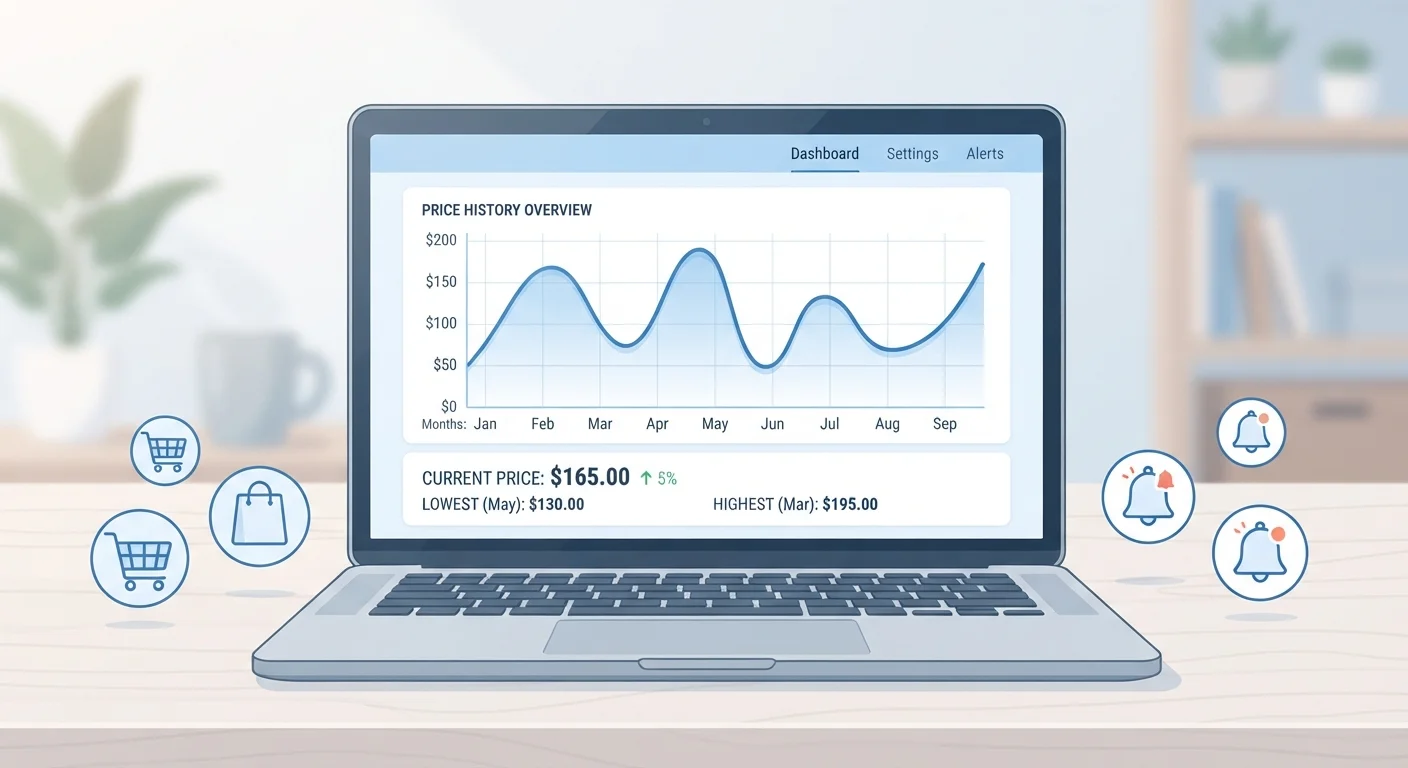
At their core, price tracking tools are automated monitors. They periodically visit a product page — or query a retailer's data feed — record the listed price, and store it in a database. Over time, that database becomes a price history graph you can consult before buying.
When you set a target price or simply ask the tool to watch an item, it compares each new data point against your threshold. When the price drops to or below your target, you get an alert — usually by email or app notification.
The practical implication: these tools work best when you're patient. Set a target, walk away, and let the tracker do the watching. That's a more efficient approach than manually refreshing product pages.
12–24 hrs
Typical price check interval for most trackers
Many commonly used price tracking tools refresh product data once or twice daily, meaning short-duration sales may not be captured.
6+ months
Recommended price history window for context
Consumer researchers generally suggest reviewing at least six months of price history to identify genuine discounts versus routine pricing.
~30%
Share of online "sales" with prior price inflation
Studies examining e-commerce promotional periods have found a notable portion of advertised discounts follow a pre-sale price increase by the same retailer.
What Price Trackers Do Well
The clearest value of a price tracker is context. A product marked "30% off" sounds compelling, but a price history chart showing that this item has been at the same price for four months tells a different story. That historical baseline is something most shoppers don't have access to without a tool.
Trackers are also useful for:
- Patience management: Instead of checking prices daily, you delegate the task and only re-engage when conditions meet your criteria.
- Seasonal pattern recognition: Some tools display enough history to reveal recurring discount cycles. For a deeper look at when categories historically drop, see retail pricing calendars.
- Avoiding impulse purchases: Seeing that a price has been flat for months can make you less reactive to promotional framing.
Set a Realistic Target Price First
Before adding an item to a tracker, decide what price point would make the purchase genuinely worthwhile for you — independent of the current listed price. This prevents you from anchoring your target to an inflated 'original' price and ensures your alert reflects real value, not just movement.
Where Price Trackers Fall Short
These tools have meaningful limitations that are easy to overlook.
Update lag: If a tracker checks prices every 12 hours and a flash sale lasts 4 hours, you'll never see it. The tool's data is only as current as its last check.
Artificial price inflation: Some retailers raise prices before a promotional period so the subsequent "discount" looks larger. If a tracker's history is short, it may not expose this pattern. Longer historical windows — six months or more — provide better protection against this.
Incomplete cost picture: A tracker monitors the listed item price, not the total cost of ownership. Shipping fees, installation charges, required accessories, and long-term subscriptions can significantly change what you actually pay. The hidden costs behind price tags article breaks this down in detail.
Coverage gaps: Not every retailer is tracked. Smaller merchants, specialty stores, and newer platforms may be absent entirely.
It's also worth noting that some products simply don't drop meaningfully — no tracker will find a deal that doesn't exist. Certain categories hold their prices regardless of how long you wait.
Browser Extensions and Privacy
Many price tracking browser extensions request broad permissions to read page data across sites you visit. Before installing, review what data the extension collects, how it's stored, and whether it's shared with third parties. Checking the extension's published privacy policy takes a few minutes and is worth doing.
Using Tracker Data Alongside Other Checks
Price data is one input, not a complete decision framework. Before acting on a tracker alert, consider:
- Is the seller reputable? A low price from an unfamiliar seller carries different risk than the same price from a well-known platform.
- What are the return terms? Price aggregators and trackers rarely surface return window quality or restocking fees. Check these variables first before treating two prices as equivalent.
- Is the listed unit comparable? Product configurations, bundle inclusions, and model variants can make two identical-looking prices represent very different purchases.
For shoppers comparing across multiple retailers, the value comparisons hub offers frameworks for making those assessments more systematic. Price tracking works best as one layer in a broader, informed approach — not as a shortcut that replaces judgment.
“A price alert tells you the number changed — it doesn't tell you whether the deal is actually good. That judgment still belongs to the shopper.”
— Consumer Research Perspective, General principle in behavioral economics of retail decision-making