

Key Takeaways
Our Verdict
Neither loyalty programs nor one-time discount codes is universally superior — the right choice depends on how often you shop a particular category and whether your spending is concentrated or spread across many retailers. Frequent, focused shoppers generally extract more value from loyalty programs over time, while occasional or one-off buyers benefit most from immediate discount codes.
| Best for | Recommended |
|---|---|
| Shoppers who repeatedly buy from the same retailers or brands | Loyalty Programs |
| Infrequent or one-time purchasers in a category | One-Time Discount Codes |
| Those wanting maximum savings with minimal program commitment | One-Time Discount Codes |
| Shoppers building long-term value across travel, groceries, or beauty | Loyalty Programs |
How Each Mechanism Actually Works
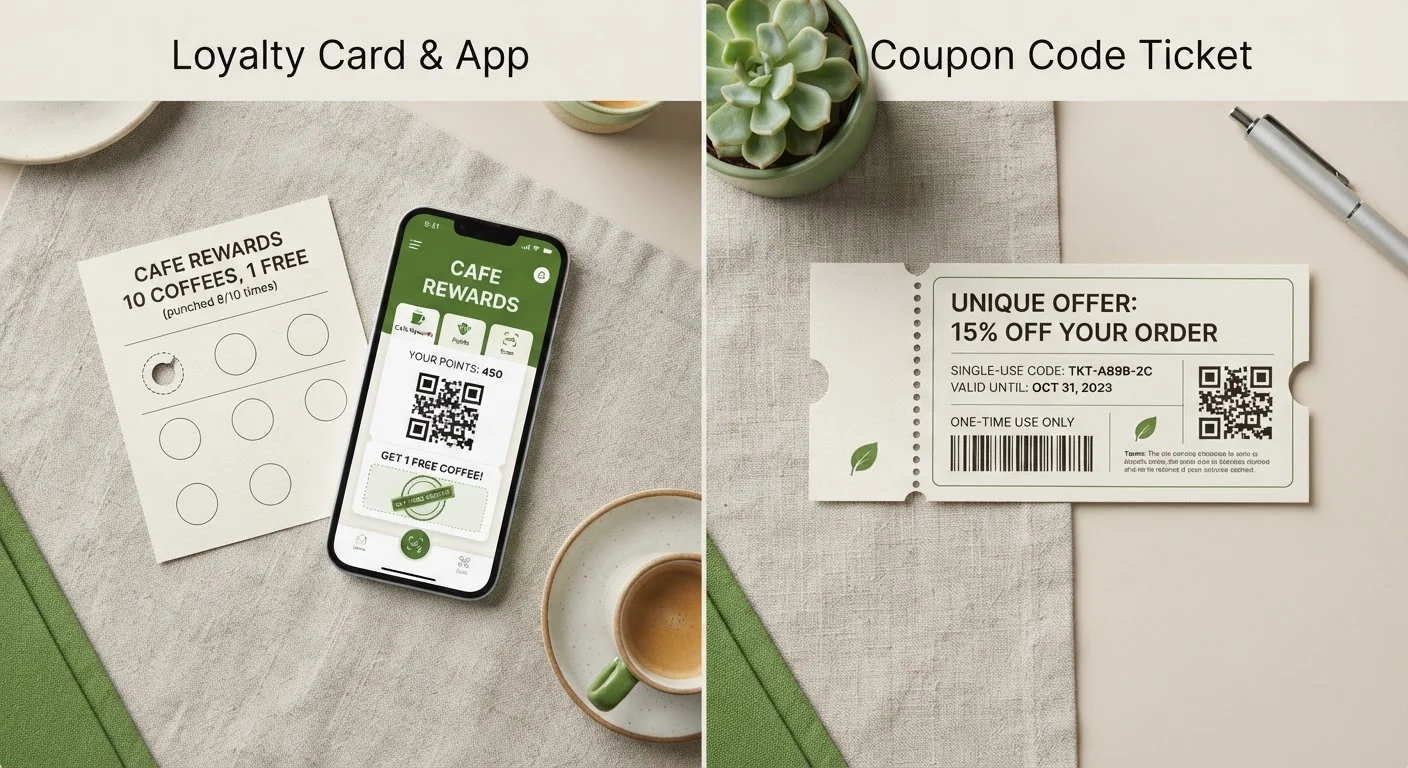
Loyalty programs accumulate value over multiple transactions. A shopper earns points, miles, or tiered status with each qualifying purchase, then redeems those credits for rewards — discounts, free items, early access, or upgrades. The key mechanic is compounding: the more you engage, the more you earn, and higher tiers often unlock better earn rates or exclusive perks.
One-time discount codes work differently. They apply a flat or percentage reduction to a single transaction and expire after use. They're typically distributed through email sign-up incentives, promotional campaigns, or third-party coupon aggregators. There's no accumulation and no future benefit — the value is entirely front-loaded.
Understanding this structural difference is the starting point for deciding which suits your habits. Think of loyalty programs as a savings account and discount codes as cash back on a single purchase. Both put money in your pocket, but the time horizon and conditions are entirely different.
Where Loyalty Programs Deliver — and Where They Don't
Loyalty programs shine in categories where repeat purchasing is natural: groceries, fuel, travel, coffee, and personal care subscriptions. In these contexts, you'd be spending the money anyway, so earning incremental rewards costs nothing extra in behavioral terms. Research from the loyalty industry consistently shows that enrolled members generate higher lifetime revenue for retailers — but the flip side is that members also tend to concentrate more spending with enrolled retailers to maximize point accrual, which may or may not align with getting the lowest price.
The hidden costs are worth examining. Loyalty programs can subtly steer purchasing decisions in ways that don't always serve the shopper's financial interest. Chasing a reward tier sometimes means spending more than planned, buying items slightly earlier than needed, or ignoring a lower-priced competitor. Points and miles also carry expiration risks and devaluation — a program can quietly lower redemption rates, reducing the value you thought you'd accumulated.
Loyalty Programs Can Shift Your Spending Behavior
One underappreciated risk of loyalty programs is that they can encourage you to consolidate spending with a single retailer even when a competitor offers a lower price. Before assuming your loyalty tier is saving you money, compare total out-of-pocket cost against what you'd pay elsewhere without any program. The points earned rarely outweigh a significant price gap.
Programs also vary wildly in actual redemption value. A point worth one cent at signup may deliver far less value by redemption time depending on how the program structures its rewards catalog. Calculate the dollar-equivalent value of your points before assuming a program is worthwhile. For a broader look at how promotional mechanics can distort perceived value, see how promotional saturation affects perceived value.
The Case for One-Time Discount Codes
For shoppers who purchase infrequently in a category — a new appliance, a seasonal clothing refresh, a one-time travel booking — discount codes often deliver better net value. There's no behavioral commitment required, no points to track, and no risk of value evaporating if you don't shop again within a qualifying window.
Codes are also more flexible across retailers. A 15% welcome code at one electronics retailer and a 20% code at another can be compared directly; loyalty points rarely offer that kind of apples-to-apples clarity. This transparency makes it easier to evaluate whether a discount is genuinely worthwhile — which matters given that many published retail prices are set with promotional discounting baked in.
~72%
U.S. adults enrolled in at least one loyalty program
According to Bond Brand Loyalty's U.S. Loyalty Report, the majority of American consumers participate in at least one loyalty program, though active engagement rates are considerably lower.
~50%
Loyalty program memberships that are inactive
Industry research has consistently found that roughly half of loyalty program memberships go unused, suggesting enrollment alone does not guarantee value extraction.
Where codes lose ground is predictability. Availability depends on a retailer's promotional calendar, and the best codes often arrive with short expiration windows or cart minimums that pressure hasty decisions. If you're not already planning to buy, a time-limited code can push you toward a purchase that wasn't necessary. See how stacking discount codes with cashback can increase their effective value when you do use them.
Comparing the Two Approaches Side by Side
| Loyalty Programs | One-Time Discount Codes | |
|---|---|---|
| Value accumulation | Compounds across multiple purchases | Single transaction only |
| Best purchase frequency | Regular, repeat shoppers | Occasional or one-time buyers |
| Flexibility across retailers | Locked to specific program | Broadly available across retailers |
| Transparency of value | Variable; points value can shift | Clear percentage or dollar off |
| Risk of value loss | Points expiry and devaluation possible | Low; value is immediate |
| Effort to manage | Moderate; track tiers and expiry | Low; apply at checkout |
| Works best for categories | Groceries, travel, fuel, beauty | Electronics, apparel, one-off services |
The comparison above highlights that neither option dominates across every dimension. Shopping category, purchase frequency, and your tolerance for program management all influence which delivers more value in practice. If your spending is concentrated in two or three retailers you use habitually, enrolling in their loyalty programs is low-effort and likely worthwhile. If you shop broadly or infrequently, hunting for codes before each transaction is usually more efficient.
For shoppers who want to go further, combining both strategies is often possible. Many retailers allow discount codes to stack on top of loyalty point accrual — meaning you receive the immediate discount and earn points on the reduced purchase price. See our guide to building a personal deal strategy for a framework that integrates both tools across the categories you actually shop.