

| Standard return window (major U.S. retailers) | 15–90 days (Varies by retailer and product category) |
| Typical restocking fee range | 10%–25% (Common in electronics and furniture categories) |
| Final sale items | Not returnable (Clearance and marked-down items often excluded from standard policies) |
| Return shipping responsibility | Varies — buyer or seller (Confirm before purchasing, especially for heavy items) |
| Refund form options | Original payment, store credit, or gift card (Store credit and gift cards are not equivalent to cash refunds) |
Why Return Policies Deserve a Second Look
Most shoppers check the price, skim the reviews, and hit buy — without reading the return policy. That's understandable, but it's also where avoidable regret starts. Return policies are legal documents, and retailers draft them in their own favor. What's advertised as a "hassle-free returns" promise at the checkout banner often contains meaningful restrictions buried several paragraphs deep.
Understanding the structure of a return policy before you purchase — not after — puts you in a better position to evaluate the real cost of a transaction. See also how restocking fees and other charges quietly erode deal value before you ever open the box.
| Standard return window (major U.S. retailers) | 15–90 days (Varies by retailer and product category) |
| Typical restocking fee range | 10%–25% (Common in electronics and furniture categories) |
| Final sale items | Not returnable (Clearance and marked-down items often excluded from standard policies) |
| Return shipping responsibility | Varies — buyer or seller (Confirm before purchasing, especially for heavy items) |
| Refund form options | Original payment, store credit, or gift card (Store credit and gift cards are not equivalent to cash refunds) |
The Key Terms You Need to Recognize
Return policies use a consistent vocabulary, and knowing what each term actually means is the fastest way to spot a problematic policy.
Return window
The number of days from purchase (or sometimes delivery) during which a return is accepted. Once this period lapses, the retailer is typically under no obligation to accept a return.
Restocking fee
A charge deducted from a refund when an item is returned, intended to cover the retailer's cost of processing the return. It's expressed as a percentage of the purchase price.
Final sale
A designation indicating that an item cannot be returned or exchanged under any circumstances, regardless of condition or timeframe.
Store credit
A non-cash refund issued as credit usable only at that retailer. Unlike a cash or card refund, store credit cannot be applied elsewhere and may have expiration conditions.
Proof of purchase
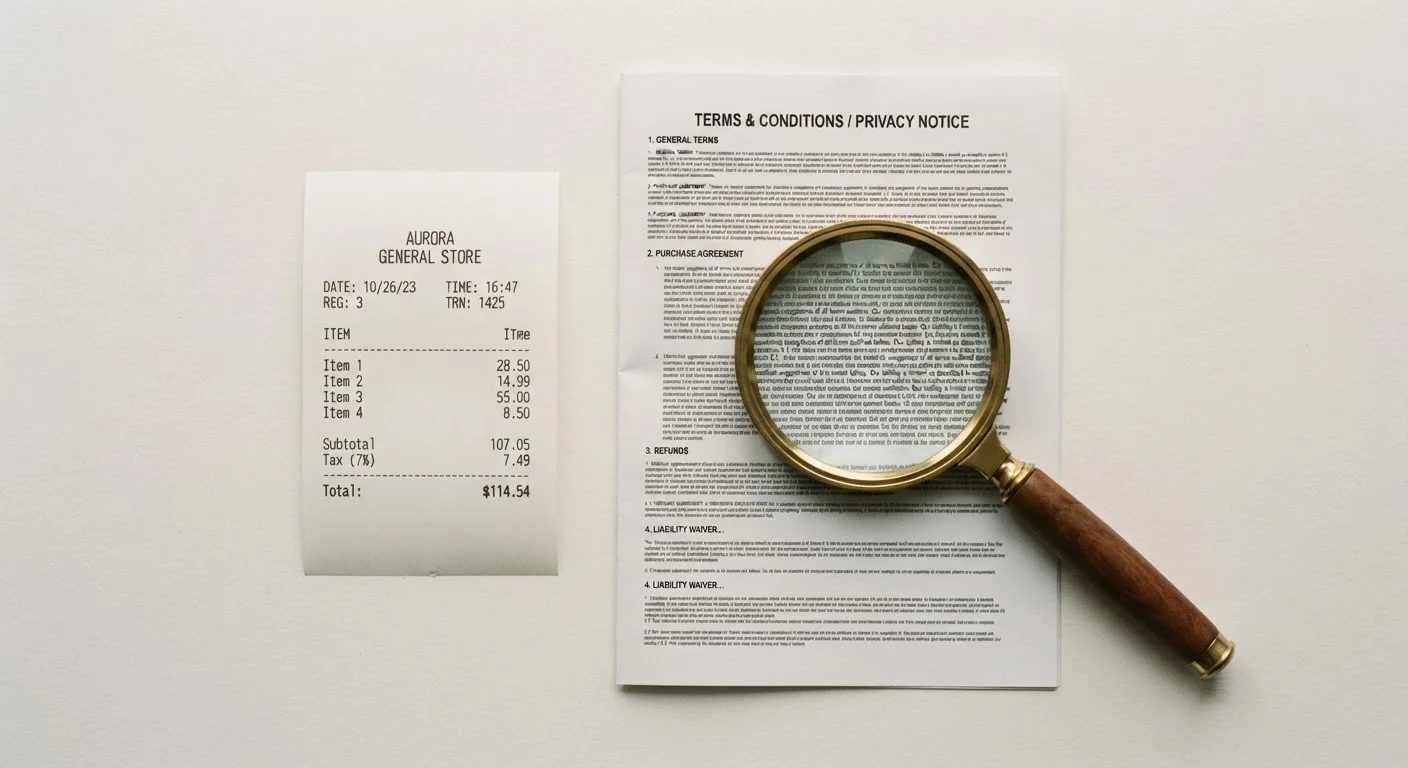
Documentation — typically a receipt or digital order confirmation — required to process a return. Without it, return options are usually limited or reduced in value.
Exchange policy
A policy that allows a returned item to be swapped for a different item or the same item, rather than issuing a monetary refund. Often conflated with a return policy but distinct in outcome.
One often-overlooked detail: many policies differentiate between a return (item goes back, you get a refund) and an exchange (you get store credit toward a replacement). If a retailer advertises "easy returns" but only offers exchanges, that's a significant limitation — especially for online purchases where you can't try before you buy.
For a broader look at terms that can complicate ownership costs, the warranty fine print guide is a useful companion read.
The Clauses Retailers Rarely Highlight
Even policies that seem generous can contain limiting clauses. Here are the most common ones to watch for:
- Category exclusions: Electronics, mattresses, swimwear, and earbuds are frequently carved out from standard return windows or require a shorter return period — often 15 days versus a general 30- or 90-day policy.
- Opened vs. unopened rules: Some retailers only accept returns if original packaging is intact. Opening the box may trigger a restocking fee or void the return entirely.
- Condition requirements: Items must often be returned in "original condition" with all accessories, manuals, and tags. Missing a cable or a sticker can result in a partial refund or rejection.
- Sale and clearance item rules: Discounted merchandise is frequently marked "final sale," meaning no returns are accepted regardless of condition or timeframe.
- Proof of purchase requirements: Without a receipt or order confirmation, some stores will only offer store credit at the lowest recent sale price — not what you paid.
These clauses are common across retail categories. A pre-purchase checklist can help you confirm return terms before committing, especially for higher-ticket items.
Marketplace Purchases Have Different Rules
When buying through a third-party marketplace listing — even on a well-known platform — the return policy is set by the individual seller, not the platform. A platform's own return guarantee may not apply to every transaction. Always check the seller-specific return policy before purchasing from a marketplace listing, and confirm whether the platform offers any buyer protection that overrides seller terms.
How to Evaluate a Return Policy Before You Buy
A few targeted questions can help you assess any return policy in under two minutes:
- What is the exact return window? Count calendar days from purchase, not delivery. Some windows start at purchase date, which matters for online orders with shipping delays.
- Who pays return shipping? Prepaid return labels are not universal. For large or heavy items, return shipping costs can be substantial.
- Is there a restocking fee? Common in electronics and furniture, these fees typically range from 10%–25% of the purchase price and are applied before your refund is issued.
- What form does the refund take? Original payment method, store credit, or gift card — these are not equivalent, and store credit is far less flexible.
- Are there product-specific exceptions? Check whether your specific item category falls under a shortened or stricter policy.
The condition of an item at purchase also affects return eligibility. Refurbished and open-box items frequently carry non-standard or abbreviated return terms that differ from new product policies at the same retailer.
17.6%
U.S. retail return rate
According to the National Retail Federation, U.S. retailers see returns averaging around 17.6% of total sales annually.
~$101B
Estimated annual cost of returns to U.S. retailers
The NRF has reported that return fraud and processing losses cost the retail industry tens of billions each year, motivating stricter policy language.