

Key Takeaways
Our Verdict
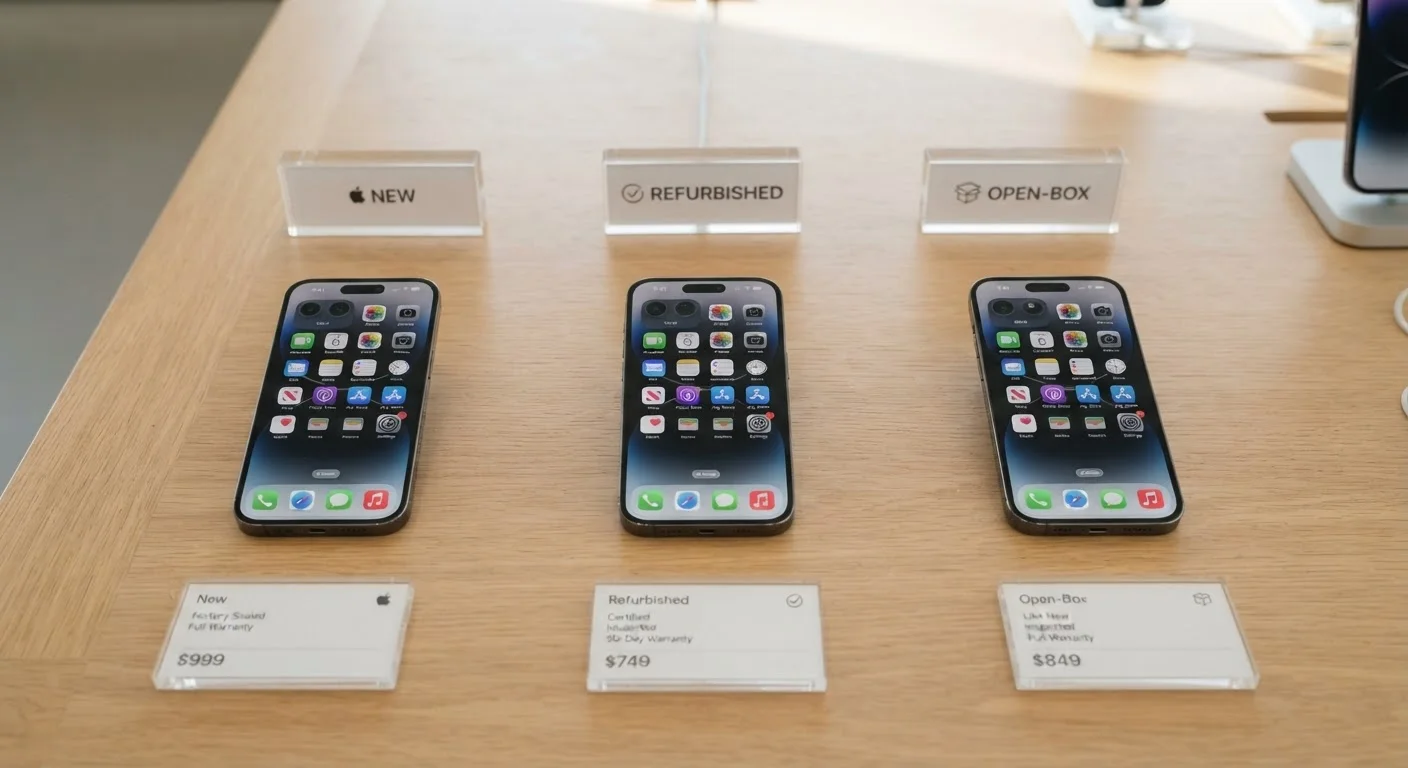
New products offer the most predictable experience but at a premium. Refurbished items from certified programs can deliver strong value, while open-box goods are often the lowest-risk way to pay less than full price. The right choice depends on how much uncertainty you're comfortable with and what warranty protection you need.
| Best for | Recommended |
|---|---|
| Shoppers who want zero ambiguity about condition and full warranty protection | New |
| Those comfortable with a documented inspection process and reduced price | Certified Refurbished |
| Buyers who want near-new condition with minimal savings risk | Open-Box |
What These Condition Labels Actually Mean
Retailers use the terms new, refurbished, and open-box to signal the prior handling history of a product — but the definitions aren't always consistent across stores. Before comparing prices, it helps to understand what each label is actually promising.
New means the item has never been used or previously sold. It arrives in original, sealed packaging with all included accessories and documentation. The full manufacturer warranty applies from the date of purchase.
Open-box refers to a product that was purchased and returned, or had its original packaging opened before sale — sometimes on a display floor, sometimes in a warehouse during a return inspection. The item may be in perfect working order with all parts intact, or it may be missing an accessory or show minor cosmetic wear. Condition grades (such as "Excellent" or "Good") vary by retailer.
Refurbished is the most variable of the three. It means the product was returned, repaired, or restored before being resold. Who performed that work — the original manufacturer, an authorized service partner, or a third-party reseller — has a major impact on reliability. Look for the phrase manufacturer-certified or certified refurbished as a meaningful distinction. See also: what certification labels really mean.
Warranty and Return Policy Differences
Warranty coverage is where the three tiers diverge most sharply — and where overlooking the fine print can be costly.
| New | Open-Box | Certified Refurbished | Third-Party Refurbished | |
|---|---|---|---|---|
| Condition | Unused, sealed | Returned or opened, may vary | Inspected, restored to standard | Restored, standards vary widely |
| Warranty | Full manufacturer warranty | Partial or store warranty | Limited manufacturer warranty | Minimal or none |
| Return flexibility | Standard window | Often shortened | Often shortened | Varies by seller |
| Price relative to new | Full price | Modest discount | Moderate discount | Larger discount, higher risk |
| Inspection documentation | N/A — unused | Varies by retailer | Standardized checklist | Not standardized |
| Packaging | Original, sealed | May be repackaged | Typically repackaged | Often repackaged |
New products typically include the manufacturer's standard warranty, which commonly ranges from 90 days to one year for electronics and longer for appliances or vehicles. Open-box items may carry the remainder of the original warranty, a shortened store warranty, or none at all — retailers set their own policies. Refurbished products sold through manufacturer-certified programs often include a limited warranty (commonly 90 days to one year), while third-party refurbished goods may offer minimal or no coverage.
Return windows also narrow as you move away from new. Open-box and refurbished items frequently have shorter return periods and may be subject to restocking fees. For a detailed breakdown of what to read before purchasing, review how return policies are structured. And for help parsing warranty language itself, warranty terms decoded explains what the fine print actually covers.
Prioritize Certified Programs for Electronics
When buying refurbished electronics, manufacturer-certified programs are the most reliable option. They typically include documented inspection steps, replacement of key components, and a limited warranty. Look for program names directly affiliated with the device maker rather than generic third-party listings. Paying slightly more within a certified program often provides meaningfully better protection than an uncertified discount.
How to Evaluate Quality Before You Buy
Condition grade descriptions are only as reliable as the process behind them. Here's what to verify regardless of which tier you're considering.
- Source matters most for refurbished. Manufacturer-certified programs follow documented inspection checklists and typically replace worn components. Third-party refurbishers have no standardized requirements.
- Check what's included. Open-box listings should itemize all original accessories. A missing charging cable or manual is manageable; a missing key component changes the value significantly.
- Read the condition grade carefully. Retailers often use tiered labels (Grade A, Grade B, or descriptors like "Excellent," "Good," "Acceptable"). These grades are not standardized across sellers, so cross-referencing the description text matters more than the label alone.
- Verify the return window. If a product arrives and doesn't meet expectations, how many days do you have to return it, and is there a restocking fee?
For a structured pre-purchase review process, use this pre-purchase checklist before committing. Also worth reviewing: the variables that make two prices genuinely different.
"Refurbished" Without Certification Is a Broad Term
Not all refurbished products meet the same standard. A third-party seller listing an item as refurbished may have done little more than clean the exterior and repackage it. Without a documented inspection record and a warranty backing the claim, the label offers limited assurance. Treat unverified refurbished listings with the same scrutiny you'd apply to any used-goods purchase.
When Each Option Makes Practical Sense
The right condition tier depends on the product category, intended use, and your tolerance for variability.
New makes the most sense for items where reliability is non-negotiable — medical devices, safety equipment, and products with complex firmware or software that may have been altered. It's also the rational choice when the price gap between new and refurbished is small.
Certified refurbished offers meaningful value for higher-cost electronics like laptops, smartphones, and tablets when purchased through manufacturer programs. The discount can be substantial, and a documented inspection provides reasonable confidence. Smartphone trade-in programs often run parallel to certified refurbished channels and are worth comparing.
Open-box tends to be the lowest-risk non-new option, especially at retailers with generous return policies. If the item was simply returned unused or lightly tested, you may receive a virtually identical product at a reduced price. The key variable is the retailer's inspection process and what condition grade they applied.
For context on how this dynamic plays out with vehicles specifically, the new vs. used car comparison covers the same tradeoffs at a much higher price point. And for a closer look at how open-box compares to floor models, floor models, open-box, and refurbished items compared offers additional detail.