

Key Takeaways
Why Small Upgrades Deserve Serious Attention
Major renovations get the headlines, but most everyday frustrations in a home — a drafty doorway, a dim hallway, a cabinet that fights back every morning — come down to small, fixable details. The good news is that these are also the problems most accessible to a DIY approach.
This list focuses on upgrades that address real friction points: the moments in your day where your home works against you rather than with you. None require structural changes, licensed tradespeople, or significant budgets. What they do require is knowing where to look. As a general principle worth keeping in mind, skipping small repairs often means a more expensive fix later — the same logic applies to home maintenance.
Start With a Friction Audit
Before buying anything, spend a few days noting which daily tasks feel unnecessarily difficult in your home. Which drawer sticks? Which room always feels cold? Which light switch is in the wrong place? A short list of real frustrations is a more useful starting point than a general home improvement checklist. Targeted upgrades deliver far more satisfaction than broad ones.
Eight Upgrades Worth Doing
Install door sweep weatherstripping on exterior doors
A gap at the base of an exterior door is one of the most common sources of drafts, dust infiltration, and insect entry in American homes. Door sweep weatherstripping — a flexible strip that seals the gap between the door bottom and the threshold — is typically self-adhesive or attached with a few screws and requires no special tools. Look for a sweep rated for your door's material and gap size. This upgrade improves comfort year-round and reduces heating and cooling load in rooms near the entry.
A simple door sweep seals one of the most common — and overlooked — air leaks in any home.
Add a programmable or manual timer to bathroom exhaust fans
Bathroom exhaust fans prevent moisture buildup and mold growth, but most homeowners either forget to run them long enough or leave them running unnecessarily. A simple in-wall countdown timer switch — which replaces the existing switch plate — lets you set a fixed run time after a shower without thinking about it again. This addresses a real functional gap: fans need to run for roughly 20 minutes after showering to effectively clear moisture, and a timer makes that automatic.
Timed exhaust fans remove moisture reliably without requiring anyone to remember to flip a switch.
Replace builder-grade cabinet pulls and knobs
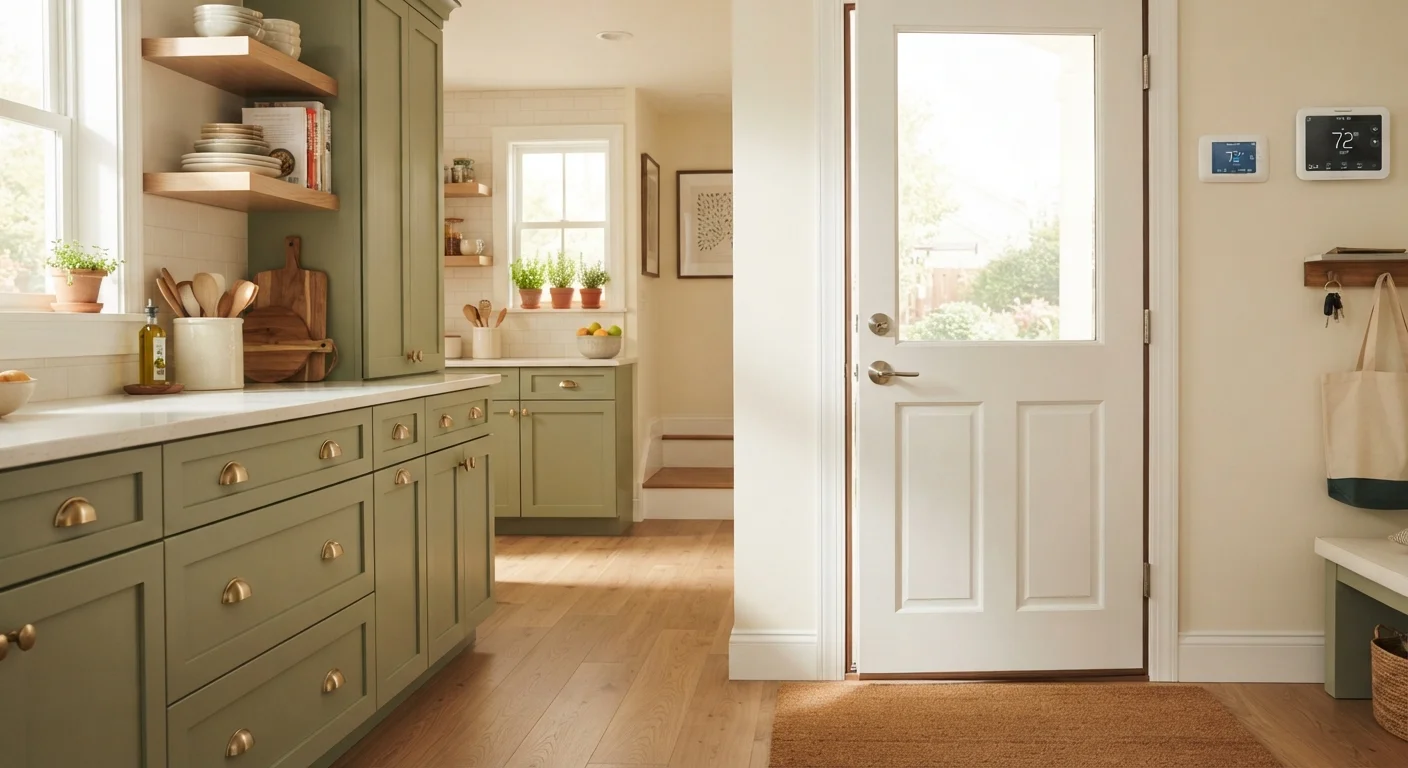
Builder-grade hardware is often sized for speed of installation, not ease of use. Undersized knobs on heavy cabinet doors create daily friction — literally. Swapping in larger, well-positioned pulls is a straightforward drill-and-screw project that takes minutes per cabinet. The functional improvement is immediate: doors open cleanly with one hand, drawers feel more substantial, and the kitchen or bathroom becomes noticeably easier to use throughout the day.
Properly sized cabinet pulls are one of the smallest investments with the most immediate daily payoff.
Add under-cabinet LED lighting to kitchen work surfaces
Overhead kitchen lighting creates shadows directly on countertops — the exact areas where food prep happens. Plug-in or adhesive LED strip lights installed under upper cabinets illuminate work surfaces without any electrical work. This upgrade meaningfully improves task visibility, reduces eye strain during food preparation, and makes a kitchen feel more functional at any time of day. Many options are motion-activated, which eliminates the need for a separate switch.
Under-cabinet lighting solves a shadow problem that overhead fixtures create by design.
Caulk gaps around window frames and baseboards
Gaps between window frames and drywall — or between baseboards and floors — allow air movement, let in pests, and create visible cracks that collect dust. Paintable acrylic latex caulk is inexpensive, easy to apply with a standard caulk gun, and dries in a few hours. Addressing these gaps in high-traffic rooms like bedrooms and living areas improves thermal comfort and gives finished spaces a cleaner, tighter appearance without any painting required.
Caulking gaps is among the most cost-effective sealing tasks a homeowner can do independently.
Install a tension rod shelf in cabinet dead zones
The space under a sink or inside a deep pantry cabinet often wastes its full vertical depth. A simple tension rod installed horizontally creates an instant second tier for spray bottles, foil rolls, or light cleaning supplies — no drilling or permanent hardware required. This is particularly useful in rental situations where modifications must be reversible. Decorating a rental without leaving a mark covers this approach more broadly for renters who want functional spaces without risking their deposit.
Tension rods convert wasted vertical cabinet space into usable storage without a single screw.
Swap out standard outlet covers for tamper-resistant or in-wall USB models
Standard outlet covers in high-traffic areas — especially kitchens, home offices, and rooms used by children — can be replaced with tamper-resistant receptacles or combination outlet/USB-A models. This is a low-voltage electrical task that most handy homeowners can complete safely after turning off the circuit breaker, but it's worth noting: if you're uncertain about your home's wiring or the circuit involved, consult a licensed electrician. The functional gain is real: fewer adapters on countertops, a more organized charging area, and added safety in family spaces.
In-wall USB outlets eliminate adapter clutter and improve everyday charging without rewiring anything major.
Add adhesive foam tape to interior doors that rattle or slam
Interior doors that rattle in their frames or slam shut loudly are often missing their door stop bumpers, or those bumpers have compressed over time. Self-adhesive foam tape applied along the door stop (the narrow strip the door closes against) absorbs impact, reduces noise significantly, and prevents the door from bouncing open after closing. This is a five-minute fix with immediate results, especially noticeable in hallways, bedrooms, and home offices where sound carries.
Foam door tape is a five-minute fix that makes a noticeable difference in household noise levels.
When to Bring in a Professional
Several upgrades on this list involve switching out electrical components, such as outlet receptacles or timer switches. These tasks are manageable for many homeowners when the circuit is properly de-energized first, but they do involve live wiring. If you're unsure about your home's wiring configuration, the age of your electrical panel, or local code requirements, consult a licensed electrician before proceeding. Permits and inspections may be required for some electrical work depending on your municipality.
Putting It Into Practice
The most effective approach is to walk through your home as a critical observer for one week, noting every moment something feels harder than it should. That inventory usually reveals a short list of high-leverage fixes. Tackle them one at a time, starting with the ones that affect your daily routine most directly.
If you're interested in going further with smart home tools, it's worth understanding what the research shows about real-world results — smart thermostats and energy use don't always deliver the savings that marketing suggests, and informed expectations lead to better decisions. Similarly, home automation routines worth setting up can help you decide which connected upgrades genuinely earn their keep.
Low-cost improvements are also a reminder that value isn't always about spending more. The cheapest option often costs more in the long run, but the right modest investment — a quality door sweep, a properly rated outlet cover — pays dividends in comfort and durability for years.