

| Number of common sheen levels | 5 (flat, eggshell, satin, semi-gloss, high-gloss) |
| Best finish for ceilings | Flat / matte |
| Best finish for bathrooms | Satin or semi-gloss |
| Best finish for trim and doors | Semi-gloss or high-gloss |
| Best finish for bedrooms | Flat or eggshell |
| Most forgiving finish for imperfect walls | Flat / matte |
| Easiest finish to clean | High-gloss |
| Best all-purpose finish for living areas | Eggshell or satin |
Why Paint Finish Matters as Much as Color
When homeowners choose interior paint, color gets most of the attention — but sheen (the level of reflectivity in the dried finish) has an equally powerful effect on how a room looks and how long the paint holds up. The wrong finish can make walls look greasy, highlight every ding and patch, or peel prematurely in a humid space.
Understanding sheen also ties directly into how light reads in a room. As explained in our article on natural light vs. artificial light in interior design, the way surfaces reflect light dramatically shapes the mood and spatial perception of a space. Pairing the right sheen with the right light conditions is a decision worth thinking through before you open a single can.
| Number of common sheen levels | 5 (flat, eggshell, satin, semi-gloss, high-gloss) |
| Best finish for ceilings | Flat / matte |
| Best finish for bathrooms | Satin or semi-gloss |
| Best finish for trim and doors | Semi-gloss or high-gloss |
| Best finish for bedrooms | Flat or eggshell |
| Most forgiving finish for imperfect walls | Flat / matte |
| Easiest finish to clean | High-gloss |
| Best all-purpose finish for living areas | Eggshell or satin |
The Five Sheen Levels at a Glance
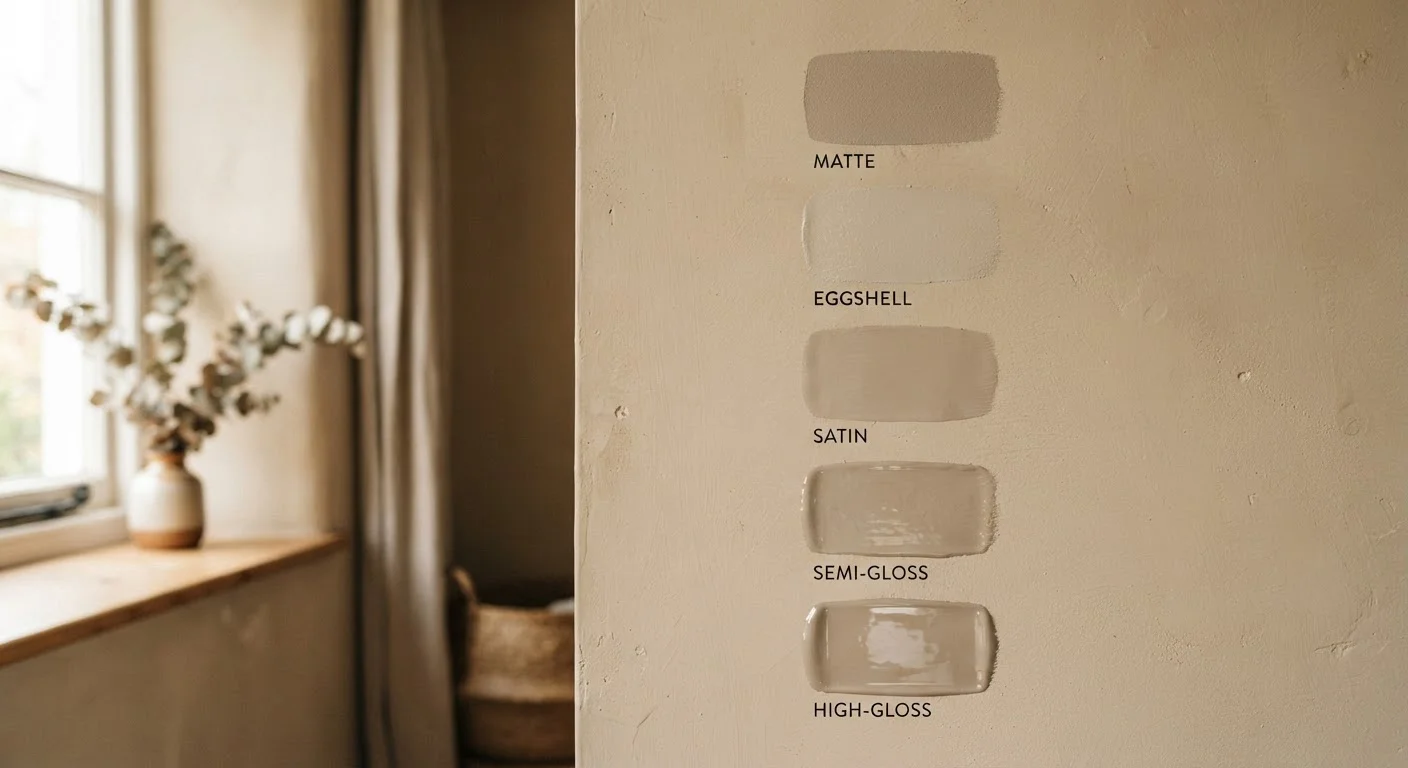
Most interior paint lines follow the same basic spectrum. Here's what each finish does and where it belongs:
- Flat / Matte: No reflectivity. Excellent at hiding wall imperfections — ideal for ceilings and low-traffic adult bedrooms. Difficult to wipe clean.
- Eggshell: Subtle, soft sheen. The go-to for living rooms and formal dining rooms where you want a refined look with slightly better washability than flat.
- Satin: Noticeable sheen, smooth feel. Durable enough for hallways, children's rooms, and family rooms. Handles light scrubbing without damage.
- Semi-Gloss: Reflective and moisture-resistant. The standard choice for kitchens, bathrooms, trim, and doors. Easy to clean and holds up well to humidity.
- High-Gloss: Mirror-like finish. Best for trim details, cabinetry, and furniture accents where maximum durability is the priority.
Room-by-Room Sheen Recommendations
Matching sheen to the specific demands of each room is where informed decisions pay off:
Kitchens and Bathrooms
Moisture, grease, and frequent cleaning make these the most demanding environments for paint. Satin or semi-gloss are the standard choices. Semi-gloss is particularly reliable on bathroom walls and kitchen backsplash areas, where the surface needs to handle both humidity and the occasional wipe-down. Avoid flat finishes in either room — they absorb moisture and are nearly impossible to clean without leaving marks.
Hallways and High-Traffic Areas
Scuffs, handprints, and general wear are facts of life in entryways and corridors. Satin is the most practical option: durable enough for scrubbing, but not so reflective that it makes a narrow hallway feel harsh. Eggshell can work in lower-traffic hallways.
Living Rooms and Dining Rooms
Eggshell is the classic pick for these spaces. It lends walls a polished, finished look without the high reflectivity of satin or semi-gloss, which can feel out of place in a formal or relaxed living area. For tips on building a color palette that works with your chosen finish, see colour theory at home.
Bedrooms
Flat or eggshell suits most bedrooms well. The lower reflectivity creates a calm, cocoon-like atmosphere — and since bedrooms aren't typically scrubbed down regularly, the reduced cleanability of flat paint is a smaller trade-off. Note that flat paint isn't ideal in children's rooms, where walls take more abuse; satin is a smarter call there.
Ceilings
Flat paint is nearly always the right answer for ceilings. Any sheen will reflect light downward and draw attention to roller marks and imperfections. Many paint lines offer a dedicated ceiling flat formula with extra hide.
Trim, Doors, and Cabinetry
Semi-gloss or high-gloss on trim creates a crisp contrast against lower-sheen walls and stands up to the knocks and finger contact these surfaces endure daily.
Sheen Amplifies Both Color and Imperfections
Higher-sheen finishes reflect more light, which can intensify a color's appearance and make walls look more vibrant — but they also highlight dents, patches, and uneven textures. If your walls have flaws, lean toward a lower sheen or invest time in proper surface prep before applying a satin or semi-gloss. For more on how lighting interacts with paint color, see our guide on natural and artificial light in interior design.
Surface Prep and Application Tips
Sheen choice also determines how much prep work your walls need. Higher sheens are less forgiving — any crack, patch, or uneven texture becomes more visible once the light hits the surface. Before applying satin or semi-gloss to walls, fill holes, sand smooth, and prime patches so they don't flash differently than the surrounding surface.
For older homes with textured or imperfect walls, flat or eggshell finishes can work in your favor. If you're considering darker paint colors in compact rooms, a flat or eggshell finish softens the intensity and helps the color read more evenly. And if you're starting a room from scratch and haven't settled on a color direction yet, our first-time decorator's starting point walks through the full decision sequence — including where paint fits in the overall process.
One practical note: always test your chosen finish and color on the actual wall in the actual room's lighting conditions before committing. A 4×6-inch swatch painted directly on the wall tells you far more than any chip card or paint fan.