

Key Takeaways
Our Verdict
Every Hawaiian island rewards visitors, but the right choice hinges on your travel style and priorities. History-seekers and social travelers thrive on Oahu; nature lovers and adventure seekers find their groove on Kauai or the Big Island; luxury resort-goers gravitate toward Maui; and those craving true solitude head to Molokai or Lanai.
| Best for | Recommended |
|---|---|
| First-time visitors and city-comfort travelers | Oahu |
| Families, snorkelers, and luxury resort seekers | Maui |
| Hikers, photographers, and nature adventurers | Kauai |
| Geology enthusiasts and multi-climate explorers | The Big Island |
How Hawaii's Islands Stack Up Side by Side
Choosing a Hawaiian island can feel overwhelming — six distinct destinations, each with its own personality, terrain, and vibe. This overview breaks down the six main islands so you can match your travel goals to the right landfall before you book a flight.
| Oahu | Maui | Kauai | Big Island | Molokai | Lanai | |
|---|---|---|---|---|---|---|
| Best for | First-timers, city lovers | Luxury, snorkeling, road trips | Hiking, dramatic scenery | Volcanism, diverse climates | Seclusion, cultural depth | Quiet luxury, diving |
| Crowd level | High | Moderate–High | Moderate | Moderate | Very Low | Very Low |
| Nightlife & dining | Excellent | Good | Limited | Moderate | Very limited | Resort-only |
| Signature experience | Waikiki & Pearl Harbor | Road to Hana | Na Pali Coast | Hawaii Volcanoes NP | Kalaupapa & sea cliffs | Hulopoe Bay snorkeling |
| Car rental needed? | Optional | Recommended | Recommended | Essential | Recommended | Essential (4WD) |
| Typical trip length | 3–7 days | 4–7 days | 4–7 days | 4–7 days | 2–4 days | 2–3 days |
Use the table above as a quick-reference snapshot. The sections below dig into what each island actually delivers on the ground.
Oahu, Maui, and Kauai: The Classic Three
Oahu is where roughly 70% of Hawaii's population lives, which means infrastructure is robust and attractions are plentiful. Waikiki Beach, Diamond Head Crater, and the Pearl Harbor National Memorial are genuinely unmissable. Honolulu's restaurant and nightlife scene rivals any mainland city. The trade-off: popular spots can feel crowded, especially in peak season.
Maui earns its reputation as the "Valley Isle" through sheer variety. The Road to Hana — a winding 64-mile coastal highway — threads past waterfalls, black-sand beaches, and bamboo forests. Molokini Crater offers some of the clearest snorkeling water in the Pacific. Lahaina's historic Front Street is a cultural anchor, though visitors should be mindful of ongoing community recovery following the 2023 wildfires; check current guidance before visiting affected areas.
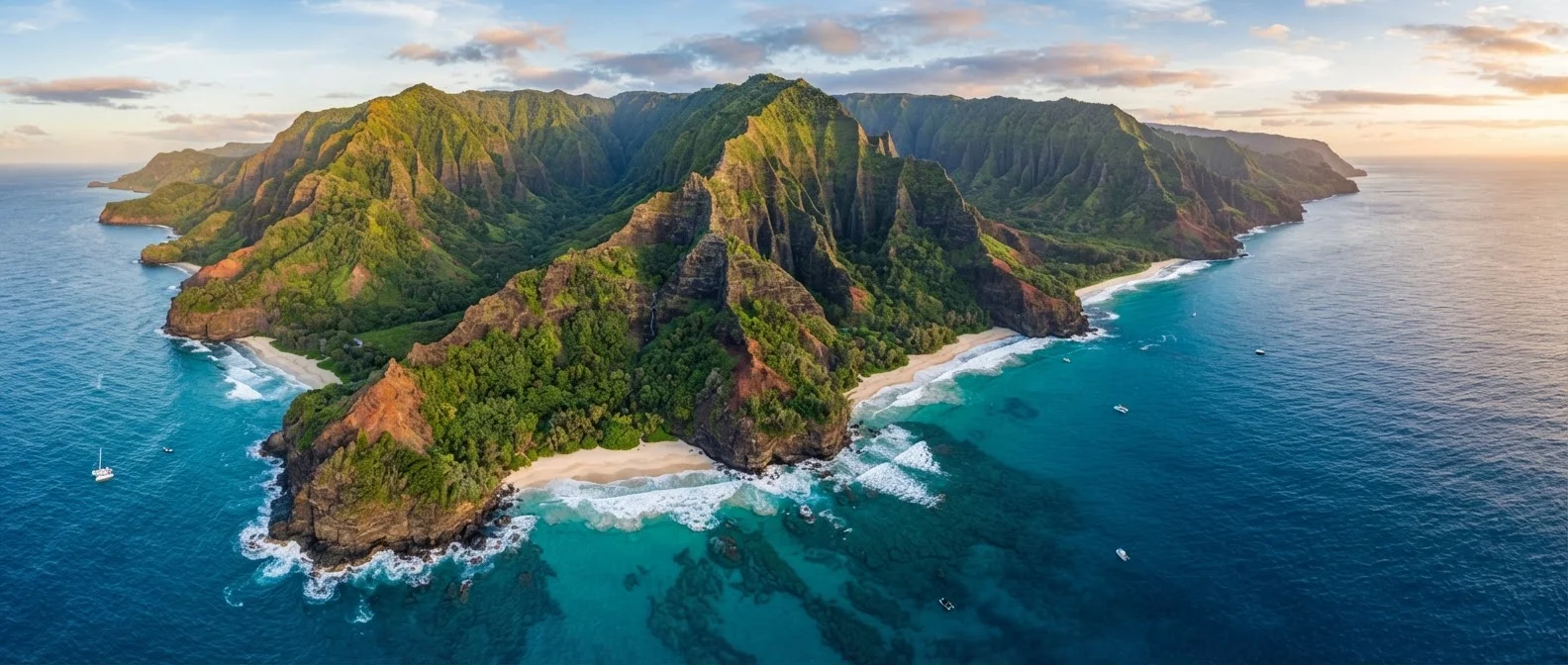
Kauai, the oldest of the main islands geologically, has the dramatic scenery to prove it. The Na Pali Coast — accessible by boat, helicopter, or strenuous hiking trail — is among the most photographed landscapes on Earth. Waimea Canyon stretches roughly 14 miles and drops over 3,600 feet, earning the nickname "Grand Canyon of the Pacific." Development restrictions keep Kauai quieter than Oahu or Maui, though amenity options are more limited as a result.
Consider Combining Two Islands
Inter-island flights are short and relatively frequent, making a two-island itinerary very manageable for trips of seven nights or more. A popular pairing is Oahu (for history and logistics) plus Kauai or Maui (for natural scenery). Book inter-island legs early, as seat availability on smaller routes can tighten.
The Big Island, Molokai, and Lanai: The Alternates Worth Knowing
Hawaii Island (commonly called the Big Island) is larger than all other Hawaiian islands combined. Its defining feature is active volcanism: Hawaii Volcanoes National Park hosts Kilauea, one of the world's most continuously active volcanoes. The island also spans 11 of Earth's 13 climate zones, so you can snorkel in warm Kona waters in the morning and stargaze from near-freezing Mauna Kea summit observatories the same evening. Visitor infrastructure is spread across a large area, so renting a car is essentially mandatory.
Molokai is the fifth-largest island and deliberately resists mass tourism — there are no traffic lights, no buildings taller than a coconut palm, and no large resort developments. The island's residents have consistently voted to maintain this character. Visitors who make the effort encounter sea cliffs that rank among the tallest on the planet, mule-trail access to the historic Kalaupapa National Historical Park, and an authentic slice of Native Hawaiian culture that other islands can struggle to offer.
Lanai is small (just 140 square miles) and privately oriented, with two high-end resort properties and a rugged interior accessible primarily via 4WD. The Hulopoe Bay marine preserve draws snorkelers and divers. Day trips from Maui via ferry are a practical way to sample the island without committing to an overnight stay.
Respect Community Boundaries on Molokai
Molokai's residents have expressed strong preferences around visitor conduct and limits on tourism development. Before visiting, review current community guidelines and be prepared for limited commercial services. Attempting to access private or culturally sensitive land without permission is both disrespectful and potentially illegal.
Planning Tips for Picking Your Island
A few practical considerations can sharpen your decision quickly:
- Trip length: Short trips (four nights or fewer) generally favor one island. A week or more opens up island-hopping via inter-island flights, which are typically short hops of 20–45 minutes.
- Activity priorities: Surfing culture centers on Oahu's North Shore; big-wave season runs roughly November through February. Whale watching peaks January through March and is especially reliable in Maui's waters.
- Budget: Accommodation costs vary significantly across islands. Lanai's resort-centric model skews expensive; Oahu and the Big Island offer the widest range of lodging options.
- Seasonality: Hawaii's weather is warm year-round, but the drier, sunnier "summer" season (May–October) sees higher visitor volumes on all islands. The wetter winter months bring bigger surf on north shores and lush, green landscapes.
Always verify current entry requirements, road conditions, and any area advisories through official state and federal sources before you travel — conditions on active volcanic islands can change.