

Key Takeaways
Option A
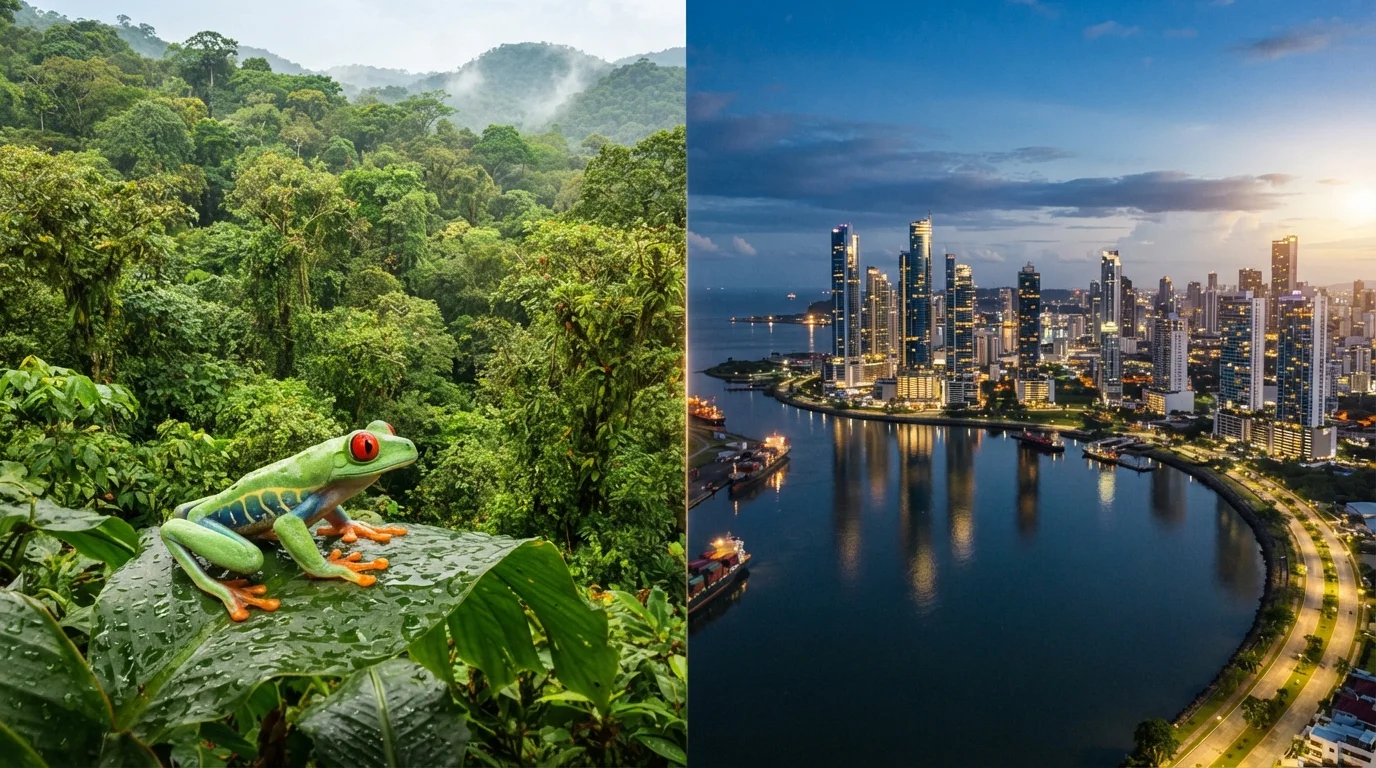
Costa Rica
The classic eco-adventure powerhouse of Central America.
Best for: Travelers who prioritize wildlife, national parks, and outdoor experiences over urban exploration.
Option B
Panama
The cosmopolitan crossroads blending city energy with jungle and coast.
Best for: Travelers who want a mix of modern city life, world-famous infrastructure, and accessible nature.
If wildlife and national parks are your top priority
Costa Rica
Costa Rica protects over 25% of its land in parks and reserves, delivering unmatched density of wildlife encounters from cloud forests to Pacific beaches.
If you want a city-nature combination in one trip
Panama
Panama City is a walkable, modern capital just minutes from rainforest trails, offering urban comfort alongside genuine wilderness access.
If budget is a key consideration
Panama
Panama generally offers more budget flexibility, especially in accommodation and dining, compared to Costa Rica's well-developed tourist infrastructure.
If first-time adventure travel is your goal
Costa Rica
Costa Rica's mature tourism ecosystem means excellent guided options, English-speaking guides, and well-marked trails for travelers new to the region.
If you want to combine Caribbean and Pacific coasts
Panama
Panama's narrow geography lets travelers reach the Caribbean's Bocas del Toro and the Pacific coast with relatively short travel times between them.
Nature and Landscapes: Wild Credentials Side by Side
Costa Rica has long been the gold standard for ecotourism in the Americas. Its national park system — covering roughly 26% of the country's land area — harbors an extraordinary concentration of species, including over 900 bird species and five distinct sea turtle nesting sites. Destinations like Manuel Antonio, Tortuguero, and the Osa Peninsula's Corcovado National Park draw nature travelers from around the world.
Panama's biodiversity is equally impressive but less widely publicized. The country sits at the biological junction of North and South America, making it a remarkable corridor for migratory birds — birders log some of the world's highest single-day species counts in the Panama Canal watershed. Soberania National Park is accessible from Panama City in under an hour, while the Darién region represents one of the Western Hemisphere's largest intact rainforests, though its remoteness demands experienced guides and solid logistics planning.
| Criterion | Costa Rica | Panama |
|---|---|---|
| Visa required (US citizens) | No (up to 90 days) | No (up to 90 days) |
| Currency | Colón (USD accepted) | USD exclusively |
| Protected land area | ~26% of territory | ~38% of territory |
| Urban experience | Limited in San José | Strong in Panama City |
| Typical travel cost | Moderate to high | Moderate |
| Best dry season | December–April | Mid-December–mid-April |
| Iconic attraction | Corcovado National Park | Panama Canal |
| English prevalence | Common in tourist areas | Common in Panama City |
Getting There and Getting Around
American travelers have solid options into both countries. San José's Juan Santamaría International Airport receives direct flights from dozens of US cities, and Panama City's Tocumen International Airport functions as a major regional hub with even broader US connections. Copa Airlines uses Tocumen as its main base, which can make Panama an efficient entry point for broader Central or South American itineraries.
Within Costa Rica, a rental car is widely considered the most practical way to reach diverse regions, though roads can be rough and driving conditions challenging during the rainy season (May through November). Domestic flights and shuttle services connect popular tourist zones and save significant time. Panama City itself is navigable by Metro and rideshare apps — a convenience Costa Rica's capital, San José, doesn't yet match. Outside the city, Panama's road infrastructure varies considerably, and boat transport is essential for reaching archipelagos like Bocas del Toro and the San Blas Islands.
900+
Bird species recorded in Costa Rica
Costa Rica's avian diversity makes it one of the top birdwatching destinations in the Western Hemisphere.
38%
Panama's land under protection
Panama protects a significant share of its territory through national parks and indigenous-managed reserves, according to Panamanian environmental authorities.
~2,000
Ships transiting the Panama Canal annually
The Panama Canal Authority reports roughly 13,000–14,000 transits per year, making it a defining piece of global trade infrastructure visitors can observe firsthand.
Entry, Costs, and Practical Planning
American citizens do not need a visa for either Costa Rica or Panama for tourism stays of up to 90 days, making both highly accessible for spontaneous or pre-planned trips alike. Both countries use the US dollar as their official or de facto currency — Panama uses the dollar exclusively, while Costa Rica's colón is in wide use but dollars are broadly accepted in tourist areas.
Cost differences are real and worth factoring in. Costa Rica has invested heavily in eco-lodge infrastructure, and that quality comes at a price: mid-range lodges in popular areas typically run higher than comparable options in Panama. Panama City's hotel market offers a wide range from budget to luxury, and food costs — especially outside tourist corridors — are generally lower than in Costa Rica's prime destinations.
Rainy Season: A Hidden Opportunity
Both countries experience a pronounced rainy season from roughly May to November. While this brings daily afternoon downpours, it also means fewer crowds, lower accommodation rates, and lusher landscapes. Many experienced travelers specifically prefer this window, particularly in Costa Rica's Pacific regions and Panama's highlands. Pack waterproof gear and embrace the rhythm — mornings are often clear and brilliant.
For safety, health requirements, and current entry conditions, always verify with the U.S. Department of State and the official tourism or immigration authorities of each country before travel, as regulations can change.