

| Primary function of mortar | Bond tile or masonry to a substrate |
| Primary function of grout | Fill joints between tiles on the same plane |
| Primary function of caulk | Seal movement joints and changes of plane |
| Flexibility after curing | Mortar & grout: rigid; Caulk: flexible |
| Correct corner joint material | Caulk (never grout) (Tile Council of North America guidelines) |
| Grout sealing required | Yes, for most cement-based grouts |
Why These Three Materials Get Confused
Walk into any hardware store and you'll find grout, mortar, and caulk shelved near each other, often marketed for overlapping purposes. All three seal or bond surfaces — but they behave in fundamentally different ways under stress, moisture, and temperature change. Using the wrong one in the wrong place can cause cracking, water intrusion, or adhesive failure within months.
| Primary function of mortar | Bond tile or masonry to a substrate |
| Primary function of grout | Fill joints between tiles on the same plane |
| Primary function of caulk | Seal movement joints and changes of plane |
| Flexibility after curing | Mortar & grout: rigid; Caulk: flexible |
| Correct corner joint material | Caulk (never grout) (Tile Council of North America guidelines) |
| Grout sealing required | Yes, for most cement-based grouts |
This guide cuts through the confusion by treating each material on its own terms: what it's made of, where it performs reliably, and where it will let you down.
Mortar: The Foundation Adhesive
Mortar is a bonding compound made from cement, sand, and water — sometimes with additives like lime or polymer modifiers. Its primary job is to adhere tile, brick, or stone to a substrate. It is rigid once cured and is designed to bear load.
Thinset mortar
A cement-based tile adhesive applied in a thin layer using a notched trowel. Available in modified (polymer-enhanced) and unmodified formulas for different tile types and substrates.
Sanded grout
Cement-based grout containing fine sand, used to fill tile joints wider than roughly ⅛ inch. The sand adds body and helps resist shrinkage cracking.
Unsanded grout
Cement-based grout without sand aggregate, used in narrow tile joints (typically under ⅛ inch). Sand particles can scratch polished or delicate tile surfaces.
Epoxy grout
A two-part grout system combining resin and hardener. Highly stain- and chemical-resistant, making it suitable for demanding environments like commercial kitchens or pool decks.
Movement joint
A joint specifically designed to allow surfaces to expand, contract, or shift slightly without cracking. These joints should be filled with a flexible sealant such as caulk, never rigid grout.
Substrate
The underlying surface to which tile or stone is bonded — for example, cement board, concrete, or a properly waterproofed wall panel. The condition and type of substrate determines which mortar is appropriate.
Types of Mortar
- Thinset mortar — the standard choice for most tile installation, applied in a thin layer with a notched trowel. Available in modified (polymer-enhanced) and unmodified versions.
- Medium-bed mortar — used for large-format or heavy tiles where thinset alone may not provide sufficient support.
- Masonry mortar — formulated for brick, block, and stone construction. Not appropriate for tile work.
Where Mortar Cannot Substitute
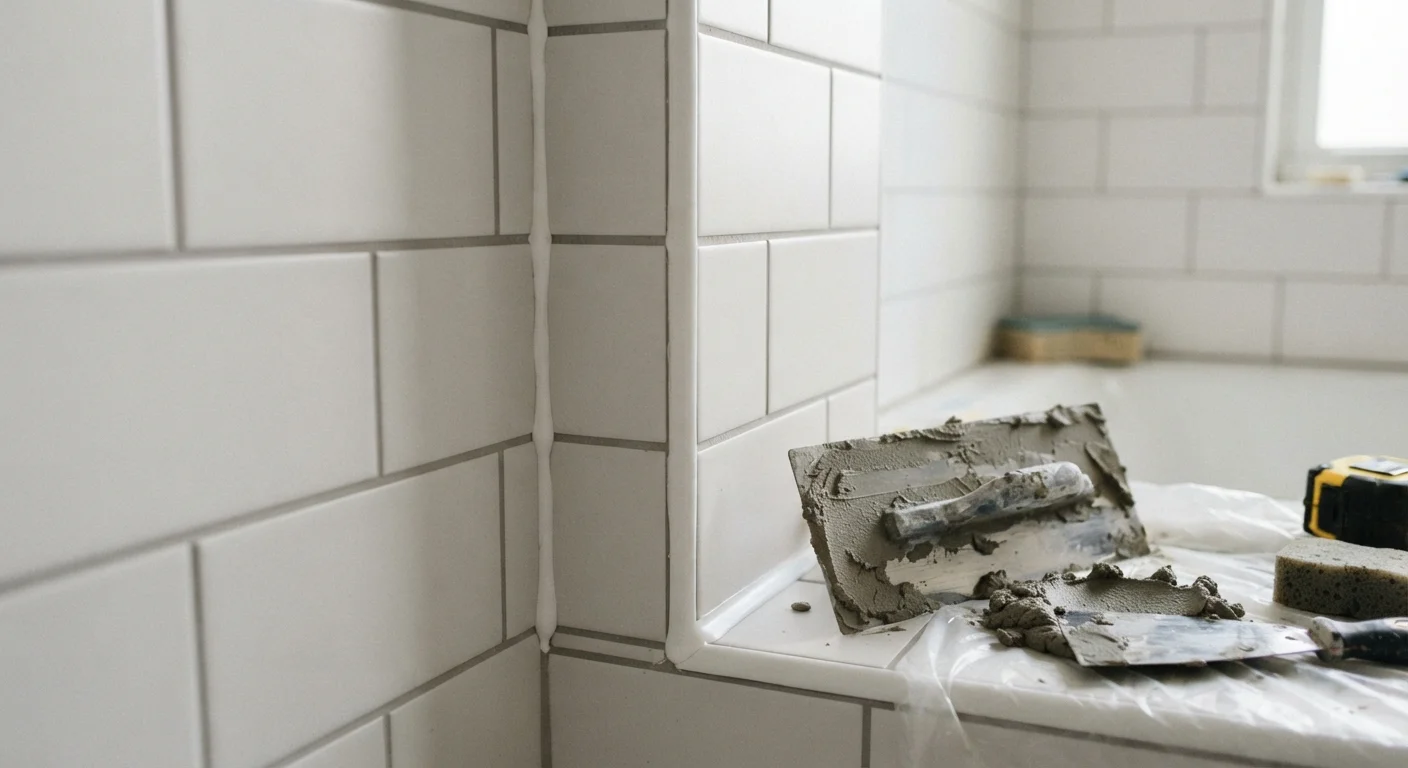
Mortar has virtually no flexibility after it cures. Never use it to fill the joint where a tiled wall meets a tiled floor — that corner must flex slightly as the building moves. Using mortar there will cause the joint to crack. That corner belongs to caulk.
Grout: The Joint Filler
Grout fills the spaces between tiles after they are set in mortar. It is not an adhesive and carries no bonding function. Grout is available in two broad categories:
- Cement-based grout — includes unsanded grout (for joints under ⅛ inch) and sanded grout (for wider joints). Requires sealing in most applications to resist staining.
- Epoxy grout — highly resistant to stains, chemicals, and moisture. More difficult to apply and more expensive, but often the right choice for commercial kitchens, pool surrounds, or countertops.
Where Grout Cannot Substitute
Grout is rigid and brittle. It should never be used at changes of plane — meaning corners, transitions from floor to wall, or joints between tile and a fixture like a tub or sink. These are movement joints. Grout will crack there; caulk will not.
Caulk: The Flexible Seal
Caulk is a flexible sealant — typically silicone, latex, or a silicone-latex blend — designed to accommodate movement between surfaces. It forms a waterproof barrier rather than a structural bond.
Color-Match Caulk to Your Grout
Most major caulk manufacturers offer products color-matched to popular grout lines. When caulking corners or fixture joints in a tiled space, choosing a color-matched caulk makes the transition nearly invisible. Check the grout manufacturer's own caulk line first, as the color match is typically the most accurate.
Choosing the Right Caulk
- 100% silicone — maximum flexibility and moisture resistance; difficult to paint and requires mineral spirits for cleanup.
- Latex or acrylic caulk — easier to apply, paintable, and water-cleanup friendly; less durable in constantly wet areas.
- Siliconized latex — a middle-ground option that combines some flexibility with paintability.
Where Caulk Cannot Substitute
Caulk has no structural strength and should never be used to set tiles or fill large voids. It is also not a permanent fix for cracked grout mid-tile-field — that requires removing and replacing the damaged grout with fresh material.
Quick Decision Guide: Which Material Where
Still unsure which to reach for? Use this logic:
- Setting tile to a surface? Use mortar (thinset or medium-bed, depending on tile size).
- Filling the joint between two tiles on the same plane? Use grout.
- Sealing a corner, a change of plane, or a joint between tile and a fixture? Use caulk — color-matched to your grout for a clean look.
- Sealing around a window or door frame on the exterior? Use caulk — rated for outdoor use.
- Laying brick or repointing masonry? Use masonry mortar.
A reliable rule of thumb from tile industry guidelines: any joint where two surfaces meet at an angle, or where tile meets any dissimilar material (wood, metal, fixtures), should always receive caulk, never grout. This accommodates the natural movement of a structure without cracking.
~80%
Of tile failures linked to wrong product or installation error
Industry tile contractors frequently cite product misapplication — including grout used in movement joints — as the leading cause of premature tile failure.
3 types
Core sealant/bonding categories every DIYer needs to understand
Mortar, grout, and caulk each fill a distinct role; substituting one for another is the most common DIY tiling mistake.