

Key Takeaways
Our Verdict
Neither plant nor animal protein is categorically superior. Animal proteins offer high completeness and bioavailability, while plant proteins deliver important co-nutrients like fiber and phytochemicals. Research consistently shows that overall dietary patterns — emphasizing variety, whole foods, and adequate total protein — matter more than any single source. Most people benefit from understanding the trade-offs rather than committing to an all-or-nothing approach.
| Best for | Recommended |
|---|---|
| Those prioritizing amino acid completeness and absorption efficiency | Animal Protein |
| Those seeking protein alongside fiber, phytonutrients, and lower saturated fat | Plant Protein |
| Flexitarians and omnivores aiming for balanced nutrition | A combination of both sources |
What 'Protein Quality' Actually Means
Not all protein is equal — but what makes one source higher quality than another is more nuanced than marketing tends to suggest. Nutrition scientists evaluate protein quality using two main lenses: amino acid completeness and digestibility.
Proteins are built from 20 amino acids, nine of which are considered essential — meaning the body cannot synthesize them and must obtain them from food. A protein source that contains all nine in proportions sufficient to meet human needs is called a complete protein. The current gold-standard measurement tool is the DIAAS, which accounts for both the amino acid profile and how well the body actually absorbs and uses them.
Understanding these metrics helps contextualize the plant-vs-animal debate without getting pulled into diet-war rhetoric. For a broader framework on building meals around protein and other macronutrients, see our guide to building a balanced plate.
Animal Protein: Strengths and Trade-Offs
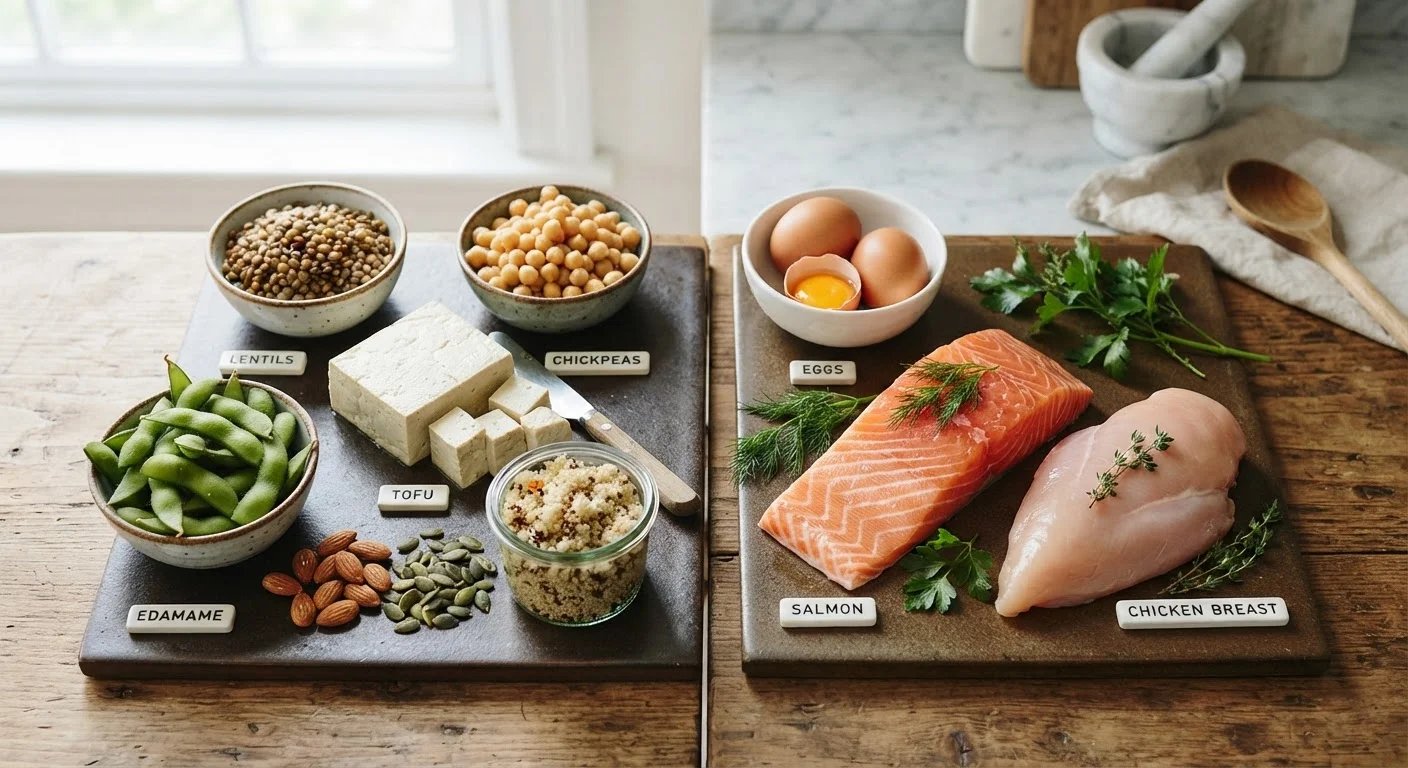
Animal-sourced proteins — including meat, poultry, fish, eggs, and dairy — are complete proteins with DIAAS scores that frequently reach or exceed 1.0, indicating high digestibility and amino acid sufficiency. Eggs and whey protein, in particular, are used as reference standards in protein quality research.
Beyond amino acid profiles, animal foods often supply nutrients that are limited or poorly absorbed from plant sources, including heme iron, vitamin B12, zinc, and long-chain omega-3 fatty acids (particularly EPA and DHA from fatty fish).
The trade-offs are real, however. Many animal proteins — particularly processed meats and fatty cuts — are associated with higher saturated fat intake. Epidemiological research has linked high consumption of red and processed meats with elevated cardiovascular and colorectal cancer risk, though the evidence is stronger for processed meats than for unprocessed red meat. Fish and dairy present a more favorable picture in the research literature.
Processed Meat: A Distinct Risk Category
Health research treats processed meats (bacon, sausage, deli meats, hot dogs) as a separate category from unprocessed red meat. The World Health Organization classifies processed meats as Group 1 carcinogens based on sufficient evidence of colorectal cancer risk. This classification does not apply equally to eggs, fish, poultry, or dairy. Limiting processed meat is a consistent recommendation across major dietary guidelines, regardless of overall protein preference.
Plant Protein: Strengths and Limitations
Legumes (lentils, chickpeas, black beans), soy products (tofu, edamame, tempeh), whole grains, nuts, and seeds are the primary plant protein sources. Most have DIAAS scores below 1.0 and are considered incomplete because they are low in at least one essential amino acid — often lysine (grains) or methionine (legumes).
Soy is a notable exception: it is a complete plant protein with a DIAAS comparable to many animal sources, and it is one of the most studied plant proteins in human nutrition research.
Plant proteins arrive with significant co-benefits. They are typically rich in dietary fiber, antioxidants, and phytonutrients absent in animal foods. Research consistently associates higher legume and whole-grain intake with reduced risk of type 2 diabetes, cardiovascular disease, and all-cause mortality.
The practical limitation — amino acid gaps — is addressable. Eating varied plant proteins across the day (not necessarily in the same meal) allows the body to pool amino acids effectively. Pairing rice and beans, or whole grain bread with nut butter, naturally covers complementary amino acid profiles.
Combining Plant Proteins Across the Day
You don't need to pair complementary proteins at every meal — your body maintains a pool of amino acids throughout the day. Eating a variety of legumes, grains, nuts, seeds, and vegetables across your daily meals naturally covers the full spectrum of essential amino acids. Deliberate meal-by-meal combining is not required for healthy adults eating varied whole-food diets.
Side-by-Side: Key Nutritional Comparisons
The table below summarizes how plant and animal protein sources generally compare across the criteria most relevant to everyday dietary decisions. Individual foods within each category vary widely, so this reflects typical patterns rather than absolutes.
| Criterion | Animal Protein | Plant Protein | |
|---|---|---|---|
| Amino acid completeness | Complete (all 9 essential AAs) | Often incomplete; soy is an exception | |
| Digestibility (DIAAS) | Generally high (≥0.9–1.0+) | Generally moderate (0.5–0.9) | |
| Fiber content | None | Significant in legumes and grains | |
| Saturated fat | Variable; often higher in red/processed meat | Typically low; exceptions include coconut | |
| Key micronutrients | B12, heme iron, zinc, EPA/DHA | Magnesium, folate, potassium, antioxidants | |
| B12 availability | Naturally present | Absent; supplementation usually needed | |
| Environmental footprint | Generally higher GHG emissions | Generally lower GHG emissions |
When evaluating packaged protein products, the nutrition label can be a useful tool. Our guide to reading nutrition labels like a comparison shopper explains how to interpret protein content, ingredient lists, and amino acid disclosures on packaged foods.
Context Is the Deciding Factor
Current evidence from large dietary pattern studies — including research on Mediterranean, DASH, and plant-forward omnivore diets — suggests that overall dietary quality outweighs any single nutrient or food category. People meeting protein needs through a variety of whole-food sources, plant or animal, tend to show favorable health outcomes.
Individual context matters significantly. Older adults have higher protein needs per kilogram of body weight to maintain muscle mass, and high-DIAAS animal or soy proteins may be particularly efficient for this goal. Those avoiding animal products should pay deliberate attention to B12 (supplementation is typically necessary), omega-3s, iron, zinc, and calcium. People managing specific health conditions should work with a registered dietitian rather than relying on general guidance.
This article is for general informational and educational purposes only and does not constitute medical or nutritional advice. Consult a qualified healthcare professional or registered dietitian before making significant changes to your diet, particularly if you have a health condition or specific nutritional needs.