

Key Takeaways
The Stress Response
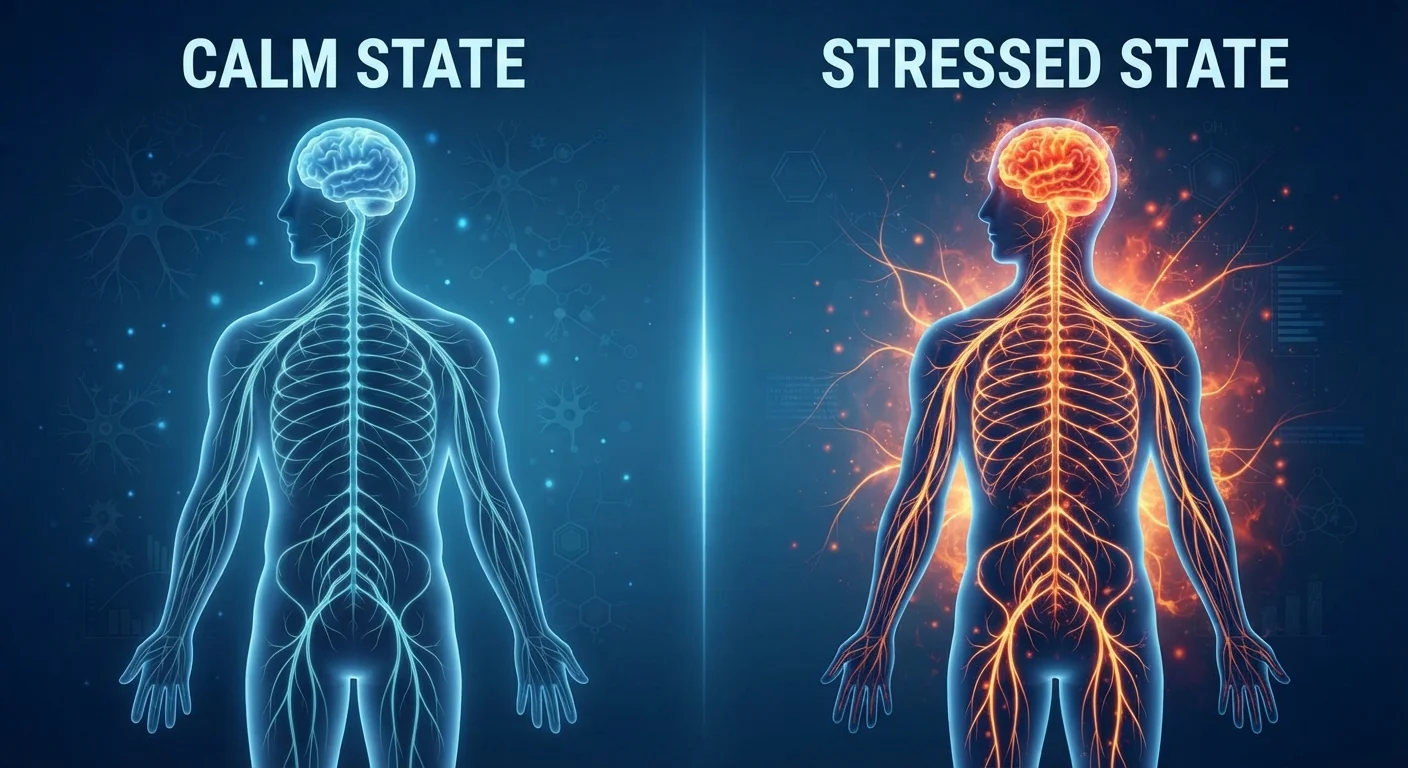
The stress response is the body's automatic reaction to perceived threats or demands. It involves a coordinated release of hormones — primarily adrenaline and cortisol — that prepare the body to act quickly. While this system evolved to protect us from physical danger, it activates just as readily in response to modern pressures like work deadlines or financial worry.
The response is mediated by the hypothalamic-pituitary-adrenal (HPA) axis, which regulates cortisol release, and the sympathetic nervous system, which drives the immediate 'fight-or-flight' reaction.
The Biology Behind the Reaction
When the brain perceives a stressor — whether a near-miss in traffic or a difficult conversation — a rapid chain reaction begins. The amygdala, the brain region involved in threat detection, signals the hypothalamus to activate the sympathetic nervous system. Within seconds, adrenaline floods the bloodstream: heart rate climbs, breathing quickens, muscles tense, and the senses sharpen. This is the fight-or-flight response.
Shortly after, the HPA axis kicks in, prompting the release of cortisol from the adrenal glands. Cortisol helps maintain elevated energy by raising blood sugar, suppressing non-essential functions like digestion and reproduction, and keeping the immune response in check. In a genuinely dangerous moment, these changes are adaptive and protective.
“Stress is not simply a psychological state — it is a whole-body physiological event with measurable consequences for nearly every organ system.”
— Robert Sapolsky, Neuroendocrinologist and author, known for research on stress biology
The challenge arises when the perceived threat is not a predator but an unanswered email — and the alarm doesn't fully switch off.
What Chronic Stress Does Differently
Acute stress is time-limited. Chronic stress — stress that persists over weeks, months, or longer — means the body remains in a state of partial activation. Cortisol levels stay elevated when they should return to baseline, and this sustained exposure affects multiple systems simultaneously.
77%
Adults reporting physical stress symptoms
According to the American Psychological Association's Stress in America surveys, a large majority of U.S. adults report experiencing physical symptoms they associate with stress.
3x
Higher illness susceptibility under chronic stress
Research published in peer-reviewed journals has found chronically stressed individuals are significantly more vulnerable to common infections such as the cold virus.
~20 min
Time for cortisol to peak after a stressor
Studies measuring cortisol in saliva indicate the hormone typically reaches peak levels roughly 20 minutes after the onset of a psychological stressor.
Brain: Chronic elevated cortisol is associated with changes in the hippocampus, a region critical for memory and learning. Research suggests prolonged stress can impair concentration, working memory, and decision-making. Mood regulation also suffers, with links to increased risk of anxiety and depression — though stress is one factor among many.
Gut: The gut and brain are in constant communication via the vagus nerve. Stress disrupts this relationship, altering gut motility and the balance of gut microbiota. Many people experience digestive symptoms — nausea, bloating, cramping, or changes in bowel habits — as a direct physiological response to stress.
Immune system: While short-term stress can briefly boost immune function, chronic stress gradually suppresses it, leaving the body less effective at fighting infection and slower to recover from illness.
Cardiovascular system: Sustained increases in heart rate and blood pressure place greater demand on the cardiovascular system over time. Healthcare providers routinely assess stress as a relevant factor in cardiovascular health conversations.
Stress and Sleep: A Two-Way Relationship
Stress and sleep deprivation interact in ways that compound one another. Elevated evening cortisol interferes with melatonin production and disrupts the transition to deep, restorative sleep. A brain that hasn't recovered overnight is then less equipped to regulate its emotional responses the following day — meaning ordinary stressors feel more overwhelming.
Protect Your Sleep to Protect Your Stress Response
Consistent sleep and wake times help regulate cortisol rhythms, making it easier for the body to wind down and recover. Even modest improvements in sleep consistency — such as reducing screen exposure before bed — are linked to measurable reductions in perceived stress. Small, sustainable habits often outperform dramatic interventions.
This cycle is well-documented. Research consistently finds that sleep quality and stress levels are bidirectionally linked, making sleep one of the most important levers in managing the body's stress load. For a deeper look at the neurological relationship, see the science of sleep and mental health.
Prolonged stress-related sleep disruption can also affect physical performance and recovery — a connection explored further in research on sleep and physical performance.
When to Take Stress Seriously
Not every stressful day signals a clinical concern. But when stress becomes the baseline rather than the exception — or when it starts shaping how you eat, sleep, relate to others, or function at work — it deserves attention. Recognizing when everyday stress has shifted into something worth addressing is a useful starting point for self-reflection.
It's also worth understanding that individual stress responses vary. Genetics, life experience, social support, and existing health conditions all influence how a person's body and brain process stressors. Building awareness of your own patterns — how stress shows up physically and emotionally for you — can help you have more productive conversations with a healthcare provider.
Approaches like structured relaxation, regular movement, and social connection are broadly supported by research as part of a healthy stress-management toolkit. Understanding emotional resilience can also reframe how you approach difficult periods without adding pressure to simply "toughen up."
This article is for general informational purposes only and does not constitute medical advice. If you are experiencing significant or persistent stress-related symptoms, please consult a qualified healthcare professional.