

Key Takeaways
Our Verdict
Movement pattern training offers a practical, functional framework that translates well to everyday life and helps prevent muscular imbalances. Muscle-group training remains a valuable tool, particularly for targeted development and rehabilitation contexts. For most people, a program that prioritizes movement patterns while using muscle-group thinking to address weak links will deliver the most balanced results.
| Best for | Recommended |
|---|---|
| Those seeking functional, real-world strength and injury prevention | Movement Pattern Training |
| Those focused on muscle hypertrophy or correcting specific weaknesses | Muscle-Group Training |
| Those recovering from injury under professional guidance | Muscle-Group Training |
| Most general fitness seekers wanting a balanced, sustainable routine | A hybrid of both approaches |
Two Ways to Organize Your Training
Walk into most commercial gyms and you'll find a familiar weekly rhythm: Monday is chest day, Wednesday is back and biceps, Friday is legs. This muscle-group model has dominated fitness culture for decades, largely shaped by bodybuilding traditions. But a growing body of sports science and strength coaching favors a different organizing principle — movement patterns.
Rather than asking "which muscles am I working today?", movement pattern training asks "which fundamental human movements am I training?" The core categories are typically: push (pressing away from the body), pull (drawing toward the body), hinge (bending at the hips), squat (bending at the hips and knees simultaneously), carry (moving while bearing load), and rotation (twisting through the torso). Understanding these two frameworks — and their trade-offs — can help you design a smarter, more balanced routine. See also what strength training actually does for your body for broader context on resistance-based exercise.
How Each Framework Works in Practice
| Movement Pattern Training | Muscle-Group Training | |
|---|---|---|
| Core organizing principle | Functional movement categories | Anatomical muscle targets |
| Muscles worked per session | Multiple muscles in concert | One or two muscles in isolation |
| Transfer to daily life | High — mirrors real-world tasks | Lower — more gym-specific stimulus |
| Injury prevention potential | Strong — promotes balance across joints | Variable — depends on program design |
| Best suited for | General fitness, athletes, beginners | Bodybuilding, targeted rehabilitation |
| Programming complexity | Moderate — requires pattern awareness | Straightforward — familiar split structure |
| Imbalance risk | Lower when all patterns are included | Higher if push/pull balance is ignored |
The table above highlights how these two approaches differ across practical dimensions. Muscle-group training offers precise control over stimulus and volume for individual muscles — a genuine advantage when rehabilitation or competitive bodybuilding is the goal. Movement pattern training, by contrast, distributes load across multiple joints and muscles in concert, more closely mirroring how the body actually functions during daily tasks, sport, and work.
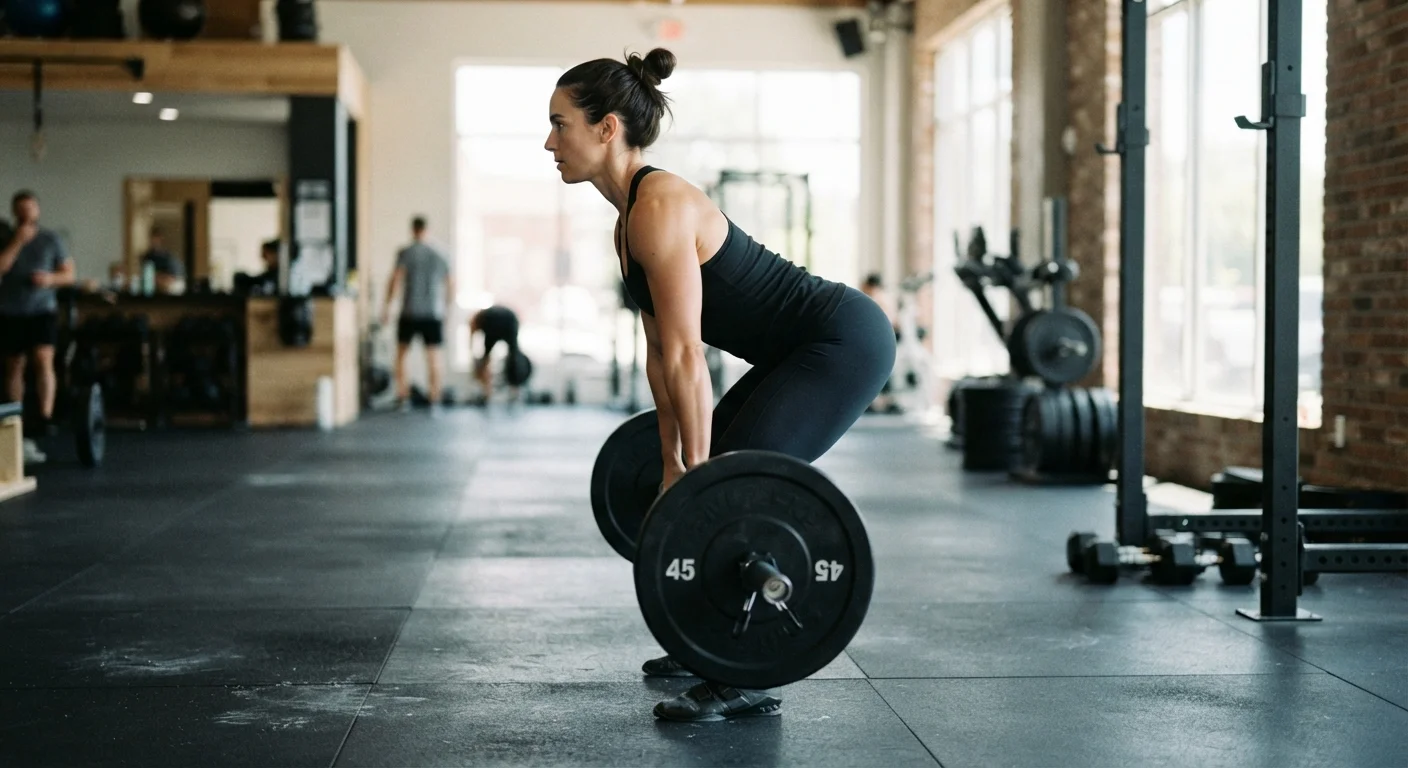
For example, a Romanian deadlift trains the hip hinge pattern, engaging the hamstrings, glutes, spinal erectors, and core simultaneously. Thinking of it only as a "hamstring exercise" undersells its full-body demand and can lead to programming gaps elsewhere. Similarly, a row is a pull pattern that involves the lats, rhomboids, biceps, and rear deltoids — muscles that are often split across different "days" in a muscle-group plan.
Audit Your Current Routine for Pattern Balance
Review your last two weeks of workouts and label each exercise by movement pattern — push, pull, hinge, squat, carry, or rotation. If any category is absent or heavily outnumbered, that's often where imbalances and overuse issues develop. Addressing gaps doesn't require a complete program overhaul; adding one or two exercises in an underrepresented category is often enough to restore balance.
Where Muscle-Group Thinking Still Has Value
Dismissing muscle-group training entirely would be a mistake. Targeting individual muscles has clear applications: physical therapists routinely use isolation exercises to rebuild strength after injury. Competitive bodybuilders use them to address symmetry and proportion. And recreational exercisers sometimes discover that a specific muscle — say, the gluteus medius or the rotator cuff — is underperforming and contributing to pain or instability.
In these cases, isolation work serves as a complement to movement training, not a replacement. The key is using it strategically. If you notice that your squat pattern is limited by weak hip abductors, an isolation exercise targeting that muscle can address the gap. This targeted approach works best under the guidance of a qualified fitness or healthcare professional, especially when addressing pain or post-injury weaknesses. For an additional layer of movement quality, mobility training addresses joint range of motion that underpins all movement patterns.
Building a More Balanced Program
Most fitness authorities — including physical therapists and certified strength coaches — suggest that a movement-pattern framework provides a useful backbone for general fitness programming. A well-structured week might ensure that push and pull patterns are balanced in volume (a common source of shoulder problems is over-prioritizing pressing), that hinge and squat patterns both appear, and that rotational and carry work are not neglected simply because they don't fit neatly into a "muscle day."
Tracking which movement patterns you've completed — rather than just which muscles — can quickly reveal imbalances. If your log shows three push sessions and one pull session in a given week, that's a meaningful signal. Workout tracking can be a practical tool for spotting these patterns over time. The approach also pairs well with varying intensity: cardio training methods can be layered in based on your goals without disrupting the movement-pattern structure.
This article is for general informational and educational purposes only and does not constitute medical or professional fitness advice. Consult a qualified healthcare provider or certified fitness professional before beginning or modifying any exercise program, especially if you have an existing health condition or injury.